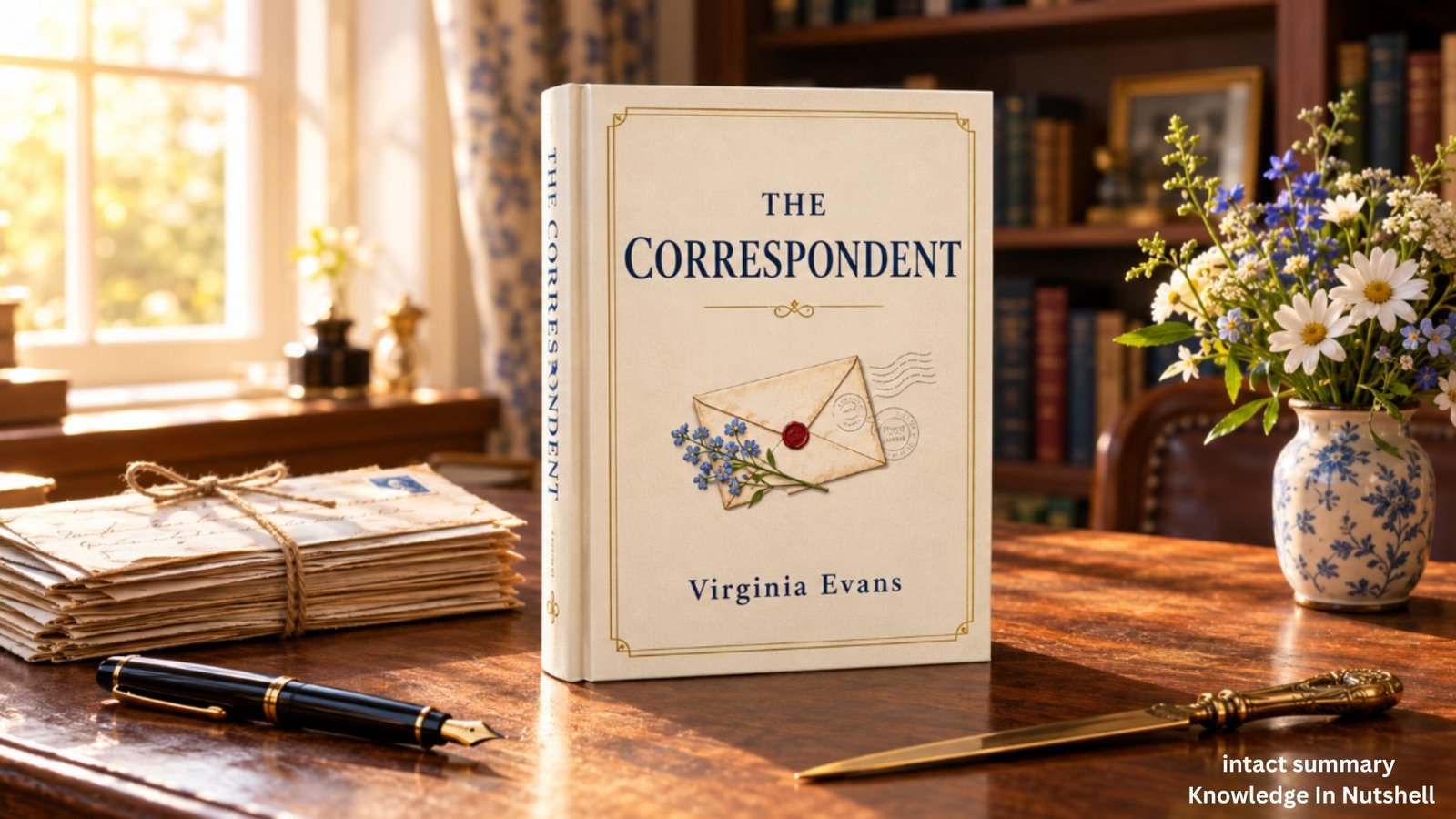
Maybe you were too angry. Maybe you were too sad. Maybe the words felt too big to say out loud. That small, secret act sits at the heart of The Correspondent by Virginia Evans, one of the most talked-about literary fiction books of the last two years.
If you are standing in a bookstore or scrolling a library app, wondering if this epistolary novel is right for you, you are in the right place. Many readers hear that the book is beautiful. They also hear that it is sad. So they ask the same questions. What is the story? Who is Sybil Van Antwerp? Is it too heavy? Is it worth my time?
Here is the short answer. The Correspondent is a warm, funny, and deeply emotional novel told almost entirely through letters. It follows a 73-year-old retired lawyer who writes to everyone, from her family to famous authors, while she carries a heavy load of grief and regret. It is a quiet, character-driven story, and many readers say it stays with them long after the last page. It also includes the death of a child, so you should know that before you start.
Quick Answer of The Correspondent
The Correspondent by Virginia Evans (2025) is a literary fiction novel told through letters and a few emails. It follows Sybil Van Antwerp, a 73-year-old retired lawyer who writes to family, friends, and famous authors. When letters from her past force her to face a painful time in her life, she must decide if she can forgive others and herself. The book is about grief, regret, family, and second chances.
What Is The Correspondent About? (Book Overview)
The Correspondent is a novel told in letters. That is what the word epistolary means. Instead of normal chapters with long scenes, you read the letters people write to each other. Each letter has a date, so you can follow the story as it moves between the past and the present.
Read More:/inner-excellence-book-summary/
The star of the book is Sybil. She is sharp, stubborn, and funny. She sits down to write most mornings, and she writes to many people. She writes to her brother and her best friend. She writes to a university president who will not let her take a class. She even writes to well-known authors, like Joan Didion and Larry McMurtry, to tell them what she thinks of their books. Reviewers also mention George Lucas among her famous letter targets. But there is one person she writes to and never mails. That unsent letter is the secret center of the story.
Who Is Virginia Evans?
Virginia Evans is an American author from the East Coast. She studied English literature at James Madison University. After she started a family, she went back to school and earned a master’s in creative writing at Trinity College in Dublin, Ireland. She now lives in Winston-Salem, North Carolina, with her husband, her two children, and a red Labrador.
Here is a fun fact that surprises many readers. The Correspondent was her debut, but it was not her first book written. Evans has said it was her eighth complete novel. She did not even plan to publish it at first. She wrote it for herself, as a way to pour out everything she wanted to say. Her agent pushed to read it, and that led to the 2025 publication.

Her writing style is intimate and authentic. She builds a whole person through nothing but letters. Many reviewers praise her for making Sybil feel like a real neighbor, with real flaws. If you like character-driven storytelling, Evans is an author to watch.
Why Did The Correspondent Become So Popular?
The Correspondent did not explode on day one. It grew slowly, one reader at a time. Evans herself has explained that one person read it and told two more people, and it kept going from there. That is the best kind of growth for a quiet book.
Here is how the story of its success played out:
- It launched in April 2025 with a normal level of publisher support.
- Booksellers fell in love with it and kept handing it to customers. Many customers came back to buy copies for friends and family.
- Ann Patchett, the author and owner of Parnassus Books, spoke about it on PBS NewsHour, which Evans says helped a lot.
- It became a New York Times bestseller and had spent 13 weeks on the list by January 2026.
- It reached the top of the New York Times hardcover fiction list in February 2026.
- Katie Couric picked it as the first title for her book club.
Reviewers have also been kind. Dear Author gave it a B+, and one popular book blogger gave it 4 out of 5 stars. Book Club Chat called it a great book club pick with plenty to discuss.
Why does this matter to you? It tells you the book is loved for word-of-mouth reasons, not just ads. Readers share it because it makes them feel something.
The Correspondent Plot Summary
Pick the version that fits you. The first is safe for everyone. The second tells you what really happens, so skip it if you want to be surprised.
Spoiler-Free Summary in The Correspondent
Sybil Van Antwerp is 73 years old and a retired lawyer. Her days follow a pattern. Most mornings she sits at her desk and writes letters by hand. She writes to her brother, who lives in France. She writes to her best friend. She writes to a university president who will not let her take a class. She writes to famous authors and tells them, very honestly, what she thought of their books. She also writes angry notes to newspapers and companies, and her notes are often funny.
But Sybil has one more kind of letter. She writes to one person again and again, and she never mails those letters. They are private, and they are heavy.
Her quiet routine is shaken when letters arrive from someone in her past. These letters pull her back to one of the most painful times of her life. Sybil has always been proud, stubborn, and sure she is right. Now she has to look at what she did, what she hid, and who she hurt. Her daughter lives far away in London, and their bond is strained. Other family ties are tangled too.
At the same time, new connections begin to grow. A young friend writes to her, and the two share a bond. As the months pass, Sybil has to ask a hard question. Is it too late to say sorry? Can a person change at 73? The book answers slowly, one letter at a time.
Full Summary (With Spoilers) in The Correspondent
Sybil’s biggest wound is the loss of her second child, Gill, who died at age eight. It was a sudden accident, and the loss broke her family. Sybil has carried unresolved grief for decades. Reviewers explain that her unsent letters are tied to this loss, which is why she can never bring herself to mail them. In her mind, she cannot forgive the past, and she cannot forgive herself.
That grief shaped everything that came after. Sybil became guarded and defensive. She leaned on rules, on being right, and on her sharp tongue. This pushed away people who loved her. Her marriage ended. Her bond with her daughter cracked and grew colder as the years went on. She also hurt her best friend, who is also her sister-in-law, and it takes her a very long time to see how deep that hurt went.
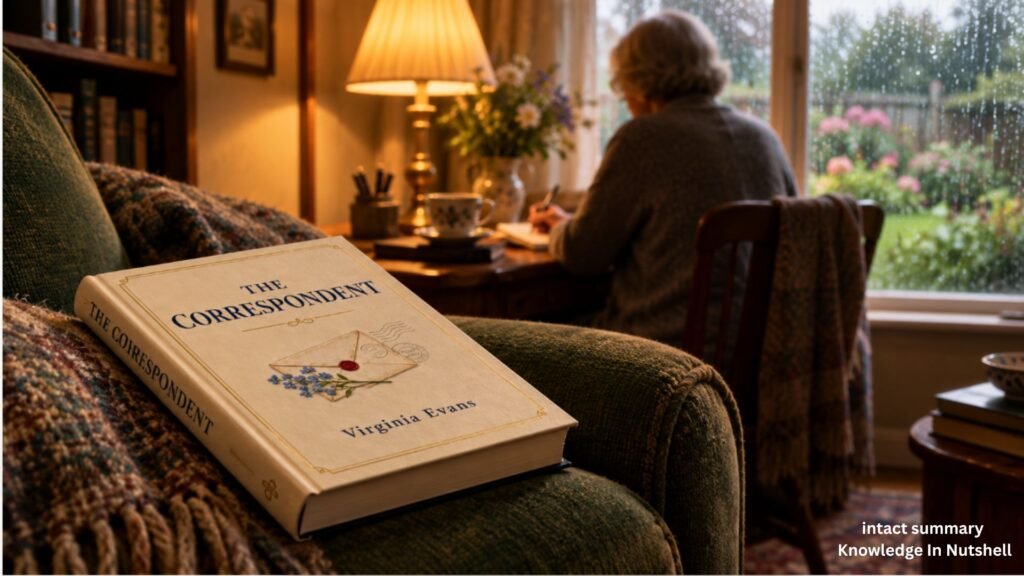
As the story moves, the letters from the past act like a key. They open doors Sybil kept locked. Old secrets come out, and Sybil is forced to tell the truth to people she has avoided for years. Her first reactions are not always graceful. She argues and lashes out, which shows how hard it is to face your own mistakes.
Her background adds another layer. Sybil was adopted as a child, and she also struggled with fear that she would not be a good enough mother. These fears help explain her hard shell. The story also brings in family secrets, including a hidden sister she reconnects with.
Meanwhile, her eyesight begins to fade. This works like a ticking clock. It makes her feel that she cannot wait forever to fix things. She builds a close, gentle bond with Theodore, and she keeps her warm friendship with the teenage boy who writes to her. These people help her learn that connection is a back-and-forth, not a one-way street.
By the end, Sybil makes real amends. She repairs her relationship with her daughter and she reaches toward others she once pushed away. She never turns into a sweet, soft person, because that would not be true to her. But she learns to open her heart. The ending is bittersweet and moving, and many readers cried. It says that forgiveness is possible, even very late in life.
Sybil Van Antwerp Character Analysis
Character: Sybil Van Antwerp
Role and Arc: Sybil is the heart of the whole book. Every other person appears because Sybil writes to them or hears from them. Her arc goes from closed off and defensive to honest and open.
Her strengths
- Sharp wit and dry humor. Her letters to editors, companies, and authors are some of the funniest parts of the book.
- Fierce independence. She does not like asking for help.
- A love of books and words. Letters are how she makes sense of the world.
- Deep loyalty, even when it is hidden under a rough surface.
Her flaws
- Stubborn and set in her ways. She holds on to her opinions tightly.
- Defensive. When someone accuses her, she can turn self-righteous and lash out.
- Judgmental. Reviewers say some of her words may make readers flinch.
- Slow to apologize. Her realization of past wrongs can take decades.
Why readers keep reading anyway: Evans does not make Sybil perfect. A book about an older woman could easily make her a sweet granny. Instead, Sybil is flawed, real, and unforgettable. One reviewer said she wanted to shake Sybil at times, yet also understood her and knew people just like her. That mix is what makes Sybil a memorable literary protagonist.
Her growth: Sybil’s change is not sudden. It is built from small, hard choices: writing a longer letter, saying sorry, listening. When she finally faces past mistakes and tells the truth, the moment feels strong because we watched her fight against it for so long.
Supporting Characters in The Correspondent
You do not need to memorize everyone. Here are the key people who shape Sybil’s journey.
Harry (the young friend)
Role and Arc: A teenager who writes to Sybil, and whose letters she looks forward to. This is the intergenerational friendship in the story. He gives her a place to be gentle and to teach, and he reminds her that connection can happen at any age. Check your copy for his exact backstory, since reviewers describe him briefly.
Sybil’s Daughter in The Correspondent
Role and Arc: The mother-daughter relationship is one of the most important in the book. Her daughter now lives in London, and the distance is emotional as much as physical. Over the story, the two slowly rebuild trust through honest communication.
Sybil’s Best Friend and Sister-in-Law
Role and Arc: A longtime friend whom Sybil has hurt in the past. This friendship shows the cost of Sybil’s pride and the power of being forgiven.
Sybil’s Brother
Role and Arc: Her brother lives in France, and Sybil has no wish to travel to see him. Their letters show a lifelong bond, even across an ocean.
Theodore in The Correspondent
Role and Arc: A gentle, down-to-earth presence who becomes meaningful to Sybil later in life. Their bond shows that finding companionship in old age is possible.
Gill (Sybil’s Late Child)
Role and Arc: Gill is rarely “on stage” in the usual way, yet he is the emotional center of Sybil’s grief. Much of Sybil’s personality can be traced back to his loss.
Sybil’s Ex-Husband in The Correspondent
Role and Arc: He shows how grief changes a marriage. Their relationship reflects the strained family ties in her past.
Who Does Sybil Write To? The Letters Explained
Because this is an epistolary novel, the letters are the story. Knowing the types of letters makes the book easier to follow.
- Letters to family: to her brother, daughter, and others. These show love, tension, and old hurts.
- Letters to friends: warm, honest, and often teasing. These show Sybil at her most relaxed.
- Letters to famous authors: to Joan Didion, Larry McMurtry, and Diana Gabaldon, the author of the Outlander books. Some of these authors write back in the story. These are literary cameos that book lovers enjoy. They show that Sybil sees literature as comfort.
- Letters to public figures and institutions: including George Lucas, a university president, newspapers, and customer service workers. These bring the dry humor.
- Letters to a local garden group and neighbors: small fights that show Sybil’s stubborn side.
- Unsent letters: the most private and most important. They carry the deepest grief and the biggest truth in the book.
A helpful tip: pay close attention to the dates at the top of each letter. The book moves back and forth in time, and the dates are your map.
The Correspondent Epistolary Writing Style Explained
The Correspondent is told through letters, with a few emails. There is no narrator telling you what to think. You only see what people choose to write down. That choice shapes the whole reading experience.
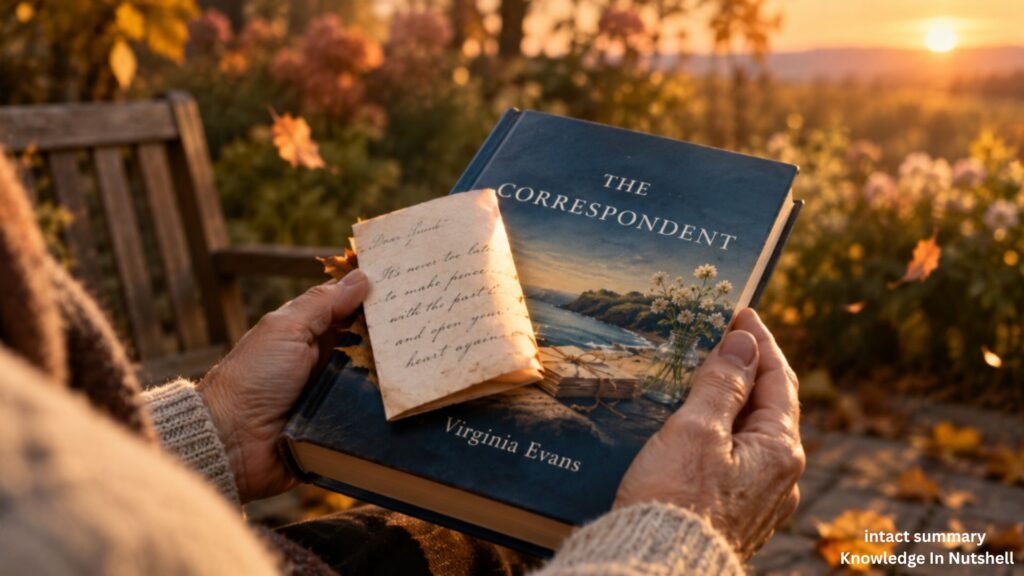
What works well
- It builds closeness. Reading someone’s private letters feels like being trusted with a secret. Reviewers say the format makes the reader feel close to Sybil.
- It moves time easily. Each letter has a date, so the story can jump forward or slow down without extra explaining. One reviewer said this gave the book a wonderful push forward.
- It matches the theme. A letter is a back-and-forth. You send words out and wait for a reply. Sybil has spent years pulling inward, and the form shows her slowly learning to reach out and wait for someone to answer.
- It makes characters from voice alone. There are almost no scenes with spoken dialogue, yet Sybil feels real. Book Club Chat called this a masterful job.
- It makes the humor land. Her short, fierce notes to editors and companies are a joy to read.
What can be tricky
- It takes a little time to settle in. You have to learn who is writing to whom.
- Voices can sound alike. One reviewer felt that several writers shared the same rhythm and the same very high self-awareness. This is a small point, but worth knowing.
- You only get partial views. A letter shows what a person wants to say, not the whole truth. That is part of the point, but some readers want more.
In short, the letter-writing shapes the story of The Correspondent at every level. The form is not a trick. It is the message: written words can connect people across years of silence.
Key Themes Explained in The Correspondent
Forgiveness and Self-Forgiveness in The Correspondent
This is the main theme. Sybil needs to forgive others, but the harder job is forgiving herself. One reviewer called it the hardest kind of forgiveness, the one we owe ourselves.
How it plays out: Sybil’s first reaction to blame is to defend herself. Over time she learns to say sorry, even when it costs her pride.
Why it matters: Many people carry old mistakes. The book says it is never too late to make amends.
Grief and Healing in The Correspondent
Sybil’s grief over her child lasts for decades. The book shows that grief is not something you simply get over. It changes you for life. Book Club Chat said Evans shows how grief changes a person forever.
How it plays out: Grief shapes Sybil’s temper, her rules, and her walls. It also explains why she writes to someone she never mails.
Why it matters: The story is gentle with sorrow. It shows healing as slow movement, not a cure.
Aging, Regret, and Late-Life Change in The Correspondent
Sybil is 73, and the story treats old age as a time of growth, not just loss. Her fading eyesight adds pressure. She is losing time, so she can no longer put off hard conversations.
Why it matters: Many stories about older people focus on endings. This one proves that change is possible at any age.
Family Relationships and Reconciliation in The Correspondent
The book looks closely at mother and daughter, siblings, in-laws, and a broken marriage. Each bond has hurt and love mixed together.
How it plays out: Sybil’s strained relationship with her daughter is slowly repaired. The path is not smooth, and there is no quick fix.
Human Connection and the Power of Written Words in The Correspondent
Sybil believes letters keep a piece of a person’s life alive. The book explores how words can wound, heal, and cross long distances. It also shows friendship across generations, like the bond between Sybil and a young pen friend.
Finding Comfort in The Correspondent
Sybil loves reading. Her letters to authors show that literature can feel like a friend. For many readers, that is one of the most relatable parts of the book.
Symbols and Motifs in The Correspondent
You do not need a literature class to see these. Here are the main ones in simple terms.
- The unsent letter. It stands for things we cannot say out loud. Its journey from hidden to read is the journey of the whole book.
- Handwritten letters. They stand for care, effort, and memory. In a fast, digital world, Sybil’s pen and paper show she values slow, honest communication.
- Dated letters as a chain. The book suggests letters can be like links in a long chain that preserve a life story. The dates give the story its time travel.
- Fading eyesight. It works as a countdown clock. It also hints at seeing yourself clearly late in life.
- Famous authors. Joan Didion, Larry McMurtry, and Diana Gabaldon appear as symbols of comfort in books. They also give Sybil a space to be curious and playful.
- Small daily fights. Her complaints to editors and garden groups show a woman who protects herself with sharp words. They also let readers see how grief can hide behind being picky.
The Correspondent Review: Strengths and Weaknesses
An honest review must show both sides. Here is a fair summary of what readers praise and what they question.
Strengths
- A memorable, flawed main character. Sybil is not sweet or simple.
- Great balance of humor and sadness. Funny letters keep the heavy parts from crushing you.
- Strong emotional payoff. Many readers say the ending moved them to tears.
- A fresh use of the epistolary form. Even readers who usually dislike letter novels said this one won them over.
- Great for discussion. Plenty to talk about for book clubs.
Weaknesses
- Slow in the middle. One reviewer felt some letters could be shorter.
- Similar voices. The writers can sound alike.
- Very heavy subject matter. One popular reviewer felt the way the child’s death was placed and handled was hard and maybe too much, calling the book misery lit in places. Other readers disagreed and called it the heart of a bigger story.
- Sybil can be tough to like. Some readers find her harsh early on. One reader noted her nasty tone at times felt at odds with her career as a lawyer.
- Some comic bits feel a little exaggerated. A few reviewers felt certain funny letters leaned cute or extra, compared with the serious tone elsewhere.
Our overall take: The book is best for readers who enjoy slow, character-driven fiction. If you want fast plot twists, this may not be for you. If you want a story that grows on you, it may be a favorite.
The Correspondent Ending Explained
Spoiler warning: this section talks about how the story wraps up.
The ending is gentle, honest, and bittersweet. It does not give Sybil a perfect life. It gives her something better: peace and connection.

What changes by the end
- Sybil opens up. She has learned to stop hiding behind pride. She reaches out instead of pulling away.
- Her family ties heal. Her relationship with her daughter is repaired in a real way.
- She finds new closeness. Bonds with Theodore, her young friend, and a sister she reconnects with show that late-life friendship and family are possible.
- The hardest letters get faced. The unsent letters stop being a secret weight. This reflects her acceptance of the past.
What the ending means: The book says that forgiveness is a process, not one big moment. It also says Sybil’s grief is not “solved.” She learns to live with it in a kinder way.
Why readers cry: Because the happy parts feel earned. We saw how hard Sybil had to fight to get there.
The Correspondent FAQS
1. What is The Correspondent about?
It is a novel told in letters about Sybil Van Antwerp, a 73-year-old retired lawyer. When letters from her past make her face a painful time in her life, she must work through grief, regret, and forgiveness.
2. Who wrote The Correspondent and when was it published?
Virginia Evans wrote it. It was published by Crown in April 2025 and is her debut novel.
3. Is The Correspondent worth reading?
Yes, if you like slow, emotional, character-driven fiction. Reviewers praise its humor, its main character, and its emotional payoff. Check the content warnings first.
4. Is The Correspondent a true story?
No. It is a work of fiction. The characters and events are made up by the author.
5. What is the main theme of The Correspondent?
Forgiveness, including self-forgiveness. Other major themes are grief, aging, family relationships, and the power of written words.
6. Why is The Correspondent told in letters?
Letters let readers see private thoughts and voices up close. They also mirror the book’s idea that relationships grow through give-and-take, like sending and answering messages.
7. How does The Correspondent end?
The ending is bittersweet and hopeful. Sybil faces her past, repairs important relationships, and opens her heart to new connection. (See the ending section above for details, with a spoiler warning.)
8. Is The Correspondent sad?
Parts are very sad, especially the story of losing a child. But there is also plenty of humor and warmth. Many readers say it made them cry and smile.
9. What are the content warnings?
Reviewers flag the death of a child, fertility struggles, adoption, grief, and the death of a pet.
10. How long is The Correspondent?
The Kindle edition is about 291 pages, so it is a medium-length read. The letter format makes it move quickly for many readers.
11. Is The Correspondent good for book clubs?
Yes. Reviewers recommend it for book clubs because of its rich characters, big themes, and emotional discussion topics.
12. Does Sybil write to real authors?
In the story, Sybil writes to real authors such as Joan Didion, Larry McMurtry, and Diana Gabaldon, and some write back. These exchanges are part of the fiction and are used for humor and heart.
How This Article Was Prepared
Research approach: This guide was built by comparing several public book reviews with news reports on the book’s publishing success, then checking key facts against those sources, including the author background, publisher, date, bestseller status, and character details.
Original writing process: Everything here is written in new words. The article does not copy competitor pages or reproduce passages from the novel.
Accuracy review: Plot and character points were limited to details that appear in reviews and reports. Fine details of the ending should be checked against a copy of the book before publishing.
Transparency: This draft was created with AI assistance. A human editor should add their name and credentials, if they have them, and confirm the details against the book. We do not claim any credentials we do not have.
Conclusion of The Correspondent
The Correspondent by Virginia Evans is a story about words, love, and second chances. Sybil Van Antwerp is a 73-year-old retired lawyer. She writes letters every day. She is funny, smart, and very stubborn. But she also hides a big, sad secret from long ago.
When letters from her past arrive, Sybil has to look at her mistakes. It is not easy. She says sorry. She listens. Sybil learns that saying sorry is very brave. She slowly opens her heart to her daughter, her friends, and new people. The book shows that forgiveness can take a long time, but it is never too late.
This epistolary novel has sad parts, so please remember the content warnings. It is about grief and the loss of a child. But it also has humor, kindness, and hope. Many readers cry, and many readers smile too.