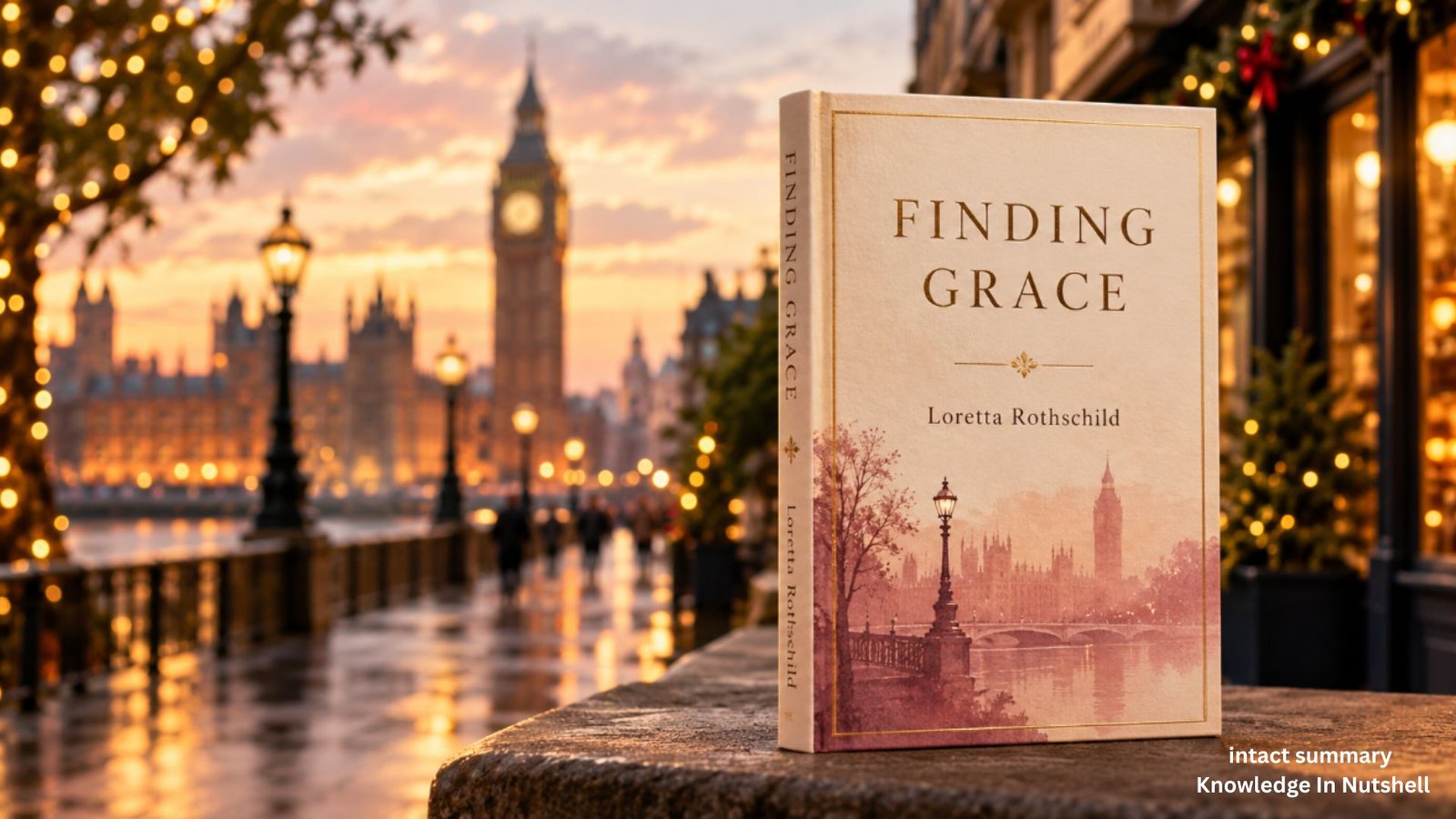
Many readers say that is exactly what happens with Finding Grace by Loretta Rothschild. This debut novel came out in 2025 from St. Martin’s Press. It is a story about love, grief, and family, and about what a family can become after the hardest day of its life. It is also one of the most talked about emotional novels of the year.
Maybe you saw it on a “best books” list. Maybe a friend told you to read it. Maybe your book club picked it and you need a quick refresher. Or maybe you just want to know if it is worth your time. Those are fair questions. This is not a light beach read, and it does not please everyone. One popular reviewer called it nearly perfect. Another gave it three stars and said readers could skip it. That big gap is worth understanding.
Here is the short answer. Finding Grace is a contemporary literary fiction novel with romance, family drama, and a little suspense. It follows Honor, a mother who deeply wants another baby, and her husband Tom. A shocking event in the first chapter changes their family forever. Years later, Tom makes a choice that brings a new woman into his life, and secrets start to rise to the surface. It is worth reading if you enjoy emotional, character-driven stories and can handle sad topics. It may not be for you if you want a fast plot or characters who are easy to like.
In this guide you will find a spoiler-free summary and a full summary with spoilers. You will also find a character guide, an explanation of how the story is told, and a look at the big themes. We cover infertility, egg donation, and surrogacy in plain words. You will see an honest list of strengths and weaknesses, book club discussion questions, similar books, and a full FAQ.
Because the answer comes first and the details come after. Every spoiler is labeled, so you can stop reading before you reach one. Everything here is written in my own words and checked against published reviews and publisher information.
Quick Answer: What Is Finding Grace About?
Finding Grace is a 2025 novel by Loretta Rothschild about Honor, a London mother longing for a second child, and her husband Tom. After a sudden tragedy changes their lives, the story follows how Tom rebuilds his world and how an unexpected new relationship brings old secrets into the light. The book looks at grief, fertility struggles, love after loss, and the meaning of family. It is told in Honor’s own voice, which makes it feel both intimate and unusual.
Finding Grace Book Overview and Background
You may see June 2025 or July 2025 on different sites. Different editions and regions list different dates, so check the one for your edition if the exact day matters to you.
The story takes place in the present day, mostly in London, with an important opening scene at the famous Ritz hotel in Paris. The family is wealthy, and their world has nice hotels, fancy dinners, and a close group of friends. The book shows that money cannot fix grief or make a hard choice easier.
Also Read:/all-the-colors-of-the-dark-summary/
Three things help. First, the book deals with miscarriage, the loss of a child, and the loss of a spouse. Some parts are very sad. Second, the story moves back and forth in time. Honor often starts a chapter by remembering the past. Third, the book asks you to accept a few big coincidences. Even reviewers who liked it say this. If you go in knowing that, you will probably enjoy the ride more.
The book got a lot of buzz in 2025. One review site notes it also appeared on a best books of the year list. Readers talk about it because the premise is unusual. Few novels are told by someone who is no longer alive. Fewer still look so closely at fertility treatment and modern families.
Who Is Loretta Rothschild, and Why Does Honor Tell the Story?
Loretta Rothschild is a full-time writer. She splits her time between London, Florence, and Switzerland with her husband and young son. Finding Grace is her first novel, so it is also her first time in front of a large reading audience.
One of the most interesting facts about the book is how it changed while she wrote it. In an interview with Shelf Awareness, she explained that she first wrote the whole story in third person, like a narrator standing outside the family. But the very first chapter was always in Honor’s voice. As she kept writing, she realized she missed Honor. She decided the story could not be told without her. So she rewrote it from Honor’s side.
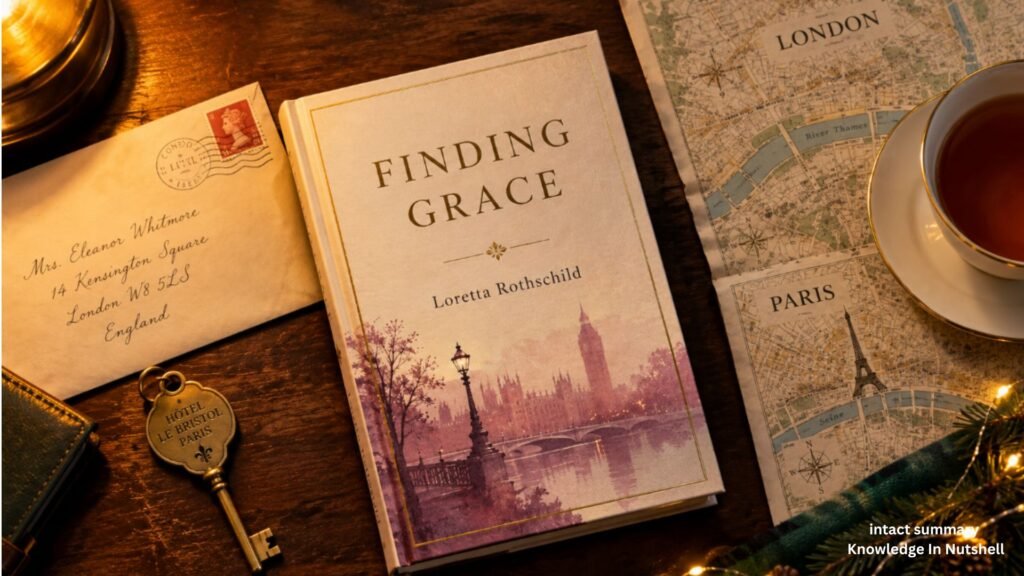
That choice shaped the whole book. Rothschild describes it as something like a chat between the reader and Honor. Honor watches the story happen, and you watch it with her. This is why the book feels warm and personal, even when the events are heartbreaking.
She has also said she wanted to write about how people often avoid talking about someone who has died. They think it protects the people who are grieving. In Finding Grace, the dead are not hidden. Honor is always present, and the living talk about her, think about her, and sometimes argue about her.
Rothschild’s writing style is simple and clear, with a lot of feeling underneath. She uses short, direct lines, a little dry humor, and lots of small, real moments. Even a reviewer who gave the book three stars called the writing itself solid. That is a good sign for a first-time author.
Is Finding Grace Literary Fiction, Romance, or Suspense?
Literary fiction: The book spends a lot of time inside people’s thoughts and feelings. It cares more about why people act than about fast action. It also asks big questions about right and wrong, grief, and parenthood. That is how literary fiction works.
Romance: There is a real love story, and in fact more than one. Honor and Tom’s marriage is shown in flashbacks. Later, Tom starts a new relationship. One reviewer described the mood as a mix of two well-known British films, one about weddings and a funeral and one about time and family. That gives you a sense of the cozy, bittersweet British feeling.
Suspense: A secret sits at the center of the book. The reader knows something that other characters do not. This creates what one trade review called an “edge of suspense.” You keep asking: when will the truth come out, and what will it cost? Library Journal suggested it is a good match for readers who like psychological suspense.
So what should you call it? The best label is contemporary literary fiction with a love story and a secret at its heart. If you expect a fast thriller, you will be disappointed. If you expect a gentle romance, you may be surprised by how heavy it gets. If you like emotional family drama with a hook, you are in the right place.
Finding Grace Plot Summary: Spoiler-Free and Full Version
Spoiler-Free Summary of Finding Grace
Honor has a life that looks nearly perfect from the outside. She is a successful children’s book author in London. She loves her young daughter Chloe and her husband Tom, even though Tom works very long hours. But Honor wants one more thing: another baby. For years, she and Tom have tried. They have been through fertility treatment, and Honor has lost pregnancies. The strain has pushed the couple apart. Honor is so focused on her dream that she forgets to ask what the dream is costing Tom.
The family has a Christmas tradition in Paris, and this year they are waiting for important news about their latest attempt to grow the family. Then, at the end of the first chapter, something happens that changes everything. Reviewers agree on one thing: it is a shocking twist, and it is best discovered by reading it.
Read More:/the-diamond-eye-summary/
Years later, Tom makes a decision that sends ripples through the lives of many people. Old friends, old family ties, and a new relationship all start to pull against each other. As the consequences of Tom’s choice pile up, the story asks a hard question: what happens when old love meets new love, and a secret will not stay buried?
All along, the story is told in Honor’s voice. She starts many chapters by looking back at her own life, her friendships, and the long road that brought her and Tom together.
Full Summary (Spoilers) of Finding Grace
The opening tragedy. During the family’s Christmas trip to Paris, Honor and Chloe are killed in a suicide bombing near the Ritz hotel. Tom survives. He becomes a widower and loses his daughter and his wife in the same moment. Honor is the narrator, so she tells the story as a ghost who watches over him.
The surprise news. Back in England, Tom hears from the surrogate that the couple’s latest attempt worked. She is pregnant. The baby was made with an egg donor and carried by the surrogate, just as Honor had planned. A son named Henry is born. Tom, in grief, leaves his finance career to raise Henry full time.
Four years later. Tom and Henry have built a small, quiet life. Tom is a loving father, but he is lonely. Honor’s friends and family still orbit him, and the grief has never really gone away.
The letter. A misaddressed letter reveals who Henry’s anonymous egg donor was. Her name is Grace, and she lives in London. Curious, Tom goes to see her at her wine shop. He is startled to find that Grace looks a lot like Honor, which makes sense, because Honor chose her donor from a profile. Tom does not tell Grace who he is. They begin to talk, and then to fall in love.
A growing relationship built on a secret. Grace is also familiar with loss. She has lost her husband, and she finds comfort in a circle of other widows. Tom and Grace connect because they can speak openly about sadness. But Tom is hiding the biggest fact of all: Grace is Henry’s biological mother, and he knew that before they met.
Suspicion rises. Honor’s friends notice how much Grace looks like Honor. Lauren, Honor’s close friend, grows suspicious. Colette, Honor’s mother, keeps comparing Grace to her lost daughter. The pressure grows until a careless slip reveals that Henry came from an egg donor. Tom, Grace, and Henry escape to Scotland for a peaceful break, but the secret is still waiting at home.

The truth comes out. The secret is exposed in a painful way in front of the people closest to them. Grace feels humiliated and betrayed. She learns that the man she loves was not honest with her from the start. She leaves Tom.
The final chapters. The last part of the book deals with the fallout: broken trust, hurt feelings, and the question of whether love and forgiveness are still possible. Several reviewers felt these final chapters moved too fast. One said characters made surprising choices in a very short time. I will not give away the last scenes, since the ending is where readers disagree the most.
Finding Grace Characters Explained
You do not need a long list of names to follow this book. A small group of main characters carries the story. Here are the key ones and how they change.
Character: Honor in Finding Grace
Role and Arc: Honor is the narrator and the emotional heart of the book. She is a children’s author, a wife, and a mother. She admits she can be fussy, proud, and a bit self-centered. She is also warm and funny. Her biggest flaw is also her biggest love: she wants another child so much that she often ignores Tom’s feelings. Her arc happens mostly after her death. As she watches Tom, she starts to see herself more honestly and understand what her marriage really looked like.
Character: Tom in Finding Grace
Role and Arc: Tom is Honor’s husband and the main living character. At the start, he is a busy finance worker who loves his family but is tired of the fertility struggle. After the tragedy, he becomes a single father and a widower. Readers have strong feelings about him. One reviewer found his choices wildly unwise but still thought the author made him sympathetic. Another said the characters in general were hard to like. Tom is a good example of a flawed but human character: he loves deeply, but he also hides the truth when honesty would be braver.
Character: Grace (Spoilers) in Finding Grace
Role and Arc: Grace is a London wine shop owner and Henry’s egg donor. She is also a widow. She begins as someone rebuilding a quiet life and slowly becomes the center of Tom’s. Her arc is about trust. She opens her heart again, then learns that her new love began with a hidden truth. Reviewers often name her as one of the more rounded characters, though one critic noted the story needs us to accept that she spends very little time at her shop.
Character: Chloe and Henry in Finding Grace
Role and Arc: Chloe is Honor and Tom’s young daughter. Her loss is the book’s deepest wound, and she shapes how Honor and Tom think about family. Henry is the son born after the tragedy. He represents hope, but he also represents a hard question: whose child is he, and who gets to decide that?
Supporting Characters in Finding Grace
Lauren is Honor’s close friend and a key voice in the London friend group. She senses that something is wrong with Grace long before the truth is out. Colette is Honor’s mother. Their relationship was difficult, and Colette’s grief shows up in sharp comments about Grace. Jess is the surrogate who carries the baby. Reviewers say the London friends can feel a little exaggerated at times, but they help show how a whole community reacts to loss and change.
How Honor’s Ghost Narration Works in Finding Grace
The biggest creative choice in Finding Grace is its narrator. Honor tells the story after her own death. This is called posthumous narration, and it is rare in contemporary fiction.
Why does it work? Think of Honor as someone sitting in the corner of the room, watching. She cannot talk to Tom or change what he does. She can only see, remember, and feel. This gives readers two kinds of knowledge. We learn what is happening now through what Honor sees. We also learn what happened before through the memories she shares. The result is a story where the past and the present are always in conversation.
What does it add? First, it adds tenderness. Honor loves these people, so even when they behave badly, we see them through her forgiving eyes. Second, it adds honesty. Honor looks back at her own mistakes without hiding them. Third, it adds suspense. Because Honor knows both sides of the secret, we feel the tension building before the characters do.
Does it have downsides? Some readers may find it strange at first. A ghost narrator needs a little imagination. And since Honor cannot act, the story sometimes depends on big coincidences to move forward. But most reviewers agree the choice is the book’s most inventive idea.
Writing Style and Story Structure in Finding Grace
Finding Grace is easy to read. The sentences are clear, the scenes are short, and the feelings are close to the surface. You do not need to be a literary expert to follow it. Even a critical reviewer called the writing itself solid.
Flashbacks: Many chapters begin with Honor looking back. She remembers how she met Tom, how their friendships began, how her relationship with her mother went wrong, and how the fertility struggle slowly changed her marriage. These flashbacks build layers. By the time something happens in the present, you already understand why it matters.
Pacing: Reviewers disagree here. One felt the book was well paced until the last two or three chapters, where events speed up too much. Another felt the middle dragged and the plot never fully came together. A fair summary is that the first chapter hits hard, the middle builds slowly, and the ending is where opinions split.
Tone: The mood is bittersweet. There is humor, warmth, and a cozy British feeling, but under it all there is sadness. Rothschild balances heartbreak and hope, and she does not rush the emotional parts.
Point of view: Because everything comes through Honor, we only see what she sees, which means her opinions color the story. This is not an “unreliable narrator” in the trick-you sense, but she is a person with her own biases. Keep that in mind as you read.
Key Themes in Finding Grace Explained
A theme is the big idea a story keeps coming back to. Finding Grace has several. Some of them show up in the section below with light spoilers, so I have labeled where needed.
Theme 1: Grief and Loss in Finding Grace
How it plays out: Grief is the main thread of the whole book. Honor grieves her lost pregnancies. Tom grieves his wife and daughter. Colette grieves her child. Grace grieves her husband. Each person carries a different kind of loss, and the book treats each one as real.
Why it matters: The novel shows that grief is not one single feeling. Losing a spouse is not the same as losing a child, and neither is the same as losing a baby you never got to hold. Rothschild does not rank these hurts. She lets them sit side by side. The story also shows that grief does not follow a neat schedule. Years pass, and it is still there.
Theme 2: Love After Loss in Finding Grace
How it plays out (light spoilers): Four years after the tragedy, Tom starts to feel something for Grace. Grace is also a widow, and she finds comfort in a group of other widows who understand what she is going through. When Tom and Grace talk, they can say things that other people cannot say to them. The author said in an interview that these two characters talk differently because both know loss.
Why it matters: Many people wonder if it is wrong to love again after someone dies. The book says new love does not have to erase old love. Honor watches Tom with a mix of joy and pain, and the story lets both feelings be true. One line in the book, paraphrased, says there is no such thing as a life without a past. That idea could be the heart of the novel.
Theme 3: The Meaning of Family in Finding Grace
Modern families come in many shapes. A child may be raised by one parent, by grandparents, or by a family made through surrogacy and egg donation. The book treats these shapes with respect, and it also shows how messy they can become.
Theme 4: The Past Shapes the Future in Finding Grace
How it plays out: The publisher describes the book as being about how the ghosts of our past shape what comes next. That fits the story well. Honor is a literal ghost, but there are also emotional ghosts. Decisions made years ago, such as choosing an egg donor from a profile, return in a way no one could have guessed.
Why it matters: The lesson is that choices matter, even small ones. Something you decide in one hard season of life can travel far.
Theme 5: Honesty and Trust in Finding Grace
How it plays out (Spoilers): Tom hides a very important fact from Grace. Honor, in her own way, also hid her real feelings from Tom while she chased her dream of another child. In both cases, silence causes harm.
Why it matters: The book suggests that love without honesty is fragile. It does not say people who keep secrets are evil. It shows that fear, grief, and hope can all push a person to hide the truth.
Infertility, IVF, Egg Donation and Surrogacy in Finding Grace
This part of the story is one of the most distinctive things about the book. Many novels cover grief. Fewer look closely at fertility treatment and modern ways of building a family.
What Honor and Tom Go Through in Finding Grace
Honor and Tom wanted a second child, but it did not come easily. Over about six years, they tried many options. Honor lost several pregnancies. The book’s very first line, as quoted in one trade review, places one of these miscarriages at a breakfast at the Ritz in Paris.
For Honor, the effort became almost the only thing in her life. She admits, in her narration, that she dragged Tom along with her dream and did not think enough about what the failed pregnancies were doing to him. Tom loved Chloe and was ready to enjoy the child they had. This is a common kind of marital tension: one partner keeps hoping, while the other is worn out.
How the Finding Grace Explains the Process (in simple words)
In everyday language, here are the key ideas that appear in the story.
- IVF (in vitro fertilization): Doctors help an egg and sperm join in a lab to make an embryo.
- Egg donor: A woman gives her eggs so another couple can try to have a baby. In the book, Honor picks the donor from a profile.
- Surrogate (gestational surrogate): A woman carries the baby for the couple. She is pregnant, but the baby is made from the donor’s egg and the intended father’s sperm in this case.
- Embryo transfer and waiting: After the embryo is placed, the couple waits to see if the pregnancy worked. The book uses this nervous waiting as a source of tension.
Why This Matters in the Story in Finding Grace
The book shows that reproductive technology brings hope, but it also brings hard feelings. Honor feels hope and fear at the same time. Tom feels love and exhaustion. And later, a question that seemed small at the start grows bigger: when a child is born through egg donation, what does the donor mean to that child, to the parents, and to herself?
A Note on Fairness in Finding Grace
The book is a novel, not a medical guide. Real fertility journeys vary widely, and readers who have lived through infertility or pregnancy loss may find some scenes painful. If that is you, it is fine to read in small pieces, or to skip ahead. Your feelings come first.
Moral Questions, Secrets and Ethical Dilemmas in Finding Grace
Finding Grace does not hand you an easy answer. It asks you to sit with hard questions. Here are the main ones.
Was Tom wrong to hide who he was? (Spoilers) Tom meets Grace knowing she is Henry’s egg donor, and he does not tell her. Some readers find this deeply wrong, since Grace is falling in love with a man who is not being honest. Others see a lonely, grieving father who stumbled into something he did not know how to explain. The book lets you argue both sides.
What does an egg donor owe, and what is she owed? Grace gave her eggs expecting to stay anonymous. She never planned to know the child. Then she finds herself in his life, without knowing it at first. Does she have a right to know the truth? Most readers would say yes.
Is it fair to love someone who looks like your lost wife? Honor’s friends notice how much Grace looks like Honor. Some wonder if Tom is really falling for Grace, or for a copy of Honor. The book keeps this question open.
What does Honor owe the living? Honor is a ghost who cannot act, but she can judge. At times she is jealous. At times she is generous. The book asks if a dead person should want her husband to be happy, even with someone else.
Why this works as a book club topic: None of these questions has a single correct answer. That is exactly why people enjoy arguing about them.
Symbolism and Literary Devices in Finding Grace
You do not need a degree to notice the patterns in this book. Here are a few that stand out. These are my own readings, based on the facts of the story.
The Ritz in Paris. The hotel appears at the start as a place of luxury, but it is also tied to heartbreak. It is where a miscarriage happens in Honor’s memory and where the family’s world is broken. It becomes a symbol of how even the nicest place cannot protect you from loss.
The ghost narrator. Honor’s presence is the book’s biggest device. She stands for memory, and for the way the dead stay with the living. She cannot leave the story, just as grief does not leave a person.

The letter that arrives at the wrong address. A small mistake in the mail changes everything. It is a reminder that tiny accidents can open big doors, and that the plan you made in the past may not stay the way you left it.
Resemblance. Grace looks like Honor. This is a plot point, but it also works as a symbol of the way the past keeps showing up in the present. Tom sees his old life every time he looks at his new love.
Flashbacks. Starting chapters with a look backward creates a steady rhythm. The reader is never allowed to forget that the past and the present are tied together.
The widows’ circle. Grace’s community of widows gives the book a sense of shared language about loss. It shows that grief can be a bridge between people, not only a wall.
Finding Grace FAQS
1. What is Finding Grace by Loretta Rothschild about?
It is a contemporary literary fiction novel about a family that is changed by a sudden tragedy. Years later, a widower’s new relationship brings secrets to the surface. It explores grief, fertility struggles, love after loss, and family.
2. Who narrates Finding Grace?
Honor, the mother, narrates the story. She tells it from beyond the grave, which makes this a posthumous narration.
3. Do Honor and Chloe die in Finding Grace? (Spoiler)
Yes. They are killed in an attack in Paris during the family’s Christmas trip. This happens in the first chapter.
4. Who is Grace in the book? (Spoiler)
Grace is a London woman who owns a wine shop. She was the anonymous egg donor for Henry, Tom and Honor’s son. She later becomes Tom’s romantic partner, without knowing at first who he is.
5. How does Finding Grace end?
In the final chapters, the secret comes out and the characters deal with the fallout, including broken trust and a choice about forgiveness. Reviewers say the ending moves quickly. I am keeping the final scenes spoiler-free so you can read them yourself.
6. Is Finding Grace a romance?
Partly. It has a strong love story, but it is also family drama and literary fiction. It is not a light romance, since grief is central.
7. Is Finding Grace a tearjerker?
For many readers, yes. One reviewer said the first chapters made her cry in public. If strong emotional stories are hard for you right now, take that into account.
8. Is Finding Grace worth reading?
It depends on what you like. Readers who enjoy character-driven, emotional fiction often love it. Readers who want realistic plotting or likable characters may be less happy. Critics gave it mixed reviews.
9. Is Finding Grace based on a true story?
No. It is fiction. The author has talked about drawing on big themes like fertility, family, and loss, but the characters and events are invented.
10. What are the main themes of Finding Grace?
The main themes are grief and loss, love after loss, the meaning of family, honesty and secrets, and the way the past shapes the future. It also looks at infertility, egg donation, and surrogacy.
11. Who is Loretta Rothschild?
She is a writer who splits her time between London, Florence, and Switzerland. Finding Grace is her debut novel, published in 2025 by St. Martin’s Press.
12. Is Finding Grace good for book clubs?
Yes. It is full of moral questions with no single answer, which makes it a strong book club pick. A set of discussion questions is included above.
About Finding Grace : How It Was Researched and Written
Research approach: I based this article on published reviews, trade descriptions, and a published author interview. I read full reviews from What Is Quinn Reading and Barlin’s Books. I also used review and interview pages from Shelf Awareness, a Library Journal review, and publisher descriptions. Where sources disagreed, such as the exact publication date, I said so instead of picking one.
Writing process: Everything is written in my own words. I did not copy competitor wording or reproduce passages from the book. Direct quotes from the novel were avoided, and ideas from the book are paraphrased.
Accuracy review: Plot details were cross-checked against more than one source where possible. Some finer plot points, especially in the final chapters, come from limited sources. For that reason I kept the last scenes unspoiled. I have not claimed any special credentials. I am an AI assistant, and I recommend reading the book itself and checking the publisher’s page for the most current details. This is a guide, not a replacement for the novel.
Conclusion of Finding Grace
Finding Grace by Loretta Rothschild is a sad but loving story about a family. It starts with a very big, very sad event. After that, we watch Tom try to be a good dad to his little boy, Henry. We also meet Grace, a kind woman who makes Tom smile again. But Tom is keeping a big secret, and secrets can hurt people we care about.
The story is told by Honor, who watches over her family. She shows us that love can last, even when someone is gone. She also shows that people make mistakes, even good people.
This book is for grown-ups who like emotional stories about family, grief, and love after loss. Some readers think it is wonderful. Others think the ending comes too fast. Both opinions are fair.
Here is the simple answer. If you like stories that touch your heart and make you think, Finding Grace may be a great pick. If you want a quick, light story, you can wait. Whichever you choose, remember this: honesty matters, and love comes in many shapes.