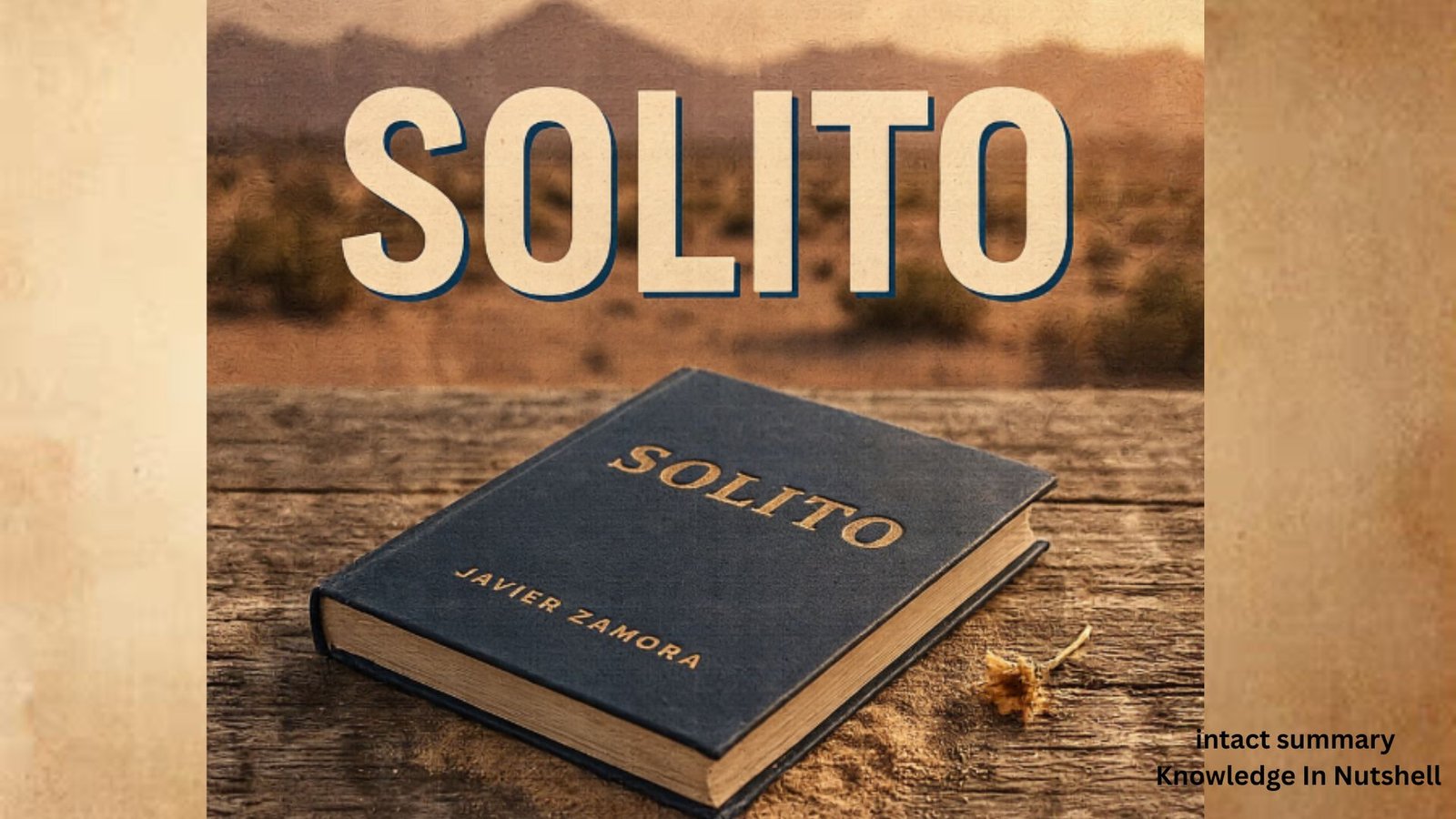
Imagine being nine years old and traveling 3,000 miles almost completely alone, without your mom or dad next to you. That is exactly what happened to Javier Zamora, and he wrote it all down in his memoir called Solito. If you searched for “solito,” you are probably trying to figure out what this book is about, whether it is worth reading, or you need a clear summary for school or your book club.
You are in the right place. This guide breaks down everything about Solito: A Memoir in simple, easy-to-follow language — the plot, the characters, the themes, and the ending — without spoiling everything if you don’t want it spoiled. We built this guide by reading through the book’s real content, cross-checking details across trusted literary sources, and organizing it so you can find exactly what you need in seconds.
Whether you are a casual reader deciding if this book deserves a spot on your shelf, a student working on a report, or someone in a book club looking for discussion material, this article covers it all: background information, a spoiler-free overview, a full detailed summary, character breakdowns, major themes, symbolism, common misunderstandings, and a large FAQ section answering the most common questions people ask about this acclaimed poet’s unforgettable literary memoir.
Quick Answer
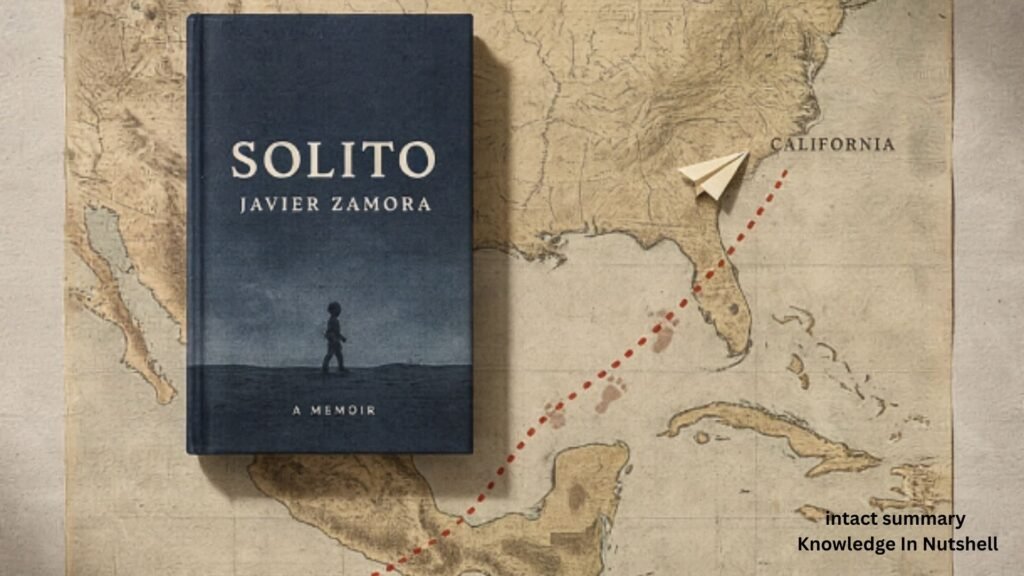
Solito: A Memoir by Javier Zamora tells the true story of the author’s dangerous journey as a nine-year-old boy traveling alone from El Salvador through Guatemala and Mexico to reunite with his parents in the United States. Guided by hired coyotes and a rotating group of fellow travelers who become his surrogate family, Javier’s planned two-week trip turns into a terrifying two-month ordeal involving boats, deserts, and arrests before he finally reaches his parents in California.
What Is Solito About? (Book Overview & Background)
Solito is a 2022 memoir written by Javier Zamora, a Salvadoran poet who had already earned praise for his poetry collection Unaccompanied before turning to prose. The book falls into the genres of memoir, autobiography, and immigration literature, and it is written from the child’s-eye view of Zamora’s nine-year-old self, even though he wrote it decades later as an adult.
The story is set in 1999, beginning in La Herradura, El Salvador, and moving through Guatemala, across Mexico, and finally into Arizona and California in the United States. Zamora narrates the entire book in present tense, which makes readers feel like they are living the journey north right alongside him instead of just reading about it after the fact.
Also Read:/how-to-tame-a-wild-tongue-summary/
Solito was published in September 2022 by Hogarth Press and quickly became a New York Times bestseller. It was picked by Jenna Bush Hager for her “Read With Jenna” book club on the Today Show, and it won the Los Angeles Times Christopher Isherwood Prize for Autobiography, the American Library Association’s Alex Award, and the 2023 American Book Award. It was also named one of the 100 Notable Books of 2022 by The New York Times and a Kirkus Reviews Best Nonfiction Book of the Century.
Before diving into the summary, it helps to know one important concept: the title itself. “Solito” is Spanish for “all alone” or “little alone one” — a fitting name, since the entire memoir is about a small boy navigating an enormous, frightening world mostly by himself, even while surrounded by other people.
Who Is Javier Zamora? (Author Background)
Javier Zamora is an acclaimed poet and author born in La Herradura, El Salvador. His father fled El Salvador when Javier was just one year old, and his mother left when he was almost five — both parents’ departures were tied to the aftermath of the U.S.-funded Salvadoran Civil War. Javier stayed behind with his grandparents until, at age nine in 1999, he made his own journey north to reunite with them.
Before writing Solito, Zamora published a poetry collection titled Unaccompanied, which explored the emotional impact of war and migration on his family. His background as a poet shows up clearly in Solito — critics have repeatedly praised the book’s poetic storytelling, lyrical prose, and vivid writing. Zamora has held prestigious fellowships, including a Stegner Fellowship at Stanford and a Radcliffe Fellowship at Harvard, and he became a U.S. citizen years after his journey.
Solito Spoiler-Free Summary
If you want the general shape of the story without knowing exactly how it ends, here it is: Solito follows nine-year-old Javier as he leaves his grandparents and aunt in El Salvador to make the treacherous journey to the United States, where his parents are waiting. He travels with a group of strangers under the guidance of a coyote, expecting the trip to take about two weeks.
Instead, plans fall apart repeatedly — smugglers change, routes shift, and border crossings fail — stretching the journey into roughly two months filled with danger, fear, and unexpected kindness. Along the way, Javier forms deep bonds with a few fellow migrants who essentially become his temporary family, and the emotional heart of the book is really about found family just as much as it is about physical survival.
Full Plot Summary (With Spoilers)
Spoiler Warning: This section reveals major plot details and how the story ends.
Javier’s story begins in his hometown of La Herradura, El Salvador, where he lives with his grandparents (whom he calls Abuelita and Don Chepe) and his aunt, Tía Mali. His parents already migrated years earlier — his father when Javier was a baby, and his mother when he was nearly five — both fleeing the aftermath of El Salvador’s civil war. Javier’s family arranges for him to travel north with a trusted coyote named Don Dago, the same smuggler who had safely guided his mother years before.
At first, Javier’s grandfather travels with him for part of the trip, but eventually the old man has to turn back, leaving Javier to continue with a family friend named Marcelo, who was asked to keep an eye on him but shows little real interest in doing so. The group moves through Guatemala and toward Mexico, and it’s here that Javier meets the people who will matter most for the rest of the journey: Patricia, a mother traveling with her own daughter, Carla, and later Chino, a nineteen-year-old man who tells Javier he reminds him of his own younger brother.
The planned two weeks quickly unravel. Transportation plans change constantly — buses swap for cramped, rough boat rides across open water that leave passengers seasick and terrified. Don Dago eventually abandons the group in Oaxaca, handing them off to a series of other coyotes and “polleros,” guides whose only job is getting migrants across the actual U.S. border. The group is stopped at checkpoints, searched at gunpoint, and forced to keep moving in secrecy, sometimes pretending to be a real family to avoid suspicion, with Patricia posing as Javier’s mother and Carla as his sister.
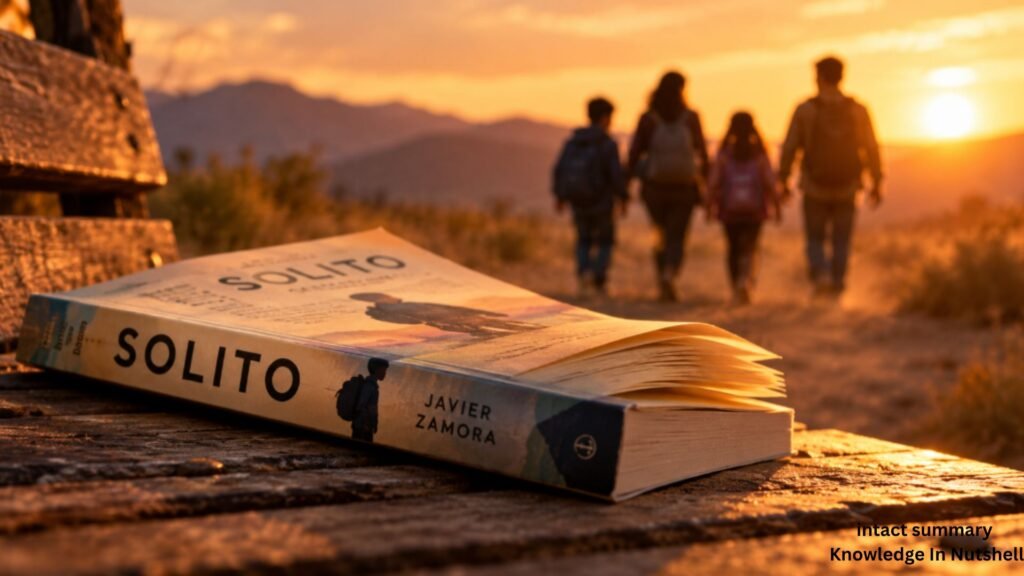
The most dangerous stretch comes in the Arizona Sonoran Desert, where the group faces a grueling trek on foot, rationing water and walking through extreme heat and freezing nights. Their first attempt to cross the U.S. border fails — after finally making it onto American soil and hiding to wait for a pickup van, exhaustion catches up with them, and they are caught by Border Patrol and sent back. A second, equally harrowing attempt eventually succeeds, though not without more fear, more walking, and more uncertainty about whether they will make it at all.
Throughout the ordeal, it is really Patricia, Carla, and Chino — not the adults paid to protect him — who care for Javier, making sure he’s fed, clean, and emotionally steady. When the group is separated near the end of the journey, Javier must say goodbye to this “found family” so he can continue on to be processed and eventually released to relatives before reaching Northern California, where his parents are waiting.
The final, emotional scene of the memoir centers on the long-awaited reunion — after nearly two months apart from everything familiar, Javier is finally back in his parents’ arms, closing a journey that began as a “two-week trip” and became a defining, life-altering ordeal.
Main Characters in Solito
Character: Javier Zamora
Role & Arc: Javier is both the author and the narrator and protagonist of the memoir. At the start, he is an innocent, somewhat sheltered nine-year-old boy who imagines the trip as an adventure. Over the course of the journey, he is forced to grow up quickly, learning to manage fear, loss, and uncertainty while still holding onto small comforts of childhood, like fantasizing about drinking an ice-cold Coke once he reaches “La USA.”
Character: Patricia
Role & Arc: Patricia is a Salvadoran woman traveling with her daughter toward Virginia to reunite with her own family. She becomes a surrogate mother to Javier — initially a bit reserved, she grows fiercely protective, making sure he is bathed, fed, and comforted. She is portrayed as strong, discerning, and unwilling to be pushed around by the men guiding the group.
Character: Carla
Role & Arc: Carla is Patricia’s daughter and a few years older than Javier. She starts out distant but becomes like an older sister, offering emotional support and companionship through the hardest stretches of the trip.
Character: Chino
Role & Arc: Chino is a nineteen-year-old migrant who tells Javier he reminds him of his own brother who died. He transforms from someone Javier initially mistrusts into a brotherly, protective figure, at one point risking his own safety by going back for the group instead of running from Border Patrol alone.
Character: Marcelo
Role & Arc: Marcelo is asked by Javier’s grandfather to watch over him during the trip, but he remains distant and largely uninvolved in Javier’s day-to-day care. He has attempted the journey before and was deported, and he hopes to find construction work once back in the U.S. He represents a contrast to the found family Javier builds with Patricia, Carla, and Chino.
Character: Don Dago
Role & Arc: Don Dago is the experienced coyote hired to guide Javier north — the same smuggler who once guided Javier’s mother safely. He abandons the group partway through the journey in Oaxaca, forcing them to rely on a rotating cast of less familiar guides.
Character: Javier’s Grandparents (Abuelita and Don Chepe)
Role & Arc: Javier’s grandparents raise him after both of his parents migrate. Don Chepe, a former soldier with a difficult, sometimes volatile temper, still becomes a caring guide during the early part of the trip before he must turn back, while Abuelita represents the warm, nurturing home Javier leaves behind.
Key Themes Explained
Migration and the Human Cost of Immigration
At its core, Solito is about the lived reality of immigrants rather than abstract immigration debate headlines. By narrating events through a child’s perspective, Zamora humanizes immigration and pushes back against migrant stereotypes, showing readers the fear, boredom, hope, and exhaustion behind a single border crossing story. This matters to readers because it turns a political topic into a deeply personal, relatable human experience.
Found Family and Human Connection
Javier’s biological family is scattered across two countries, so the bonds he forms with Patricia, Carla, and Chino become his real support system during the journey. This theme shows up constantly — in small acts like Patricia washing Javier’s clothes or Chino calling him “hermanito” (little brother). It matters because it reveals how strangers can become the people who keep us safe when we need it most.
Childhood Innocence Versus Forced Maturity
Javier is only nine, and the book never lets readers forget it — he struggles with simple tasks like tying his shoes and is frightened by things like flush toilets. Yet he is also expected to stay quiet during dangerous checkpoints, walk for miles through the desert, and process trauma most adults never face. This contrast is one of the most emotionally powerful threads in the memoir.
Memory, Trauma, and Healing Through Writing
Zamora has spoken about how writing Solito decades after the actual journey helped him process trauma he carried for years. The memoir itself becomes an act of healing, which matters to readers interested in how storytelling can help people make sense of difficult past experiences.
Hope and Resilience
Despite repeated setbacks — failed border crossings, an abandoned coyote, exhausting desert treks — Javier and his group repeatedly return to a simple phrase: “está bien” (“it’s okay”). This repeated affirmation captures the theme of hope carrying people through circumstances that otherwise feel impossible.
Symbolism and Literary Devices
The title “Solito” itself functions as a symbol — it means “all alone,” yet the irony of the book is that Javier is never truly alone; he is constantly surrounded by people who step in as protectors. This tension between the title and the actual story is one of the memoir’s most meaningful literary choices.
The desert crossing operates as more than just a setting — it symbolizes the extreme, often invisible dangers people face for the chance at a better life, with its blistering days and freezing nights mirroring the emotional highs and lows of the entire journey.
Nicknames given to Javier throughout the book (like “cipotillo” and “hermanito”) function as small symbols of belonging, marking each moment someone in the group chooses to treat him with warmth and closeness rather than as a burden.
Present-tense, first-person narration is a deliberate literary device. By writing as though events are happening right now, rather than recalling them from decades later, Zamora immerses readers in the immediacy and unpredictability that a nine-year-old would have actually felt, rather than filtering it through adult hindsight.
Setting: Where Does Solito Take Place?
The memoir spans multiple countries and regions, and understanding the geography helps make sense of the journey’s scale:
- La Herradura, El Salvador — Javier’s hometown, where the story begins
- Guatemala — an early stage of the overland journey north
- Oaxaca and Guadalajara, Mexico — key stops where coyotes change and plans fall apart
- Tijuana, Mexico — a staging point near the U.S. border
- Arizona Sonoran Desert — the site of the most dangerous, grueling stretch of the trip
- Northern California — where Javier’s parents live and where the journey ultimately ends
- Virginia — the destination for Patricia and Carla, illustrating how migrant groups scatter to different parts of the U.S. after crossing
Reception, Awards, and Why This Memoir Matters
Solito was widely celebrated by both critics and readers upon release. It became a New York Times bestseller, was chosen as a Read With Jenna book club pick, and won several major honors, including the Los Angeles Times Christopher Isherwood Prize for Autobiography, the ALA Alex Award, and the 2023 American Book Award. It was also longlisted for the PEN America Literary Awards and named among the best books of the year by outlets like NPR, The Washington Post, and Kirkus Reviews.
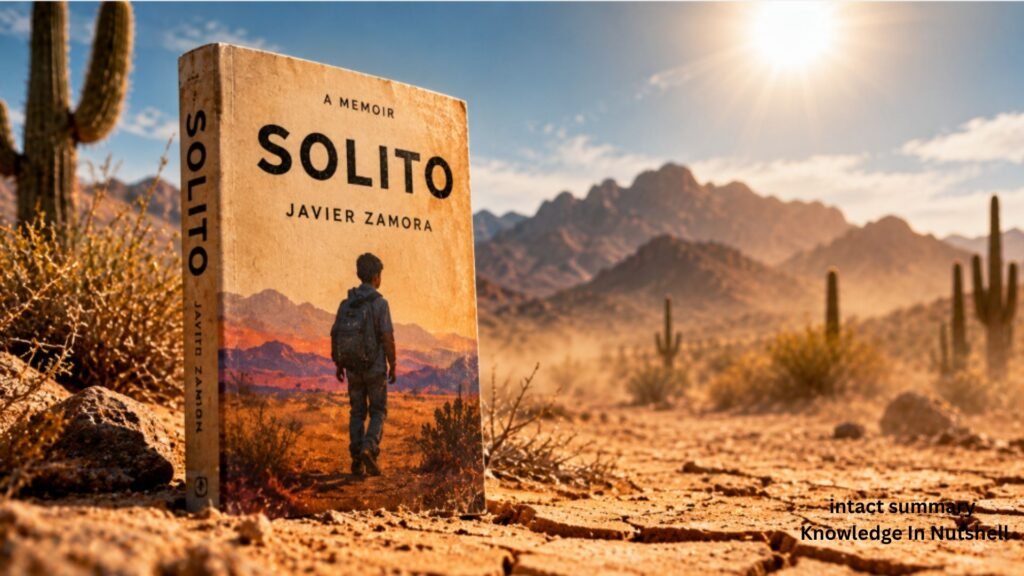
Critics have particularly praised how the memoir avoids turning immigration into a purely political topic, instead offering an intimate account that builds topical authority on the emotional and human side of migration — something few books manage with this level of craft and honesty.
Author / Editorial Note
This summary and analysis were built through careful research, including reviewing publisher descriptions, verified excerpts, professional literary reviews, and reputable study-guide sources, then cross-referencing details for accuracy before writing everything in original language. Direct quotations from the actual book are avoided or kept extremely brief and are never presented as a substitute for reading the memoir itself. This guide is intended as a helpful companion for readers, students, and book clubs — not a replacement for the original text.
Frequently Asked Questions About Solito
1. What is Solito by Javier Zamora about?
Solito is a memoir about the author’s real journey as a nine-year-old traveling alone from El Salvador to the United States to reunite with his parents, guided by hired coyotes and a group of fellow migrants.
2. Is Solito a true story?
Yes. Solito is a nonfiction memoir based on Javier Zamora’s actual childhood migration in 1999, though some details and names were adjusted for privacy.
3. How old was Javier Zamora during his journey?
He was nine years old when he made the 3,000-mile trip from El Salvador to the United States.
4. How long did Javier’s journey take?
The trip was originally planned to take about two weeks but ended up lasting close to two months due to setbacks like a coyote abandoning the group and failed border crossings.
5. What does the title “Solito” mean?
“Solito” is Spanish for “all alone” or “little alone one,” referring to Javier’s status as an unaccompanied child migrant, even though he is rarely physically alone during the journey.
6. Who are the main characters in Solito?
The main figures are Javier Zamora (the narrator), Patricia (a surrogate mother figure), Carla (Patricia’s daughter), Chino (a young man who becomes like an older brother), and Marcelo (a family friend who is largely uninvolved).
7. How does Solito end?
The memoir ends with Javier finally reuniting with his parents in Northern California after two failed and one successful attempt to cross the U.S. border, closing out a nearly two-month journey.
8. Is Solito appropriate for young readers?
The memoir is generally recommended for readers aged 18 and up due to depictions of violence, danger, and mature emotional content, though older teens studying immigration topics in school may also read it with guidance.
9. What genre is Solito?
Solito is a memoir, falling under autobiography and immigration literature, written by a poet, which gives it especially lyrical, vivid prose.
10. What awards has Solito won?
It won the Los Angeles Times Christopher Isherwood Prize for Autobiography, the American Library Association’s Alex Award, and the 2023 American Book Award, among other honors and longlist recognitions.
11. Is Solito worth reading?
Yes — critics and readers alike praise it for its vivid, emotionally honest storytelling and its ability to humanize the immigrant experience through a child’s perspective, making it a strong pick for readers interested in memoirs or immigration stories.
12. What is the main theme of Solito?
The central themes include the human cost of migration, found family and human connection, childhood innocence versus forced maturity, and resilience in the face of danger.
13. Who is the coyote in Solito?
Don Dago is the main coyote hired to guide Javier’s group north, though he eventually abandons them partway through the journey, leaving them with other guides.
14. Did Javier Zamora become a U.S. citizen?
Yes, Javier Zamora eventually became a U.S. citizen years after his 1999 journey and went on to become an acclaimed poet and author.
15. What should I read after Solito?
Readers who enjoyed Solito often move on to Enrique’s Journey by Sonia Nazario, The Distance Between Us by Reyna Grande, or Zamora’s own poetry collection, Unaccompanied.
Conclusion
Solito is the true story of Javier, a brave nine-year-old boy from El Salvador. He had to travel a very long way, almost 3,000 miles, all by himself, to see his mom and dad again. The trip was supposed to take only two weeks, but it turned into almost two whole months! Along the way, Javier met new friends named Patricia, Carla, and Chino. They took care of him like a real family, even though they had just met.
They walked through hot deserts, rode in scary boats, and hid from border patrol. It was hard and scary, but they never gave up. In the end, Javier finally hugged his mom and dad again. This book teaches us that even when things feel really hard, kindness from new friends can help us feel brave and safe.