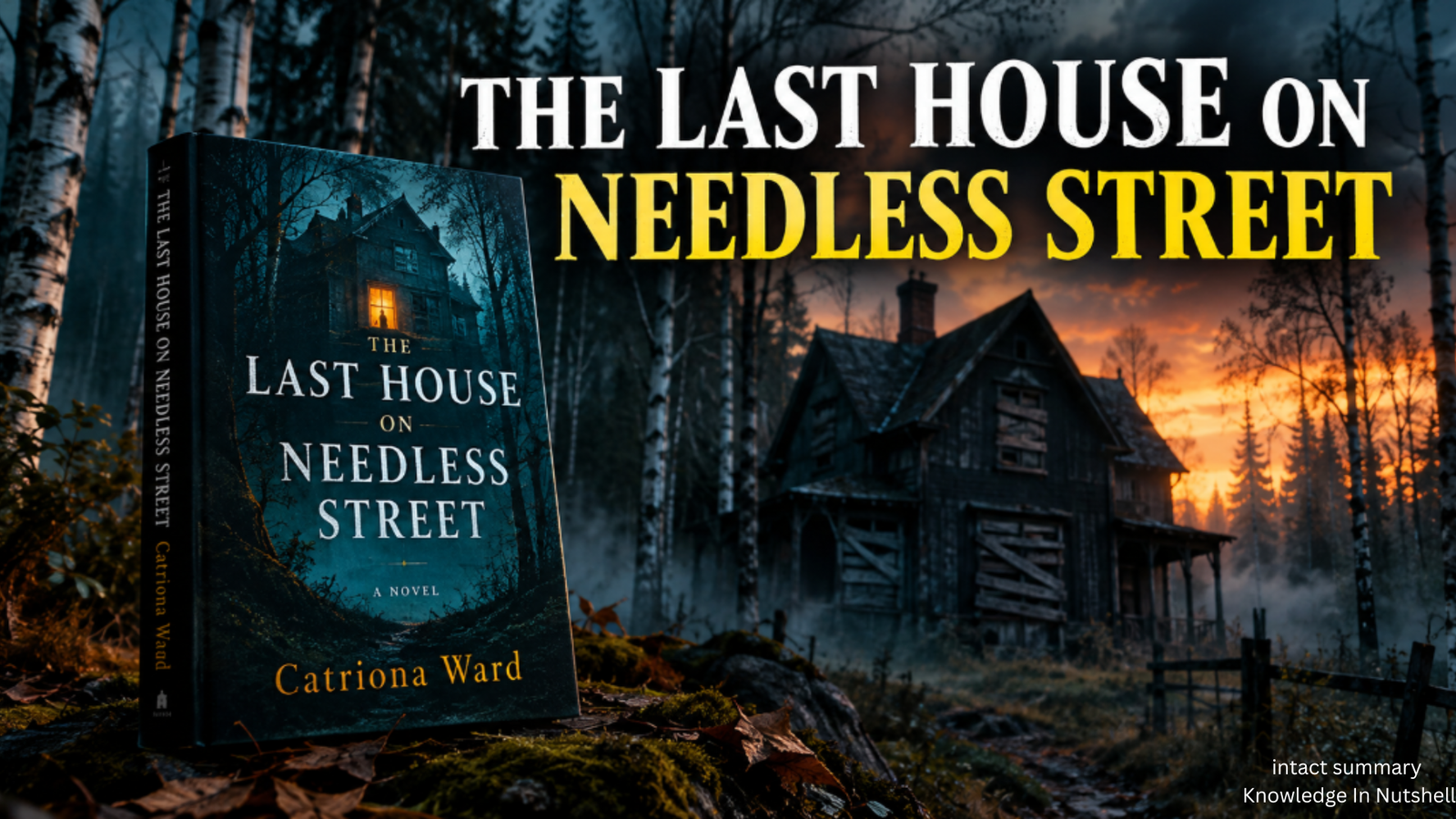
The Last House on Needless Street by Catriona Ward is a psychological horror novel that pretends to be one kind of story and then turns into something completely different. It looks like a simple missing child mystery about a mysterious serial killer hiding in a creepy house in the woods. By the end, it becomes a heartbreaking story about childhood trauma, dissociative identity disorder, and how the human mind protects itself from unbearable pain.
In this guide, you will find a spoiler-free overview for those who have not finished the book yet, a full spoiler summary for those who have, a breakdown of every major character, an explanation of the book’s biggest twists, and answers to the most common questions readers search for. We have cross-checked every detail against the original novel and reliable literary sources, so you can trust that what you read here is accurate — not just another generic AI-written summary that could apply to any horror book.
What Is The Last House on Needless Street About?
The Last House on Needless Street follows Ted Bannerman, a lonely man who lives with his teenage daughter Lauren and his cat Olivia in a boarded-up house at the edge of the woods. Years earlier, a six-year-old girl named Lulu vanished near a lake, and Ted was briefly a suspect.
When Lulu’s grieving older sister Dee moves in next door to investigate him, old secrets buried in the woods — and inside Ted’s own mind — begin to surface. The novel is famous for its unreliable narrators and a shocking twist about who Ted really is.
Book Overview and Background
Published in 2021, The Last House on Needless Street is a psychological horror, gothic thriller, and mystery novel by British author Catriona Ward. It was released in the UK by Viper Books and in the US by Tor Nightfire, and it quickly became a word-of-mouth sensation, earning praise from horror giant Stephen King, who called it “a true nerve-shredder that keeps its mind-blowing secrets to the very end.”
Also Read:/house-of-sky-and-breath-chapter-summary/
The novel won the Shirley Jackson Award for Best Novel and the August Derleth Prize for Best Horror Novel at the British Fantasy Awards, and it was a finalist for the World Fantasy Award. It was also chosen as a book club pick for BBC2’s Between the Covers. Ward is known for gothic fiction, having written Rawblood and Little Eve before this novel, but Needless Street marked her move from historical gothic settings into contemporary gothic horror — a modern-day story with old-fashioned dread.

The story is set in a rural, wooded area of northern Washington state, near a lake where a child once disappeared. The isolated house, the dark forest, and the quiet cul-de-sac all become part of the horror itself. Before you start, it helps to know one important thing: this book is not a typical haunted-house story. There are no ghosts. The real horror comes from something much closer to home — the human mind, and what trauma can do to it.
Plot Summary of The Last House on Needless Street
Spoiler-Free Summary
Ted Bannerman lives alone in a boarded-up house at the end of Needless Street, right next to a thick, quiet forest. He shares his home with his teenage daughter Lauren, who is never allowed to leave, and his beloved cat Olivia, who spends her days napping and reading the Bible. Ted drinks too much, struggles to hold a job, and often loses stretches of time he cannot account for.
Eleven years earlier, a six-year-old girl nicknamed “Little Girl with Popsicle” — her real name was Lulu — disappeared from a nearby lake and was never found. Ted was briefly investigated but never charged. Now, a woman named Dee — Lulu’s grief-stricken older sister — moves into the house next door. She is convinced Ted is the man who took her sister, and she is determined to prove it, watching his every move.
As Dee’s investigation closes in, and as Ted’s memory gaps grow more frequent and unsettling, readers are pulled into a story told from four very different points of view. Nothing about this family — or this neighborhood — is quite what it seems. This dark psychological thriller is built entirely around plot twists, so if you want the full experience, read the book before scrolling further.
Full Summary (With Spoilers)
The novel alternates between four narrators: Ted, Olivia the cat, Lauren, and Dee. Ted, Olivia, and Lauren all speak in first person, while Dee’s chapters are told in third person — a structural choice that becomes hugely important later.
As the story unfolds, Ted appears increasingly suspicious. He blacks out, wakes up in strange places, and has disturbing thoughts about the woods behind his house, where he has buried something he refuses to name. Dee, meanwhile, digs deeper into Ted’s past, breaks into his house, and becomes convinced she has finally found her sister’s kidnapper.
The novel’s central twist arrives roughly two-thirds of the way through: Lauren and Olivia are not real. They are alternate personalities, or “alters,” created by Ted’s mind as a result of the horrific childhood abuse he suffered at the hands of his own mother. Ted’s mother — a nurse the reader comes to know only as “Mommy” — is revealed to be the true monster of the story.
She believed her son was inherently dangerous and subjected him to years of physical and psychological torment, and it is ultimately revealed that she, not Ted, was responsible for the deaths of children, including what happened to Lulu. Ted’s mind fractured under the abuse, splitting off Lauren (who carries his anger and grief) and Olivia (who carries his need for comfort and protection) as separate identities sharing his body.
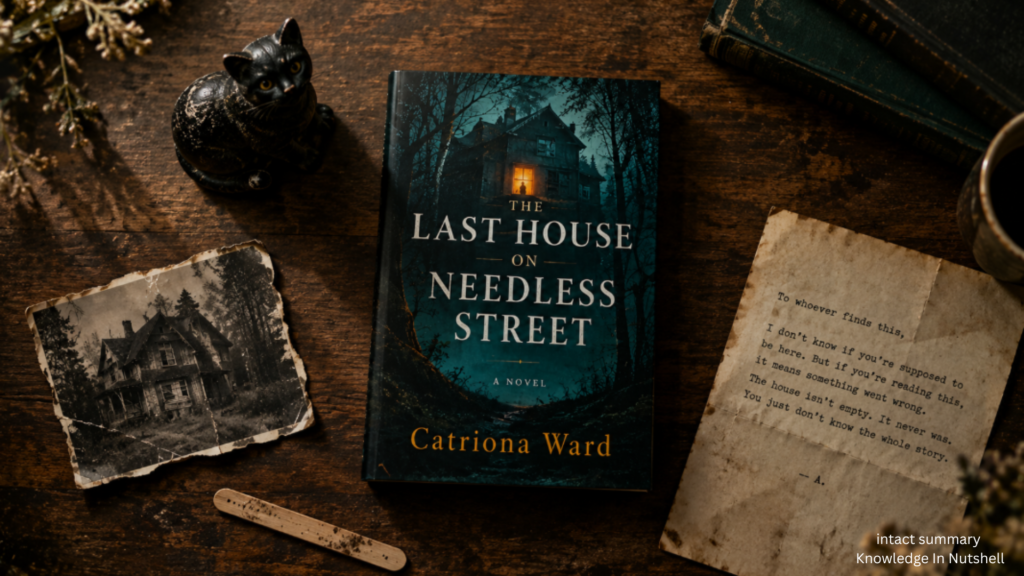
The second major twist involves Dee herself. Dee is revealed to actually be Lulu, all grown up — a survivor living with severe dissociative amnesia, who has spent years unknowingly hunting for herself without realizing that she is the missing sister she believes she is avenging. In the story’s climax, Dee attacks Ted in the woods, leaving him for dead, believing she has finally gotten justice. Ted survives; Dee does not, dying from a snakebite shortly afterward. In the aftermath, Ted’s fractured mind begins to heal, he leads police to evidence that clears his name and exposes his mother’s crimes, and the novel closes on a quiet, hopeful note — a survivor finally beginning to live an honest life.
Main Characters in The Last House on Needless Street
Understanding the characters is the key to understanding this book, since almost nothing about them is what it first appears to be. Here is a breakdown of everyone who matters to the story.
Character: Ted Bannerman
Role & Arc: Ted is the heart of the novel and its most misunderstood figure. When the book begins, he looks like a classic horror-novel suspect: a lonely man, a loner, unemployed, drinking too much, living behind boarded-up windows with three locks on his door. He experiences frequent memory lapses and blackout moments, and he cannot explain the “damage” he sometimes discovers he’s done while he was “out.” Readers naturally suspect him of being the mysterious serial killer behind Lulu’s disappearance.
As the story unfolds, we learn the truth: Ted suffered severe childhood abuse at the hands of his mother, who convinced him from a young age that he was born evil and needed to be controlled, restrained, and punished. This trauma caused his mind to split into separate identities — a condition closely associated with dissociative identity disorder.
Ted is not a predator. He is a survivor whose personality fractured as a coping mechanism, a way to survive unbearable pain. His childlike persona and simple way of naming people (“Bug Man,” “Chihuahua Lady”) reflect just how much of his development was frozen by trauma. By the novel’s end, Ted’s fragmented identity begins to integrate, and he starts to build an honest, freer life — with real support from a friend named Rob.
Character: Lauren
Role & Arc: Lauren is introduced as Ted’s teenage daughter — a troubled child with anger issues who Ted keeps hidden from the outside world “for her own safety.” She is sharp-tongued, defiant, and often furious with Ted’s overprotective rules. Readers spend most of the book assuming she is a real, living girl trapped in a dangerous household.
The twist is that Lauren is not a separate person at all. She is one of Ted’s alternate identities — the part of him that holds his rage, his grief, and his instinct to fight back against the world that hurt him. Her chaotic, sometimes violent presence in the narrative reflects the anger Ted was never allowed to express as a child. Lauren’s “sporadic” comings and goings throughout the book are really Ted’s mind shifting between identities.
Character: Olivia
Role & Arc: Olivia is Ted’s cat — and one of the most memorable unreliable narrators in recent horror fiction. She narrates her chapters with total sincerity, describing her devotion to “her Ted,” her love of naps, and her habit of reading the Bible for guidance. Olivia believes she has a sacred mission from God to protect Ted from the “Murderer” she senses is close by.
Like Lauren, Olivia is also one of Ted’s alters, not a literal talking cat. She represents the softer, more nurturing part of Ted’s fractured psyche — the part that offers him comfort, companionship, and a sense of purpose when the rest of his mind is in crisis. Ward’s decision to give this identity the form of a cat, rather than a human alter, is one of the book’s boldest and most original choices, and it keeps the horror from ever tipping into something exploitative.
Character: Dee
Role & Arc: Dee is introduced as Lulu’s grieving older sister, a woman whose entire adult life has been consumed by the unsolved disappearance of Lulu. She moves in next door to Ted specifically to investigate him, convinced he is her sister’s kidnapper. Dee is written in third person, unlike the other narrators — a small but important structural clue that something about her perspective is different from everyone else’s.
The novel’s second major twist reveals that Dee is actually Lulu herself, now grown, living with dissociative amnesia that has erased her memory of her own identity. She has spent years unknowingly hunting for herself, believing she is avenging a sister who was, in fact, her own lost past.
Her obsession, her survivor’s guilt, and her mounting paranoia all take on new meaning once this is revealed. Dee’s arc ends in tragedy: she attacks Ted in the woods, believing she has finally caught her sister’s killer, and dies from a snakebite shortly after — never learning the truth about who she really was.
Character: Lulu
Role & Arc: Lulu is the six-year-old girl whose disappearance from a lake in northern Washington sets the entire novel in motion. Known in news reports as the “Popsicle girl” because of an old photograph, her case went cold for over a decade, and her family — especially her sister — never recovered from the loss.
Lulu never appears as a present-day character in her own right; instead, her story becomes entangled with Dee’s, since Dee turns out to be Lulu after all. Her true fate — connected to the crimes of Ted’s mother — is one of the book’s most devastating reveals.
Character: Ted’s Mother (“Mommy”)
Role & Arc: Though she never appears in a present-day chapter, Ted’s mother is the true villain of the novel. A nurse by profession, she believed her son was inherently dangerous and raised him through severe abuse, restraint, and psychological manipulation.
Multiple reviewers describe her as “the real villain of the story,” and her crimes — including responsibility for what happened to Lulu — are only fully revealed at the very end. Her abuse is the root cause of everything else in the novel: Ted’s fractured identity, Lauren, Olivia, and the buried secrets in the woods.
Character: Rob
Role & Arc: Rob is a minor but important character who becomes Ted’s friend later in the story. Unlike Dee, who approaches Ted with suspicion and surveillance, Rob offers Ted genuine friendship and emotional support. His presence gives Ted a safe relationship in which to begin processing his trauma, and he plays a quiet but meaningful role in Ted’s path toward healing and trauma recovery by the novel’s end.
Character Relationships Explained
- Ted and Lauren: What looks like a strained, sometimes volatile father-daughter relationship is really Ted’s relationship with one part of his own fractured mind. Their tension reflects the conflict between Ted’s need for control and the rage his abuse left behind.
- Ted and Olivia: This human-animal relationship is the emotional anchor of the book on the surface — but underneath, it’s Ted’s relationship with his own capacity for comfort, loyalty, and self-protection.
- Dee and Lulu: What appears to be a story of sisterhood and one sister’s decade-long search for another is revealed to be one woman’s search for her own erased identity, making this one of the most poignant relationship twists in the book.
- Dee and Ted: Their relationship is built on mutual suspicion — Dee investigating Ted as a suspected killer, while Ted senses a “Murderer” is watching him too. Both are right to be afraid, but not for the reasons either of them believes.
- Ted and Rob: A friendship built on safety rather than suspicion, giving Ted the space to begin confronting his trauma without fear of judgment.
Key Themes Explained
Trauma and the Fractured Mind
The central theme of The Last House on Needless Street is how childhood trauma can shatter a person’s sense of self. Ted’s dissociative identity disorder is not used for cheap shock value; instead, the novel treats his condition with real empathy, showing how the mind creates alternate identities as a defense mechanism — a way of surviving pain that would otherwise be unbearable. Lauren and Olivia are not “evil twins” or horror-movie tricks. They are pieces of Ted that had to exist so the rest of him could keep going.
Memory, Guilt, and Denial
Both Ted and Dee struggle with unreliable memory. Ted’s mind hides his past from him to protect him; Dee’s mind hides her own identity from her because the truth is too painful to hold. The novel argues that memory is not always a reliable narrator of our own lives — sometimes forgetting is the only way the human brain knows how to survive.
The Line Between Monster and Victim
One of the book’s most powerful ideas is how easily society mislabels victims as monsters. For most of the novel, readers are led to see Ted as a dangerous serial killer. By the end, we understand he is a survivor of severe abuse, and the real predator was hiding in plain sight the whole time.
Isolation and Found Family
Ted, Lauren, and Olivia form a “family” — even though two of them exist only inside Ted’s mind. This unconventional household speaks to a deeper theme of companionship and emotional survival: even a mind under siege will find a way to create connection and comfort for itself.
Healing After Survival
The novel ends not with punishment, but with the slow, hopeful process of trauma recovery. Ted’s personalities begin to integrate, and with the support of a real friend, Rob, he starts to build an honest life. This theme of living after survival — not just surviving trauma, but learning to live beyond it — is what elevates the book above a standard horror novel twist ending.
Symbolism and Literary Devices
- The Boarded-Up House: The house itself mirrors Ted’s mind — closed off from the outside world, dark, decaying, and hiding secrets behind locked doors. As reviewers have noted, everything about the house is “old, dirty, or broken,” just like the psyches of the people living inside it.
- The Dark Forest: The woods behind Ted’s house represent buried trauma — literally, since Ted has buried physical objects there, and figuratively, since the forest holds the truth about his childhood and his mother’s crimes.
- Olivia the Cat: Beyond being an alter, Olivia symbolizes innocence and faith. Her devotion to reading the Bible and her belief in a divine mission reflect Ted’s deep, childlike need for meaning and protection in a world that offered him neither as a child.
- Mirrors: Ted removes the mirrors from his house because they upset Lauren — a small detail that becomes deeply symbolic once readers understand that “Lauren” is a part of Ted himself, unable to bear seeing his true reflection.
- The “Little Girl with Popsicle” Photograph: This media nickname for Lulu symbolizes how tragedy gets flattened into a headline, stripping a real child of her name and her humanity — a theme that echoes throughout Dee’s arc as well.
Unreliable Narrators and Multiple Points of View
This novel’s narrative structure is one of the most talked-about elements among readers, and it’s central to why the book works so well. The story is told through four multiple points of view:
- Ted — first person, childlike, gap-filled
- Olivia — first person, written from a cat’s limited understanding
- Lauren — first person, angry and defiant
- Dee — third person, methodical and obsessive
The choice to write Dee in third-person narration while everyone else speaks in first person is not random. It quietly signals, long before the reveal, that Dee’s perspective works differently from the others — a subtle clue tied to her own hidden identity as Lulu. Meanwhile, Ted, Lauren, and Olivia sharing first-person narration reflects that they are, in fact, the same person experiencing the world through different lenses.
This structure means readers are never given a fully trustworthy account of events. Each narrator withholds information — not necessarily out of malice, but because each of them genuinely doesn’t know the full truth. This is what makes the book a true psychological mystery: the puzzle isn’t just “who took Lulu,” but “who is even telling us the truth.”
The Ending of The Last House on Needless Street Explained
First, Ted’s identity is fully explained. Lauren and Olivia are alternate personalities born from the abuse Ted suffered as a child at the hands of his mother, a nurse who convinced him he was inherently dangerous and subjected him to years of physical and psychological torment. Far from being a serial killer, Ted is a survivor. His mother — never fully named, referred to only as “Mommy” — is revealed as the true predator of the story, responsible for the deaths of children, including what really happened to Lulu.
Second, Dee’s identity is revealed. Dee is not Lulu’s grieving sister — she is Lulu, now an adult, living with dissociative amnesia that erased her memory of her own childhood and identity. She has spent years chasing a “killer” without realizing she was unknowingly chasing pieces of her own erased past.
The story reaches its climax when Dee, still believing Ted is her sister’s kidnapper, attacks him in the woods and leaves him for dead. Ted survives. Dee, however, dies from a snakebite shortly afterward — dying without ever learning the truth of who she really was, a tragic and quietly devastating end for a character driven entirely by grief and guilt.
In the aftermath, Ted’s shattered identity begins to heal. A near-death experience helps trigger a kind of integration between his fragmented selves, allowing him to remember enough of the truth to lead police to evidence that finally clears his name and exposes his mother’s crimes. The novel closes on a hopeful, quiet note: Ted, no longer trapped by secrets or by the identities he needed to survive, begins to build a real, honest life — with the support of his friend Rob.
The ending is less a traditional horror climax and more a meditation on survival: the “monster” of the story was never Ted, and the person most in need of justice is finally, if only partially, allowed to heal.
Frequently Asked Questions
What is The Last House on Needless Street about?
It’s a psychological horror novel about Ted Bannerman, a man suspected of kidnapping a child, who lives with his daughter Lauren and cat Olivia. The story reveals that Ted suffers from dissociative identity disorder caused by childhood abuse, and that Lauren and Olivia are actually parts of his own fractured mind.
Is The Last House on Needless Street based on a true story?
No. It is a work of fiction. However, it draws on real psychological concepts like dissociative identity disorder and dissociative amnesia to build its story with emotional accuracy.
How does The Last House on Needless Street end?
Ted’s identity begins to heal after a near-death encounter with Dee in the woods. He survives, leads police to evidence that clears his name and exposes his mother’s crimes, and starts a new, more honest life. Dee, who is revealed to be Lulu, dies from a snakebite without learning the truth about her own identity.
Who is the real villain in The Last House on Needless Street?
Ted’s mother. She is revealed as the true predator behind the disappearance and death of children, including what happened to Lulu, and her abuse of Ted is the root cause of his fractured identity.
Is Ted the killer in The Last House on Needless Street?
No. Ted is a survivor of severe childhood abuse, not a killer. The novel deliberately misleads readers into suspecting him before revealing the truth.
Who is Lauren really in The Last House on Needless Street?
Lauren is not a real, separate person. She is one of Ted’s alternate identities, representing the anger and pain from his childhood abuse.
Is Olivia the cat real?
No. Olivia is also one of Ted’s alters, representing comfort, faith, and protection. She is not a literal talking cat within the story’s reality.
What is the twist with Dee in The Last House on Needless Street?
Dee is revealed to actually be Lulu, the sister she believed she was searching for. She has dissociative amnesia and has spent years unknowingly investigating her own erased past.
Why does Catriona Ward write Dee’s chapters in third person?
This structural choice subtly signals, well before the twist, that Dee’s perspective is fundamentally different from the other narrators, hinting at her hidden identity.
Is The Last House on Needless Street scary?
It’s unsettling and emotionally intense rather than jump-scare scary. Much of the horror comes from psychological dread, disturbing memories, and the slow reveal of the truth rather than supernatural threats.
What awards has The Last House on Needless Street won?
It won the Shirley Jackson Award for Best Novel and the August Derleth Prize at the British Fantasy Awards, and was a finalist for the World Fantasy Award.
Is The Last House on Needless Street part of a series?
No, it is a standalone novel.
What genre is The Last House on Needless Street?
It blends psychological horror, gothic thriller, psychological thriller, and mystery.
Is The Last House on Needless Street worth reading?
Yes, for readers who enjoy twist-driven, emotionally rich horror with unreliable narrators. It has been widely praised, including an endorsement from Stephen King, and won major genre awards.
What is buried in the woods in The Last House on Needless Street?
The forest holds evidence connected to Ted’s traumatic past and his mother’s crimes — a central mystery that unravels gradually throughout the novel.
Conclusion
The Last House on Needless Street is a book about a scary mystery that turns into something much more surprising and sad. It looks like a story about a bad man in a spooky house. But it is really a story about a hurt little boy named Ted, who grew up and needed special ways to feel safe inside his own mind.
His “daughter” Lauren and his cat Olivia turn out to be parts of Ted, helping him carry his pain. The woman named Dee is looking for her missing sister, but she finds something she never expected too.