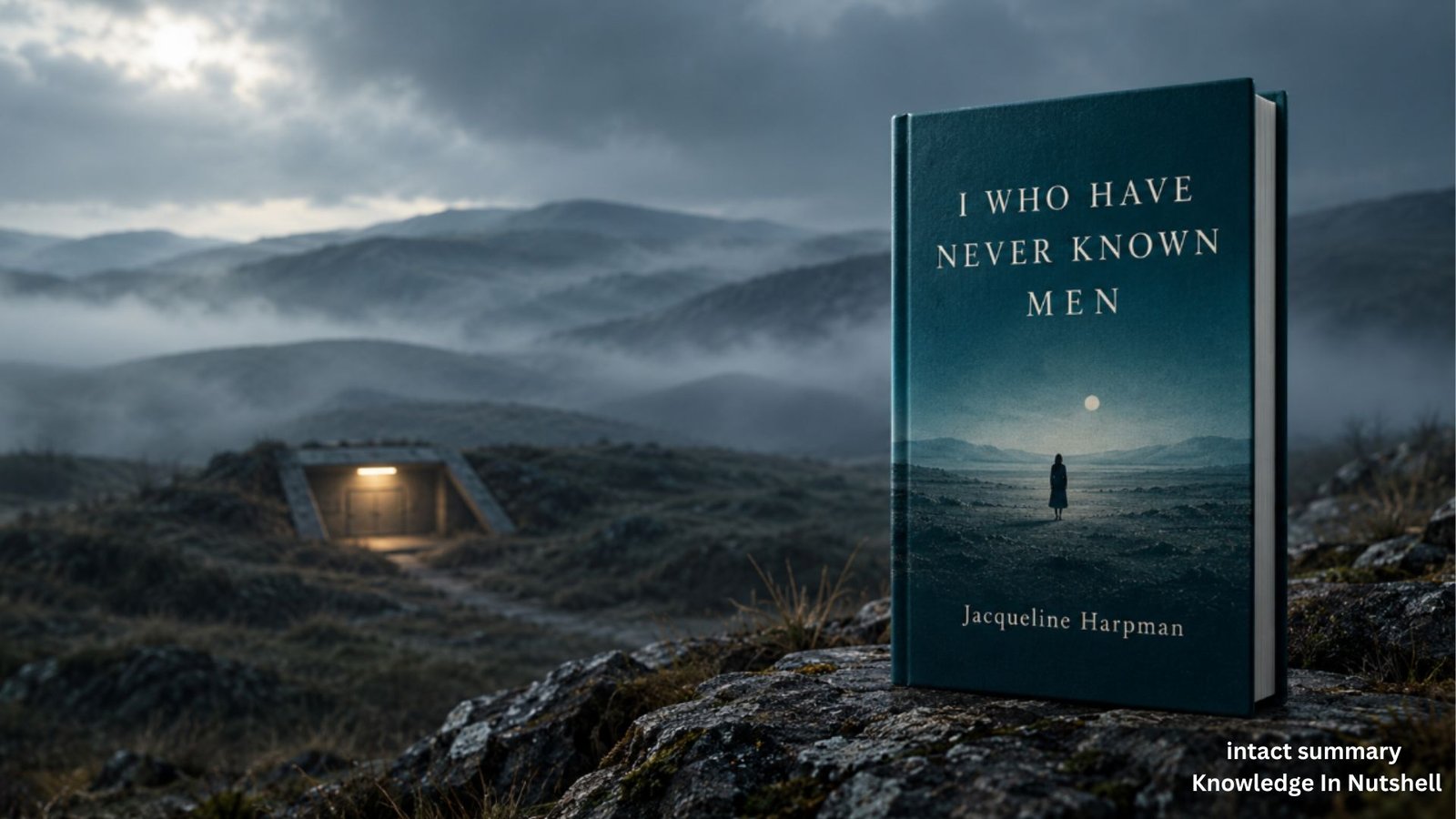
Picture a girl who grows up in a cage deep underground. She does not know how she got there. She has no memory of a home, a school, or a sunny day. A bright light never turns off, and guards watch her all day long. Then one day a loud siren goes off, and the guards are gone. That is the moment I Who Have Never Known Men turns from a prison story into something much stranger and bigger.
If you have heard of this book and cannot tell what to make of it, you are not alone. It is short, but it is not light. It is often called a dystopian novel, yet it does not act like most dystopian books. It does not explain how the world ended. It does not give you a big battle or a clear villain. Instead it asks a quiet, hard question: what makes a person human when almost everything has been taken away?
Maybe you are trying to decide whether to read it. Maybe you finished it and feel confused by the ending. Maybe your book club picked it, or your teacher assigned it. This I Who Have Never Known Men review is built for all of those readers.
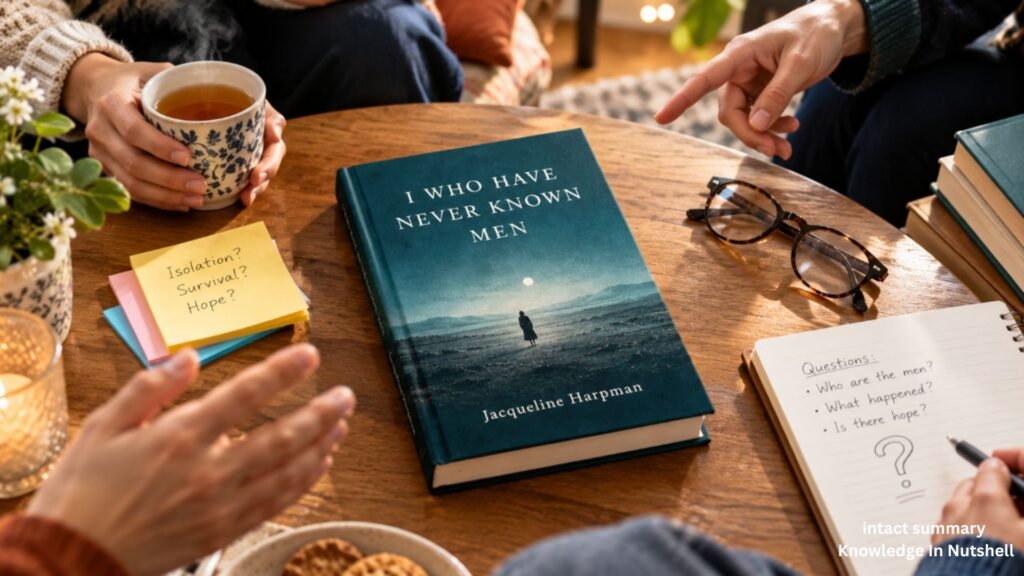
Here is the short answer. The book was written by Belgian author Jacqueline Harpman and first came out in French in 1995. The English translation by Ros Schwartz followed in 1997. It follows forty women held in an underground bunker, and the youngest of them, an unnamed girl called the Child, tells the story. It is haunting, sad, and deeply thoughtful. It is worth reading if you enjoy philosophical fiction, but it is not a happy book.
Also Read:/the-correspondent-virginia-evans-review/
In this article you will find a spoiler-free summary and a full summary with spoilers, a guide to the main characters, and a clear look at the themes, the symbolism, and the ending explained. You will also find the questions the book never answers, a list of similar books, discussion questions, and a full FAQ.
Everything here is written in my own words, in plain language. Spoilers are clearly labeled, so you can stop whenever you need to.
Quick Answer of I Who Have Never Known Men
I Who Have Never Known Men is a 1995 philosophical dystopian novel by Jacqueline Harpman. In it, thirty-nine women and one young girl are kept in an underground cage by silent male guards. When the guards suddenly disappear, the women escape into an empty, barren world with no clear explanation. The story follows the girl, known as the Child, as she searches for knowledge, meaning, and human connection while hope slowly fades around her.
What Is I Who Have Never Known Men About?
At its heart, this book is about being human. The setting is dystopian and the situation is cruel. But the story is mostly about what goes on inside a person’s mind and heart.
The tale begins in a prison underground. Forty women live in a locked cage. Guards bring food and watch them every moment. The women have only a vague memory of their old lives and no idea of how much time has passed. The oldest women remember some things about the world before. The youngest prisoner, the Child, remembers nothing. The cage is the only world she has ever known.
Then the siren sounds. The guards vanish. The women walk out into a desolate plain that seems to have no other people on it. What follows is not a fight for power. It is a long, quiet struggle to survive and to find a reason to keep living.
Who Was Jacqueline Harpman, and Why Does the Translation Matter?
Jacqueline Harpman was a Belgian author who wrote in French. She was also a psychoanalyst, which means she spent much of her working life listening to people talk about their minds, fears, and memories. Many readers feel that background shows in her novel. The Child’s thoughts are described with the care of someone who studies how people think and feel.
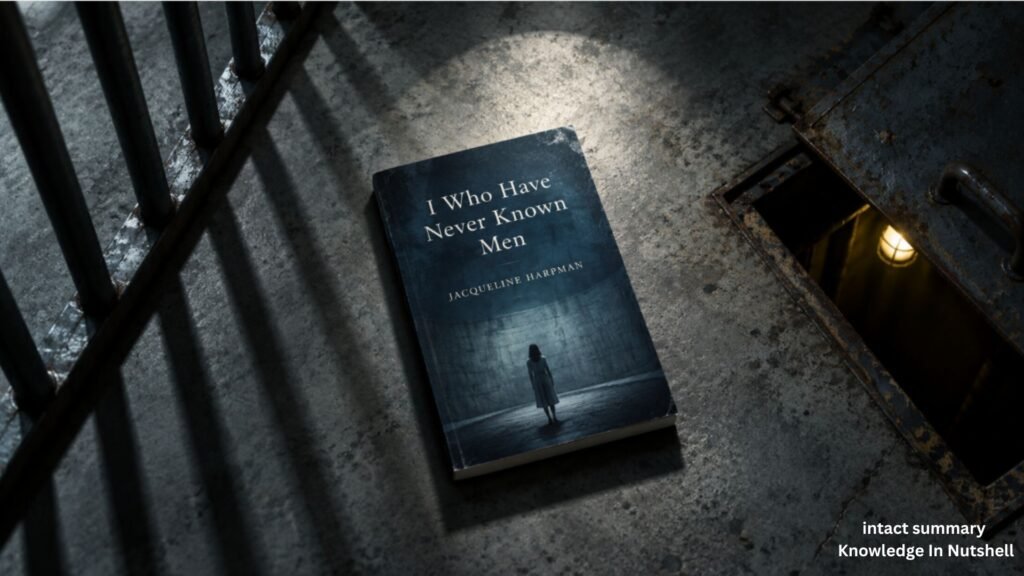
According to biographical sources, Harpman’s family left Belgium during World War II because they were Jewish, and they spent the war years in Morocco. Some readers connect that history to the book’s feeling of captivity, watching eyes, and not knowing why you are being held. Harpman never said the novel is a direct story about those events, so it is best to treat this as one possible reading and not a fact. Later we will look at how some readers also see the guards as people who are trapped, too.
She wrote many novels. Among them is Orlanda, which won a major French-language award, the Prix Médicis. But the book people most often search for today is I Who Have Never Known Men. It has found a new life with readers online, and it keeps showing up on lists of feminist dystopian novels worth reading.
Why the English Translator Deserves a Mention
The English version was translated by Ros Schwartz, and her name belongs next to the book’s. A translator does far more than swap words. She has to keep the calm, plain voice of the Child while still letting the sadness come through. The language in the English edition is spare and clear, which fits a narrator who has never learned the fancy words of the old world.
When you search for this novel, you may see both the French and English titles. The English title is a little puzzling at first. We will return to what it might mean later, because it connects to a big part of the Child’s story.
Is I Who Have Never Known Men Really a Dystopian Novel?
Think of the famous dystopian books you may know. Most have a strict society with rules, leaders, and a system to fight against. The story is shaped by how that society works. In this novel, there is almost no society at all. After the siren, there are no leaders, no laws, no cities, and no enemies to defeat. There is only a small group of women, a wide empty land, and time.
Because of this, readers use different labels:
- Dystopian fiction, because the women begin as prisoners in a cruel system
- Post-apocalyptic fiction, because the outside world seems to be empty and ruined
- Philosophical fiction, because the story is mostly about big questions
- Existential fiction, because it asks why we live when life has no clear purpose
- Feminist literature, because the cast is almost entirely women, and the story looks at female identity, friendship, and independence
So if someone asks “Is this a dystopian book?”, the helpful answer is: it starts like one, then becomes something deeper. If you want action and plot twists, you may feel let down. If you want a quiet, thought-provoking novel about survival and meaning, you may find it unforgettable.
Why the Genre Label Matters for You
If you pick up the book expecting a fast thriller, you could feel frustrated. If you pick it up expecting a slow, introspective story, you will likely enjoy it far more. Knowing this ahead of time is the best way to get the most from the reading.
I Who Have Never Known Men Plot Summary
This is the full I Who Have Never Known Men plot summary, split in two. The first part has no major spoilers. The second part tells everything, including the ending.
Spoiler-Free Summary of I Who Have Never Known Men
Deep underground, thirty-nine women and one young girl live inside a locked cage. Male guards watch them day and night. The women get food, but they have no privacy, no freedom, and no answers. They do not know why they are there. They barely remember their old lives. Time has become a blur, because the lights never go off.
The girl is the youngest prisoner, and the only one who has no memories of life before the cage. The older women call her the Child. She is moody, curious, and full of questions nobody can answer. She starts to push back against the women’s rules and the sadness hanging over the cage.
Read More:/finding-grace-loretta-rothschild-summary/
Then something happens that nobody expects, and the women’s world changes forever. What comes next is not a rescue story. It is a story about freedom, hope, friendship, and the question of what makes life worth living.
Full Summary (With Spoilers) of I Who Have Never Known Men
The novel opens with the Child already grown old. She is the last woman alive, writing down the story of the women who came before her. As she writes, she feels grief for the first time in a way she can name.
Her story then goes back to the cage. As a young girl, she is a loner. She refuses to join in the group’s habits and questions the chain of authority the older women have set up for themselves. Only one woman, Anthea, earns her respect. Anthea answers her questions patiently and starts teaching her about the world that used to exist. Slowly, the Child feels a hunger to learn, even when what she learns has no practical use. She also develops a strange crush on one of the young guards, which tells us how little she has to compare him to.
Over time, the women grow bolder. They start to talk more, think harder, and even measure time in their own way. Their days are still locked, but their minds are waking up.
Then one day, as a guard opens the hatch to hand over food, a siren blares. The guards vanish. The Child leads the way, and the women climb the stairs out of the bunker.
Outside, they find a barren, empty land. There is no city and no sign of other living people. There are other bunkers, like the one they escaped, but the people inside them are dead. At first, the women feel a rush of hope. They travel from bunker to bunker, searching for answers, food, and supplies. They find plenty of food and learn to build simple wooden houses. They settle down and form a small community.

But the hope does not last. The women slowly realize that freedom outside the cage is not the same as a good life. They are free, yet still stuck: no answers, no future, no way back. Their goal fades, and a heavy quiet takes over. One by one, the women die. Some die of natural causes. Some, sadly, choose to end their own lives because the days feel empty to them.
The Child outlives them all. She finds a luxurious bunker that feels more like a real home, and she finally enjoys a long hot bath, something the other women had always talked about missing. In that moment she feels a small piece of the old world, and she understands that she, too, is truly human. The book ends with her alone, writing in silence, still curious about the world.
Where Does I Who Have Never Known Men Take Place?
Many readers search for this: “Is the story set on Earth?” The honest answer is: the book never tells us.
Here is what we do know. The story begins in an underground bunker with a cage in the middle. After the escape, the women walk across a desolate plain of rolling, dry hills. The soil does not grow much. There are some trees, since the women use wood to build houses, and there is no sign of any city or civilization. The only landmarks are other abandoned bunkers.
The women ask themselves the same questions you might be asking: Is this Earth? Another planet? The future? Did a disaster wipe out everyone? The author never answers. The Child and the other women never find out.
Why Leave the World Unexplained?
Here are a few reasons readers give, none of them confirmed by the author:
- It puts you in the women’s shoes. You feel the same confusion they do.
- It keeps the focus on people, not on the disaster.
- It makes the story feel timeless. It could be the past, the future, or somewhere else completely.
The setting works almost like another character. Its emptiness and silence press on the women, and the reader feels that weight too.
Who Is the Child in I Who Have Never Known Men?
Character: The Child (the Unnamed Narrator)
Role & Arc
The Child is the narrator and main character. She has no name, which tells us a lot. She is known only by her age in the cage, and she never gets a name of her own that the book shares with us.
What makes her special is that she has no past. The other women are haunted by memories of homes, families, and the people they lost. The Child has none of that. She cannot miss what she never knew. That makes her feel like an outsider, and it also makes her free to think in new ways.
Her path through the book can be described in simple steps:
- Angry and alone. She starts as a sulky, rebellious girl who feels different from everyone.
- Curious. With Anthea’s help, she discovers that learning feels good, even when it is “useless.”
- Brave. When the siren sounds, she takes the lead during the escape.
- Growing up. Outside, she becomes a capable adult who helps the group build and survive.
- Alone but alive. In the end, she is the last survivor, and she keeps asking questions.
What I find most moving is her emotional awakening. She starts the book thinking she is not like the other women, and sees herself as someone who does not feel what they feel. Near the end, she realizes she has loved, she has suffered, and she is as human as any of them. The title makes more sense here too: she has never known men, and she has never known the old world, but she has still lived a full human life.
Many readers say she is one of the most memorable narrators in dystopian fiction, because her curiosity keeps shining even when hope fades.
Anthea and the Other Women: Who Else Matters in the Story?
The cast is large, but the book focuses on a few key people. The women are mostly shown as a group, which is part of the point. They are a small community trying to hold together in a world with no rules.
Character: Anthea
Role & Arc
Anthea is the Child’s teacher and guide. She is patient, kind, and thoughtful. When the Child asks hard questions, Anthea does not brush her off. She shares what she remembers about life before, including things like beauty, music, and art.
Anthea matters because she shows the Child, and us, that knowledge is a kind of gift. She helps awaken the Child’s mind. She also encourages the other women to stop sleepwalking through their days. Without her, the Child might have stayed angry and alone.
The Group of Women
The other prisoners are different ages and have different personalities. They carry heavy memories of what they lost, which is why they struggle more than the Child once they are free. Some of them find comfort in songs and stories. One, Denise, sings old songs around the fire, and those moments give the Child her first taste of what the old world called beauty.
The women are not perfect. They argue. They form small friendship circles. They sometimes keep each other at a distance, even though they depend on each other. That feels very true to life. When people are forced to live together, they build close bonds, but they do not always become friends.
The Guards in I Who Have Never Known Men
The male guards are silent and almost faceless. They are a symbol of power and watching more than real characters. The Child feels a pull toward one young guard, which is one of the first signs of her growing feelings. Later, some readers see the guards as prisoners of the same mystery, trapped in a situation they also do not understand. That is one reading, not something the book states outright.
Major Themes in I Who Have Never Known Men
The I Who Have Never Known Men themes are the real engine of this book. Because the plot is simple, the ideas do the heavy lifting. Here are the biggest ones, explained in plain words.
The Meaning of Humanity: What Makes Us Human?
This is the main question. The women have been stripped of their homes, families, freedom, and information. So what is left? The book’s answer seems to be: a lot more than you would think. The women still feel love, anger, grief, joy, and curiosity. They still tell stories and care for each other.
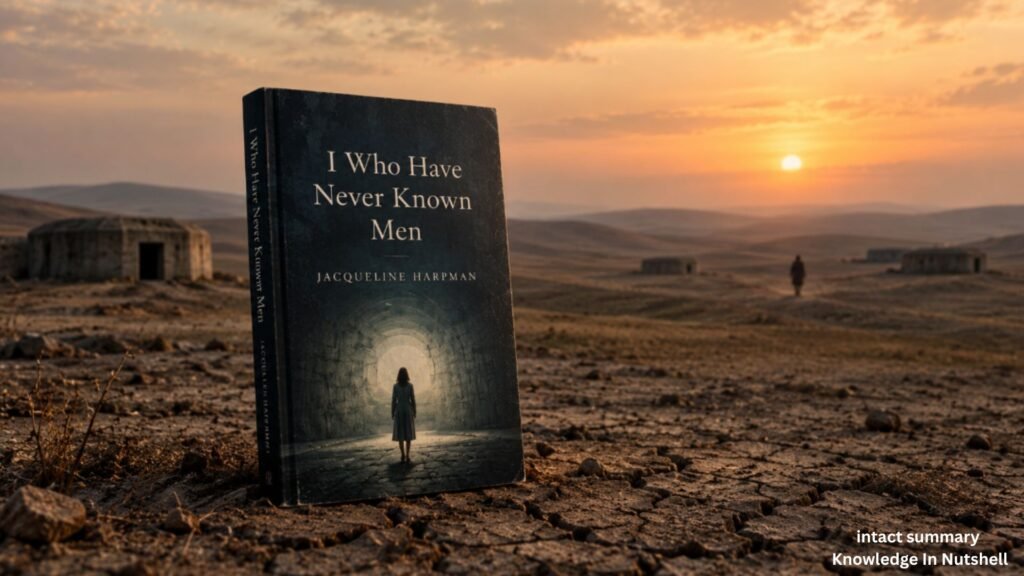
The Child is the best proof. She has no past and no culture, yet she grows into a fully human person. Her story suggests that being human is not about where you come from. It lives in how you think, feel, and connect with others.
The Meaning of Survival and Freedom
At first, freedom looks like the answer to everything. When the siren sounds, the women believe they have won. But the outside world is empty, and they soon feel almost as stuck as they were in the cage. Readers often call this freedom as an illusion. Being free in body is not the same as being free in spirit.
The book also asks whether survival is enough. The women stay alive, but staying alive feels like waiting. The story separates two ideas that people often mix together: surviving and living a meaningful life.
Hope and Despair in I Who Have Never Known Men
The book follows a slow curve. Hope is strong at the start, when the women search for answers. Then it fades as the years pass and nothing changes. This is one of the saddest parts of the story, and also one of the most honest. Harpman does not rush it. She lets the reader feel hope turning into tiredness.
Even so, the story is not only dark. The Child keeps finding small reasons to go on. That makes the book bleak but not empty.
Death, Loss, and Memory in I Who Have Never Known Men
Death is always close. The women die one by one, and the Child watches each loss. The older women also carry grief and nostalgia for a world they cannot return to. The Child has a different kind of loneliness, because she has no old life to miss. The book shows two ways of being lost: missing what you had, and never having had it at all.
Knowledge, Curiosity, and Human Identity in I Who Have Never Known Men
If one idea defines the Child, it is her hunger to learn. She wants to know things even when they have no use. That is rare in a dystopian story, where characters usually learn only what helps them survive.
Here is why it matters:
- Learning gives her power. In a place where she has no control, her mind is her own.
- It gives her a sense of self. Each new fact becomes part of who she is.
- It connects her to others. Anthea’s lessons are also the Child’s first real bond.
- It proves a point. The book suggests that curiosity is a basic part of being human, like hunger or sleep.
One of the book’s best ideas is that knowing something for the joy of it is a kind of freedom. The Child compares her useless knowledge to jewelry for the mind. It is not needed, but it is lovely.
Storytelling matters here as well. The whole novel is the Child writing down what happened, so that the women are remembered. One line often discussed by readers says that talking is existing. If no one tells the story, it is as if it never happened. That is why the Child keeps writing, even with no one left to read.
Female Relationships and the Feminist Reading
The cast is almost entirely female, so many readers read the novel through a feminist lens. Here are the main ideas people discuss.
Female Solidarity and Companionship
The women are not best friends by magic. They are strangers thrown together. But over the years they form real bonds. They sing, share chores, and comfort each other. This feels true, because it shows how people in hard times build a community one small act at a time.
Independence and Autonomy
The Child’s growth is a story of claiming her own mind. She stops obeying authority just because it exists. She notices that even the women’s own rules are made up by people who are as trapped as she is. Many readers see this as a coming into awareness of personal autonomy.
Women and Social Conditioning
Some readers point out that the Child does not feel the need to shrink her knowledge or apologize for it, while the older women sometimes do. They read this as a quiet comment on how society teaches women to make themselves smaller. This is a reader’s interpretation, not something the author states, but it is a popular and fair reading.
The Title in I Who Have Never Known Men
The phrase “never known men” can be read in several ways. It can mean she has never had a romantic life. It can mean she has never lived in a world with men and women together. It can also hint that her entire identity is different from the world’s idea of what a woman’s life is. The book leaves it open.
Symbolism and Literary Devices in I Who Have Never Known Men
Harpman uses a small number of strong symbols. Here are the most useful ones to know.
The Underground Cage in I Who Have Never Known Men
The cage stands for physical imprisonment, but also for mental limits. When the women later feel as trapped on the open plain as they did in the cage, the book is telling us the cage was never only a place.
The Barren Plain in I Who Have Never Known Men
The empty land stands for a world with no meaning handed to you. There is no society, history, or future to give the women direction. They must make meaning themselves, or go without it.
The Siren in I Who Have Never Known Men
The siren is the turning point. It marks the line between before and after. It is also a big mystery, because no one ever learns what caused it.
The Guards in I Who Have Never Known Men
The silent guards stand for power, watching, and control. They never explain themselves, which makes them feel more like an idea than a group of people. Some readers see them as trapped too.
The Hot Bath in I Who Have Never Known Men
Near the end, the Child’s long bath feels small but powerful. It is the first time she experiences something the old world valued, and it shows her that she belongs to the human family.
The First-Person Diary Voice in I Who Have Never Known Men
The Child narrates in a plain, calm voice. This keeps the story close and personal. It also adds sadness, because we know from the start that she will be the last one left.
I Who Have Never Known Men Ending Explained
The short version: the Child outlives all the other women. She is alone, still writing, and still curious about the world. The book does not reveal what happened to the world, and it does not rescue her.
Here is what actually happens. After the other women die, the Child continues living on her own. She explores. She finds that luxurious bunker. She takes the long bath she had heard so much about. She also understands that she is ill and that her own death is coming. The final mood is not panic. It is quiet.
What Does the Ending Mean?
Readers have a few main readings:
- Meaning is made, not found. The world gives no answers, so people must create their own purpose. The Child does this through learning and writing.
- Humanity survives inside one person. Even as the last human she knows, the Child carries the whole story of the women inside her.
- Life is worth it even without a reason. She keeps going without proof that it matters.
- There is no neat ending, and that is the point. The author refuses to give readers or characters the comfort they want.
The ending is sad, but many readers find it peaceful and strangely hopeful. The Child does not give up on curiosity, and that is the book’s last gift.
I Who Have Never Known Men FAQS
What is I Who Have Never Known Men about?
It follows forty women held in an underground bunker by male guards. After a siren sounds and the guards vanish, the women escape into an empty world. The Child, the youngest, tells the story.
Who wrote I Who Have Never Known Men?
Belgian author and psychoanalyst Jacqueline Harpman wrote it in French in 1995. Ros Schwartz translated it into English in 1997.
Is I Who Have Never Known Men a dystopian novel?
Yes, in part. It begins in a prison-like setting and moves into a post-apocalyptic world. But it is more philosophical than most dystopian books.
Who is the Child in the story?
She is the unnamed narrator, the youngest prisoner. She has no memories of life before the cage, which makes her view of the world very different.
Why are the women imprisoned?
The book never says. The reason stays unknown to the women and the reader.
Why do the guards disappear?
The book does not explain. A siren sounds and they are gone, and the mystery is never solved.
Where does the story take place?
It is never stated. It might be Earth or somewhere else, and the book leaves it open on purpose.
How does I Who Have Never Known Men end?
The Child outlives all the other women and ends the book alone, still writing and still curious. There is no rescue and no explanation of the world.
What is the main theme?
The main theme is what makes us human. Other big themes include hope and despair, freedom, knowledge, and companionship.
Is the book hopeful or hopeless?
Both. It is bleak, but the Child’s curiosity and the women’s bonds give it quiet hope.
How long is the book?
Most editions run around 200 pages, so it is a short read.
Is it similar to The Handmaid’s Tale?
They are often compared, but they are quite different. Atwood’s book focuses on a strict society, while Harpman’s focuses on meaning in an empty world.
About This Article: How It Was Researched and Written
Research approach. This guide is built from the book’s known events, details about its publication and translation, and four published reader and critic reviews. Each plot point and character detail was cross-checked across those sources.
Writing process. Everything is written in original words. No passages from the book are copied, and direct quotes are avoided on purpose. Reader interpretations are labeled as interpretations, not facts.
Accuracy review. The article states plainly what the book does not explain, and avoids guessing about the guards, the setting, or the siren. This piece was drafted by an AI assistant, so before publishing, a human editor should check the plot details against the book itself and confirm author biography points with a trusted source. No professional credentials are claimed here.
Conclusion of I Who Have Never Known Men
I Who Have Never Known Men is a quiet, sad, and thoughtful book. It was written by Jacqueline Harpman and tells the story of forty women who live in an underground cage. One day, a loud siren sounds and the guards disappear. The women walk out into a big, empty world with no answers.
The Child is the heart of the story. She has no memories of the old world, but she loves to learn. Her curiosity keeps her going, even when everyone else loses hope. In the end, she shows us that a person can be human without a home, a name, or a past.
The book does not explain why the women were locked up or what happened to the world. That is on purpose. It wants us to think about big questions, like what makes life worth living.
This is not a happy story, so it is best for readers who like slow, deep books. If that sounds like you, I Who Have Never Known Men may stay in your heart for a very long time.