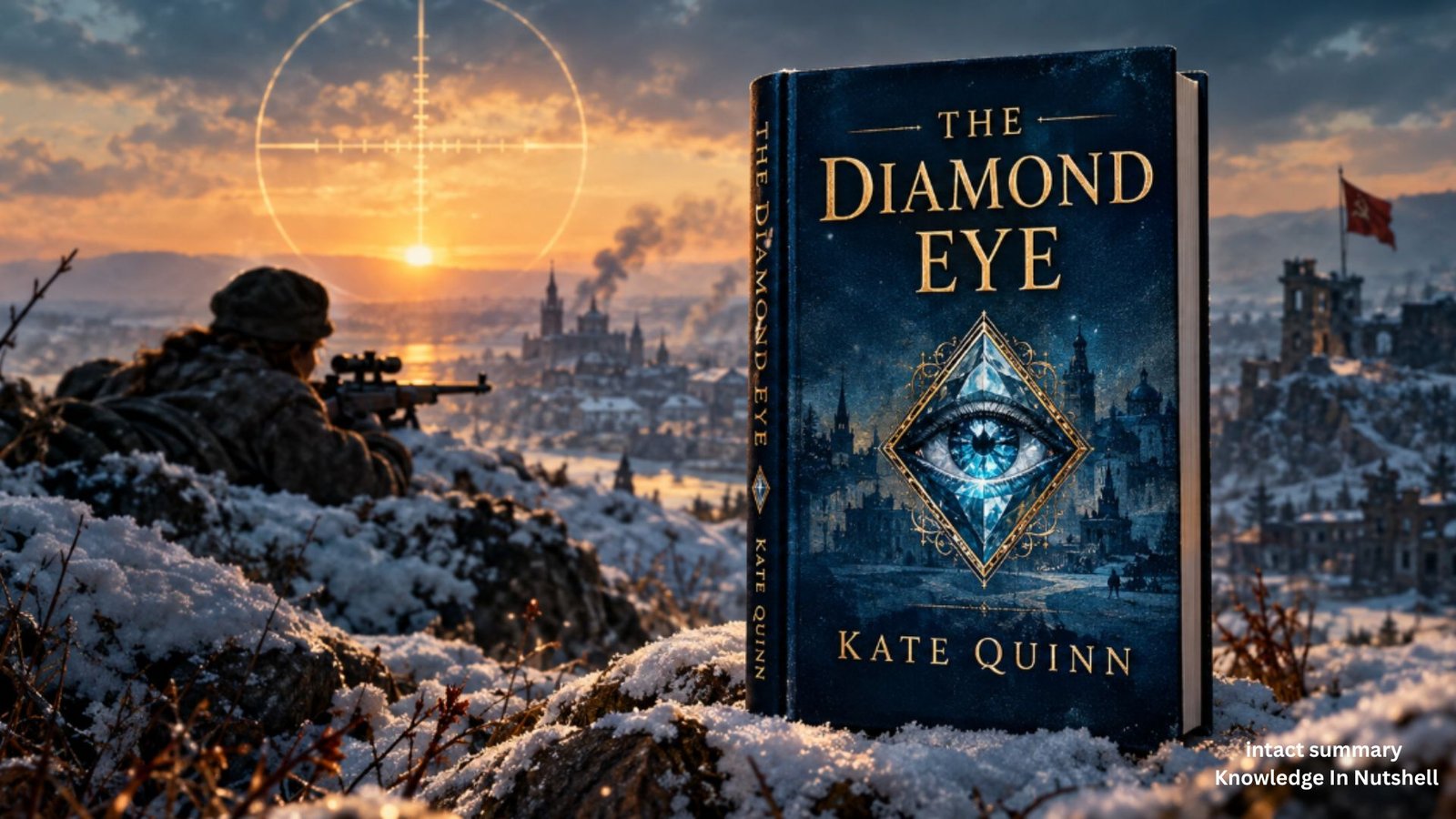
Imagine a quiet history student who loves libraries, and who becomes one of the most feared snipers of World War II. That is the heart of The Diamond Eye. It sounds like something a writer made up. It is not. Lyudmila Pavlichenko was a real woman, and her life was just as wild as the book.
Maybe you saw this novel on a bookstore table and wondered if it is worth your time. Maybe your book club picked it. Maybe you read it months ago and need a quick memory refresher. Or maybe you are a student who needs help before a class talk. This guide is for all of you.
Also Read:/the-borrowed-life-of-frederick-fife-summary/
Here is the short answer. The Diamond Eye is a 2022 historical fiction novel by Kate Quinn. It tells the story of Mila Pavlichenko, a Ukrainian mother and Red Army sniper who earned the nickname Lady Death. The book follows her on two paths. One path is on the front lines of the Eastern Front. The other is her American tour, where she becomes friends with Eleanor Roosevelt and gets caught up in a dangerous plot in Washington, D.C.
Quick Answer
The Diamond Eye by Kate Quinn is a World War II historical novel about Lyudmila “Mila” Pavlichenko, a Ukrainian student who becomes a famous Soviet sniper nicknamed Lady Death. The story switches between her wartime service on the Eastern Front and her 1942 tour of the United States, where she befriends Eleanor Roosevelt. The book mixes real history with an invented assassination plot and explores motherhood, courage and how the world turns people into war heroes.
What Is The Diamond Eye About?
The Diamond Eye is a historical novel about one woman who is trying to decide who she really is. Everyone around Mila has an opinion. Soldiers think she is too small and too female to be a sniper. Newspapers want a shiny war hero. Her husband wants a wife who stays home. Mila wants something different. She wants to be strong, and she wants to be a good mother to her son.
The novel has two story lines that run side by side. In one, we watch Mila grow from a bookish graduate student into a military sniper who leads a sniper platoon. In the other, we see her in 1942 during her visit to America. There, she must speak to crowds, deal with nosy reporters and face a hidden danger.
This setup helps the book feel like both a war story and a mystery. You get battlefield scenes full of tension. Then you get a slower, cleverer suspense plot in the halls of power in Washington.
Reading this book also does not require any special history knowledge. You only need to know a few simple facts. In 1941, Nazi Germany invaded the Soviet Union. That war is part of World War II, and the fight there was called the Eastern Front. It was huge and brutal. Millions of people were pulled into it, including many women. Quinn explains what you need as the story moves along.
Is The Diamond Eye Based on a True Story?
Yes, partly. The Diamond Eye is based on a true story. The main character is a real person. Her sniper career, her 309 kills, her injury, her trip to the United States and her friendship with Eleanor Roosevelt all come from history.
But it is still a novel. That means Kate Quinn used her imagination to fill in the gaps. Here is a simple way to tell what is what.
Quinn did historical research, and she drew on Mila’s memoir and accounts from the time. A novel is not a history textbook, though. So think of the book as a fictional retelling that stays close to the real events but adds drama.
Who Was the Real Lyudmila Pavlichenko?
The real Lyudmila Pavlichenko was born in 1916 in Ukraine, which was then part of the Russian Empire and later part of the Soviet Union. She grew up and studied history at the university in Kyiv. When the German invasion began in 1941, she did not wait to be drafted. She walked into a recruiting office and asked to fight.
Here is something interesting. She was first told to work as a nurse. She refused. She had already learned to shoot before the war, and she proved her marksmanship to the army. Soon she was in the 25th Rifle Division and fighting around Odesa and later Sevastopol.
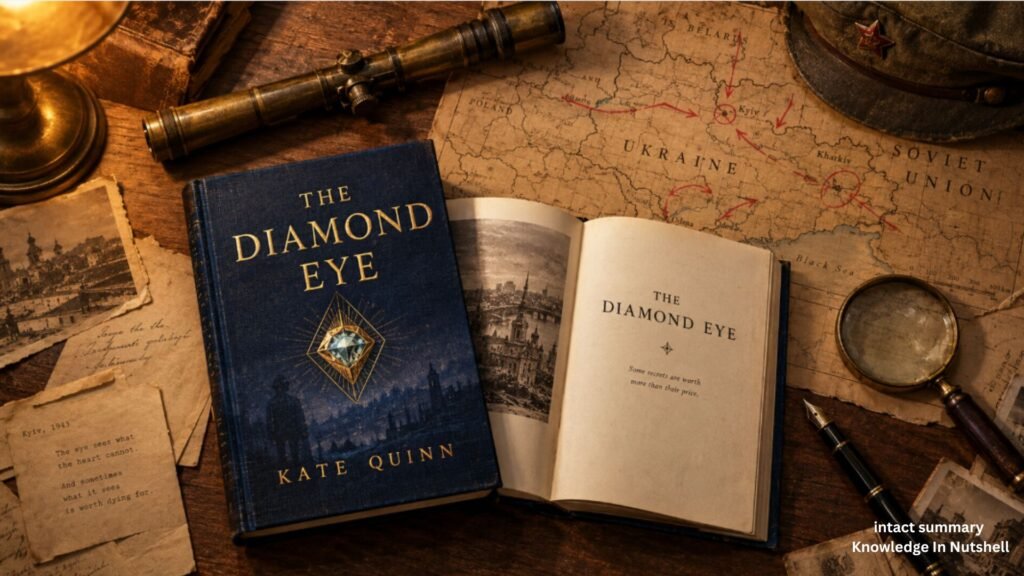
Over time, she earned 309 confirmed kills. About 36 of those were enemy snipers, which many experts see as the hardest targets because they are also trained to hide and wait. Her success made her famous. Soldiers and reporters called her Lady Death.
In June 1942, she was wounded by mortar fragments. After that she was taken out of combat. The Soviet government saw that she could help the Russian war effort in a new way. They sent her to the United States as part of a Soviet delegation. She spoke to crowds, met President Franklin D. Roosevelt, and traveled with First Lady Eleanor Roosevelt. The folk singer Woody Guthrie even wrote a song about her.
After the war, Mila finished her studies, worked as a historian, and helped train other soldiers. She died in 1974.
Why does this matter to the novel? Because the real woman was already a mix of things that do not seem to fit together. She was a scholar and a killer, a mother and a soldier, a private person and a public star. Kate Quinn built her whole book on that tension.
The Diamond Eye Plot Summary
This section has two parts. The first is spoiler-free. The second is the full summary with spoilers, so you can stop after the first one if you want to keep the ending a surprise.
Spoiler-Free Summary
The story begins in Kyiv in the late 1930s. Mila Pavlichenko is a young graduate student who loves history and books. She is also a single mother, in practice if not on paper, raising her son while stuck in a marriage that makes her feel small. She decides she wants to be stronger. That choice leads her to a shooting range, where she finds out she has an amazing talent for marksmanship.
Then World War II reaches her country. The Nazi invasion changes everything. Mila signs up for the Red Army, even though many men laugh at the idea of a female sniper. She trains hard, joins a sniper unit and begins to build a deadly reputation on the Eastern Front. The enemy gives her a name that spreads fast: Lady Death.
Meanwhile, the book jumps to 1942. Mila has been pulled from the front lines and sent to the United States with a Soviet delegation. Her job is to talk to Americans about the Russian war effort and ask for help. There she meets Eleanor Roosevelt, and the two women slowly learn to trust each other. But a hidden threat is growing around them in Washington, D.C., and Mila’s sniper instincts may be the only thing that can stop it.
Full Summary (With Spoilers)
The early years. Mila begins as a quiet library researcher in Kyiv who is tired of being controlled by her husband, Alexei. After she takes her first shots at a shooting range, she finds a skill and a sense of purpose. She keeps training and becomes very good. When the war comes, she leaves her old life behind and enlists. A recruiter at first tries to steer her toward a safer job. Mila pushes back and proves her skill with a rifle.
Sniper training and the front. Mila joins the Soviet Army and is sent to fight near Odesa. She is paired with Kostia, a fellow sniper who respects her work. Their sniper missions are slow and tense, full of waiting, hiding and counting breaths. Her kill count rises, and her first kills weigh on her. As she gets more successful, soldiers who once mocked her start to look to her for leadership. She is promoted and given her own sniper platoon. Her bond with Kostia grows into love, and the couple faces the war together.
Read More:/the-guncle-summary/
Sevastopol and the cost of war. As the fighting moves toward Sevastopol, the war gets harder. Mila’s tally grows toward the number that will make her famous, but each success costs her something. She loses people she cares about. She learns that being a hero means carrying grief that no medal can fix. She is finally wounded, which ends her time on the battlefield.
The American tour. The Soviet government decides Mila is more useful as a spokesperson. In 1942, she travels to Washington, D.C. to meet President Roosevelt and speak to the public. Reporters ask silly questions about her clothes and makeup. At first, Eleanor Roosevelt and Mila misjudge each other. Eleanor sees a stiff, cold soldier. Mila sees a rich woman who cannot understand war. Over time, they discover how much they share, including strength, loneliness and a deep wish to protect others.
The Washington plot. While Mila tours the country, a quiet plan to harm the president comes into view. Mila, who thinks like a sniper, starts to notice what others miss. She sees how a shooter would pick a spot, wait and strike. Someone also tries to turn suspicion toward her, which makes her situation more dangerous. With Eleanor’s help, Mila uses her skills, her patience and her knowledge of how a marksman thinks to fight back against the assassin.
The ending. In the final stretch, the book ties together Mila’s two lives. The woman who had been used as a symbol has to decide what she wants for herself. She also thinks about her son and the kind of future she wants to build for him. I am leaving the exact final scenes unspoiled here, but the ending is about personal transformation more than victory.
Main Characters in The Diamond Eye
You do not need a long list to follow this book. These are the key characters to know.
Character: Lyudmila “Mila” Pavlichenko
Role & Arc: Mila is the heart of the story. She starts as a bookish researcher and young mother who feels trapped. She becomes a formidable sniper and a reluctant hero. Her big change is not that she learns to shoot. It is that she learns to own her strength and decide who she is, without letting a husband, an army or a newspaper decide for her.
Character: Slava (Mila’s Son)
Role & Arc: Mila’s son is her reason to keep going. He is not a soldier, but he shapes almost every choice she makes. The mother and son relationship shows the book’s softer side. It also asks a hard question: how can a woman be a loving mother and a deadly soldier at once?
Character: Alexei
Role & Arc: Alexei is Mila’s husband in her early life. He stands for the kind of life she is expected to accept, where a woman stays small and quiet. Mila’s break from him is the first act of self-determination that starts her whole journey.
Character: Kostia
Role & Arc: Kostia is a fellow sniper and partner. He treats Mila as an equal, which is a rare thing in her world. Their romance shows how love can grow in the middle of war. He also shows Mila that being tough and being tender can live in the same person.
Character: Eleanor Roosevelt
Role & Arc: The First Lady is a real historical figure, and she becomes Mila’s most important friend in America. Eleanor starts out curious and a little unsure. She ends up as Mila’s ally. Their friendship is the emotional center of the second story line.
Character: Franklin D. Roosevelt
Role & Arc: FDR appears as the president at the heart of the assassination plot. He is less a main character and more the person whose safety drives the suspense.
Character: The Doubters
Role & Arc: Many unnamed or minor characters, such as skeptical officers, nosy reporters and sneering soldiers, represent the sexism and stereotypes Mila faces. The book even opens with a man who cannot believe a woman could be Lady Death. These small characters matter because they show the world Mila has to push against.
How the Story Is Built: Setting and Structure
Timeline 1: The Rise of a Sniper (late 1930s to 1942). This line follows Mila from Kyiv to the Eastern Front. It is chronological and covers her student years, her sniper training, her combat experience and her injury. It reads like a war novel.
Timeline 2: The American Tour (1942). This line takes place in the United States. It moves through Washington, D.C. and other cities. It reads like a historical thriller, with suspense, secrets and a ticking clock.
Quinn weaves these lines together so that each one explains the other. When Mila feels trapped in a crowd of reporters, we remember the quiet battlefield she misses. When she studies a rooftop in Washington, we remember how she learned to read land through a rifle scope.
The book also uses an omniscient narrator. That means we can see inside both Mila’s mind and Eleanor’s mind. This helps us understand how each woman first sees the other, and how those misconceptions slowly melt away.
The mood changes between the two halves too. The front line chapters feel cold, sharp and lonely. The American chapters feel busier and more social, but just as tense. That contrast keeps the pages turning.
Key Themes Explained
Kate Quinn packs this novel with big ideas. Here are the main themes, what they mean and how they show up in the story.
Theme 1: Courage and Inner Strength in The Diamond Eye
The book shows that courage comes in different shapes. Mila has the loud kind, the kind that walks into a war zone. She also has the quiet kind, the kind that says “no” to a husband or “I will not be your doll” to a crowd of reporters. The story suggests the quiet kind can be just as hard.
Theme 2: Motherhood and Sacrifice in The Diamond Eye
Motherhood runs through every chapter. Mila is a single mother in many ways, and she is also a soldier. She is always pulled in two directions. She wants to protect her son, yet the best way to protect him seems to be fighting a war far away from him. The book asks what a mother owes her child, and what she owes herself. It does not give an easy answer, which is why it feels real.
Theme 3: Identity and Transformation in The Diamond Eye
Who is Mila? A historian? A mother? A sniper? A symbol? The novel is really about personal identity and transformation. Mila changes many times, and each version is partly her own choice and partly forced on her by events. By the end, she must decide which parts of herself she will keep.
Theme 4: Making Heroes and Myths in The Diamond Eye
This is one of the most interesting ideas in the book. Governments and newspapers create heroes because they need them. Mila becomes Lady Death partly because a nickname sells stories and lifts the spirits of an army. But the real Mila would rather have a quiet life. The book shows the gap between the legend and the person, and how hero worship can be a burden.
Theme 5: The Moral Weight of War in The Diamond Eye
Quinn does not turn killing into a game. Mila is skilled, but she is not numb. In one famous kind of scene, she lines up a shot and knows the enemy has a family too. She still pulls the trigger. That is the moral dilemma at the center of war. The book shows the cognitive dissonance of doing something terrible for a cause you believe in. It also shows that violence is a choice shaped by training and belief, not a trait that belongs only to men.
Theme 6: Friendship and Human Connection in The Diamond Eye
The bond between Mila and Eleanor Roosevelt shows how empathy can beat stereotypes. They start out with wrong ideas about each other. Over time, those ideas fade, and a real friendship takes their place. The relationship with Kostia adds a love story, and together these bonds show that even in a cold, harsh book, human connection matters most.
Women in Combat: The Real History Behind the Story
One reason this book matters is that it brings attention to a part of World War II many people never learned about.
Many Soviet women served in the war. Historians often say that roughly 800,000 women served in the Soviet armed forces during World War II. They worked as doctors, pilots, tank crews, radio operators and snipers. Several thousand women were trained as snipers, and a good number of them went to the front lines.
This was very different from what happened in many other countries at the time. In the United States, for example, women mostly served in support roles and not in direct combat. That is why American reporters were so surprised by Mila. They wanted to know how a young woman could be a soldier at all.
The book shows how hard it still was for women who served. They faced sexism, harassment, doubt and discrimination from the men around them. Even after proving themselves, they were often treated as strange or as tools for propaganda. Mila’s story captures this well. She is respected for her skill, but she also has to keep proving she belongs.
If you want to see the real history, remember this: the book is about one woman, but she was not alone. Female resilience and courage were all over the Eastern Front.
Symbolism and Literary Devices of The Diamond Eye
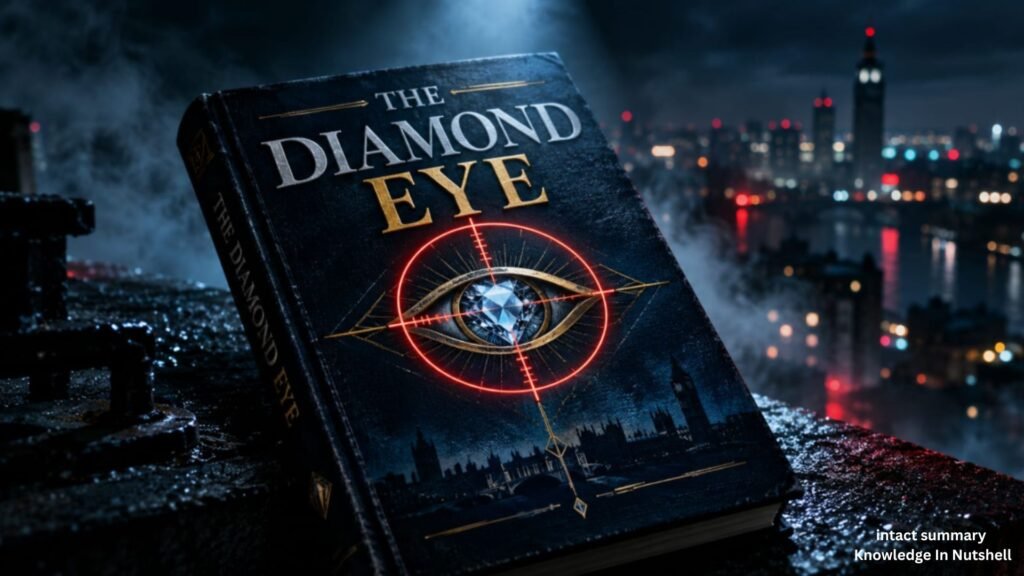
The title, “The Diamond Eye.” A diamond is clear, hard and sharp. An eye sees. Put them together and you get the idea of perfect vision, the kind a sniper needs. But the title also points to a deeper question. What does Mila see when she looks at the world, and what does the world see when it looks at her? Readers can take it as a symbol for both her skill and her need to be truly seen.
Weapons as symbols. The rifle in the book is both a tool and a statement. It shows Mila’s power and her independence. It also shows what war costs her. The book plays with both physical weapons and mental weapons, such as patience, focus and cold calm. Mila’s real strength is not just in her gun but in her mind.
The nickname “Lady Death.” This name works like a mask. It makes Mila sound unstoppable, but it also hides the real woman. Much of the story is about the distance between the name and the person.
Two timelines as mirrors. The war chapters and the American chapters reflect each other. In both, Mila is watched, judged and underestimated. In one, the watchers are soldiers. In the other, they are cameras and crowds.
The omniscient narrator. By letting us see both Mila and Eleanor’s thoughts, the book shows how people build misconceptions and how those can be broken. It is a gentle way of showing empathy at work.
Is The Diamond Eye Worth Reading? Our Final Verdict
Short answer: yes, for most fans of historical fiction.
The book earns its place for three reasons. First, it shines a light on a woman and a war front that many readers do not know well. Second, it blends history and thriller in a way that keeps you turning pages. Third, it treats Mila as a full person, not just a symbol.
The downsides are real, though. It is on the long side, at roughly 400 pages. Some readers find the tone cold. And since part of the story is invented, you should not treat it as a history lesson.
Frequently Asked Questions About The Diamond Eye
1. What is The Diamond Eye about?
It is a historical novel about Mila Pavlichenko, a Ukrainian history student who becomes a famous Soviet sniper in World War II. It also follows her 1942 tour of the United States, where she befriends Eleanor Roosevelt.
2. Is The Diamond Eye a true story?
Partly. Mila was a real person, and her sniper career, injury and American tour are real. Many scenes, talks and the assassination plot are invented by Kate Quinn.
3. Who is Lyudmila Pavlichenko?
She was a real Red Army sniper from Ukraine, credited with 309 confirmed kills. She was nicknamed Lady Death and later became a spokesperson for the Soviet Union in the United States.
4. Who wrote The Diamond Eye?
Kate Quinn, an American author of historical fiction. She also wrote The Rose Code, The Alice Network and The Huntress.
5. When was The Diamond Eye published?
It came out in 2022.
6. What is the main theme of The Diamond Eye?
There are several. The biggest are courage, motherhood, identity, sacrifice and how the world creates heroes. The book also explores women in combat and the moral weight of war.
7. How does The Diamond Eye end?
The ending brings Mila’s two lives together. After the danger in Washington, she has to decide who she wants to be beyond the war hero image. It focuses on personal transformation more than a big victory. To keep this answer short and spoiler-light, I have not listed every final scene.
8. Who is Eleanor Roosevelt in the book?
She is the real-life First Lady of the United States. In the novel, she becomes Mila’s friend and ally during the American tour.
9. Why is Mila called Lady Death?
It is the nickname she earned from her deadly accuracy as a sniper. In the book, the name also shows how a legend can hide the real person.
10. Is the assassination plot real?
No. The plot against the president is part of the fiction. The tour and the meetings with the Roosevelts are real.
11. Is The Diamond Eye hard to read?
Not in language. It is written in clear, smooth prose. It is long, and some scenes of war and loss can be heavy.
12. Do I need to read other Kate Quinn books first?
No. The Diamond Eye is a standalone novel. You can read it without any other book.
13. Is The Diamond Eye a good book club pick?
Yes. It has strong discussion topics, including motherhood, gender, heroism and truth versus fiction. See the questions above.
14. What are the best books like The Diamond Eye?
Try The Rose Code, The Nightingale, Lilac Girls or The Book of Lost Names. For real history, read Pavlichenko’s own memoir.
About This Article: Our Research and Writing Approach
How this article was made. This guide was written to help readers get a clear, honest overview of The Diamond Eye. The writing is original and in plain language. It does not copy competitor pages or reproduce passages from the novel.
Research approach. The facts about the book and about Lyudmila Pavlichenko were checked against well-known historical and publishing information, and against a published reader review of the novel. Where a detail was uncertain, such as the exact final scenes, this guide describes it in general terms instead of guessing.
Quality and accuracy review. I kept plot points to those that fit the book as widely reported, and I marked what is real history and what is fiction. Before you publish, I recommend a human editor compare the summary and character notes against a copy of the book and add the editor’s name and real credentials. I have not invented any author profile or qualifications here.
Conclusion
The Diamond Eye is a story about a brave woman named Mila Pavlichenko. She loved books and learning. She was also a mother who loved her son very much. When World War II came, she became a sniper and helped her country. People gave her the name Lady Death, but the real Mila was much more than a nickname.
The book shows us many big ideas. It shows courage, family love and how people can change. It also shows that women can be strong and smart, even when others do not believe in them. Mila’s friendship with Eleanor Roosevelt reminds us that two very different people can become good friends.
Some parts of the story are true, and some parts were made up by Kate Quinn. That is what makes it a historical novel.
If you like history, brave heroes and stories with a little mystery, this book is a good pick. It is long and some parts are sad, so it is best for older readers. But Mila’s story teaches a nice lesson. You can be gentle and strong at the same time.