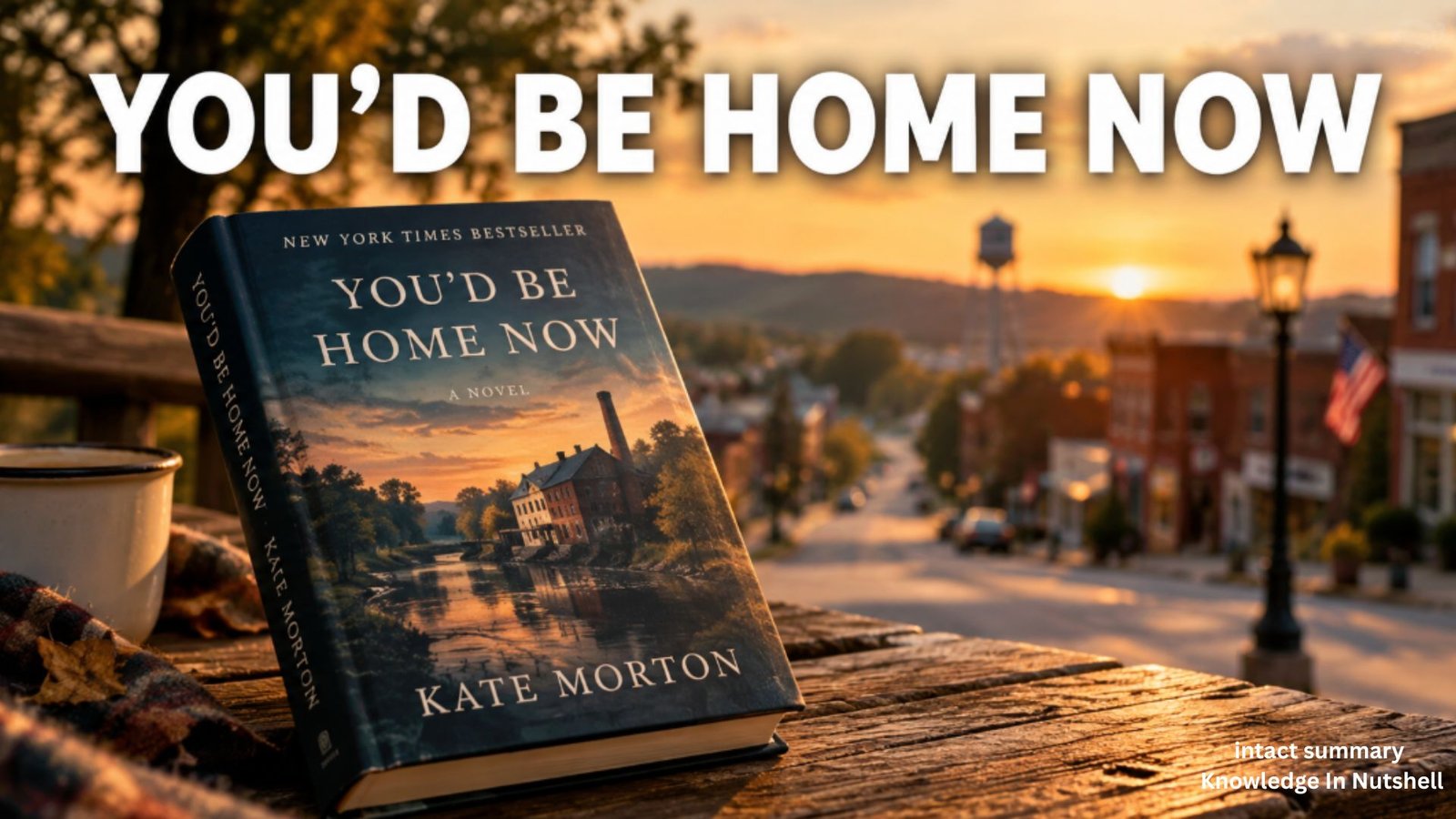
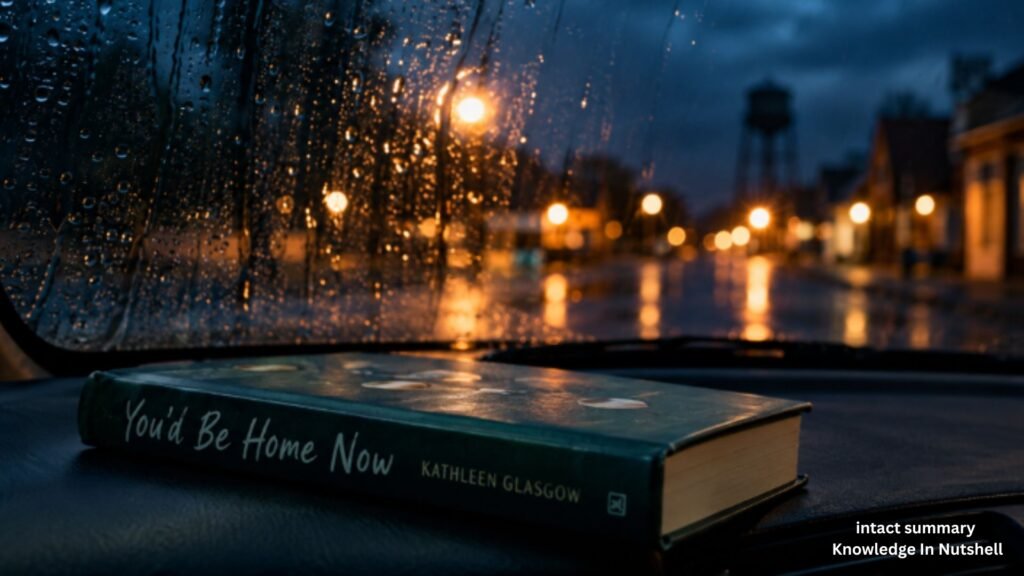
You have just finished You’d Be Home Now and you need help to understanding what happened Or maybe you are deciding if this book is the right one for you to read next. Either way, you are in the right place. This article gives you a full, easy to follow guide to Kathleen Glasgow’s award winning young adult novel about addiction, family, and finding out who you really are.
Also Read:/american-street-summary/
You’d Be Home Now is not an easy book. It talks about hard things like drug addiction, loss, and teenage mental health. But it is also a story about love, hope, and healing. Many readers say it feels honest in a way that few books about addiction do. That is because Glasgow does not just tell you what addiction looks like. She shows you what it feels like to be the sister, the daughter, and the person left standing after everything falls apart.
Whether you are a student working on a book report, a parent checking if this book fits your teen, or a reader who just wants to talk about the ending with someone, this article covers it all. Let’s start with a quick answer for anyone in a hurry.
Quick Answer: What Is You’d Be Home Now About?
You’d Be Home Now by Kathleen Glasgow (2021) follows sixteen year old Emory “Emmy” Ward, the “good” daughter in a wealthy family in the small town of Mill Haven. After a car accident caused by her older brother Joey’s drug use kills their classmate Candy MontClaire, Emmy must survive her junior year while Joey goes through rehab and recovery. The novel explores addiction, grief, and what it means to find your own identity when everyone else thinks they already know who you are.
Book Overview and Background
What Kind of Book Is This?
You’d Be Home Now is a contemporary young adult fiction novel. It falls into the category of realistic fiction, meaning the story could truly happen in real life. It is not fantasy or science fiction. It is grounded in the real, ongoing opioid crisis that has affected communities across the United States.
The book is written for readers roughly age 14 and up, which lines up with its status as a serious teen fiction title that does not shy away from difficult subjects. It is told from a first-person narration, meaning readers experience everything through Emmy’s eyes and thoughts, which makes the emotional moments feel even closer and more personal.
Setting: Mill Haven
The story takes place in a fictional small town called Mill Haven. The Ward family’s wealth comes from an old textile mill built generations ago by Emmy’s ancestors, which is why Emmy is known around town as “the rich one.” This detail matters a lot because the book uses Mill Haven to show that addiction does not care about money or family name. It can affect a wealthy family just as easily as anyone else, a point Glasgow makes clear throughout the story about socioeconomic inequality and access to help.
Why This Book Matters
You’d Be Home Now was published in 2021 by Delacorte Press and quickly became a New York Times bestseller. It comes from Kathleen Glasgow, the acclaimed author of Girl in Pieces, a novel about self-harm that won the Amelia Bloomer Book List award. Glasgow has spoken about drawing on her own experiences with addiction and recovery to write this book, which gives the story an added layer of authenticity that readers and critics have praised.
One especially interesting piece of background: the novel was inspired by Thornton Wilder’s classic American play Our Town. Just like the original play used the town of Grover’s Corners to explore ordinary life and death, Glasgow uses Mill Haven to explore how a modern town is shaped by the opioid epidemic. This literary inspiration gives the book extra depth for readers who enjoy literary adaptation and modern retelling stories.
What You Need to Know Before Reading
Before diving in, it helps to know that You’d Be Home Now includes serious content warnings for substance abuse, overdose, a fatal car accident, and discussion of self-harm. It is an emotional read, but many readers and reviewers describe it as ultimately hopeful and healing rather than hopeless.
Spoiler-Free Summary of You’d Be Home Now
You’d Be Home Now follows Emmy Ward through her junior year of high school in Mill Haven. Emmy has always been “the good one” in her family, the responsible younger sister who quietly watches over her older brother Joey, whose drug addiction has slowly taken over his life. When a night out ends in tragedy, Emmy’s whole world changes.
As her brother heads into rehab and eventually comes home to rebuild his life, Emmy has to figure out how to hold her family together while also discovering who she is outside of the roles everyone else has given her. It is a story about guilt, healing, and learning to speak up for yourself even when it feels impossible.
Full Summary (With Spoilers) of You’d Be Home Now
Emmy Ward has spent her whole life being labeled by other people. In town, she is “the rich one” because of her family’s mill fortune. At school, she is just “Maddie Ward’s little sister,” living in the shadow of her popular older sister. At home, she is “the good one,” the responsible kid who quietly covers for her older brother Joey, who has struggled with drug addiction since he was only twelve years old.
Everything changes one night when Emmy and Joey are at a party. Joey has overdosed, and in the chaos that follows, a classmate named Candy MontClaire asks for a ride home. Because Emmy has been drinking, another boy named Luther, who is also carrying drugs, ends up driving. The car crashes in the rain. Candy MontClaire dies, Emmy suffers a serious knee injury, and Luther is seriously hurt and later sent to juvenile detention. The accident exposes to the entire town just how deep Joey’s addiction had become.
Read More:/the-coven-harper-l-woods-summary/
Four months later, the story picks up as Emmy begins her junior year. Joey has returned home from a summer spent in rehab, and the whole town of Mill Haven is still reeling from Candy’s death. The family now lives under strict new rules meant to help Joey stay clean, including curfews, AA meetings, drug tests, and close supervision. Emmy, still grieving and still healing physically from the crash, is expected to help monitor her brother, all while trying to keep her grades up, hold down a job, and process her own trauma from the accident.

As the school year unfolds, Emmy starts to notice something important: everyone in Mill Haven has a story they tell about themselves, and about her, but those stories are not always true. She begins forming a cautious friendship, and possibly something more, with the popular boy next door. She also becomes fascinated by an anonymous Instagram account called Mis_Educated, which posts honest, unfiltered thoughts from students at her school, the kind of thoughts people are usually too afraid to say out loud.
Throughout the book, Emmy wrestles with heavy guilt over Candy’s death and her own role that night, even though it was not her fault. She also struggles with resentment toward Joey, love for him, and fear that his recovery will not last. Joey, for his part, struggles to figure out who he even is without drugs, since he has used them for nearly as long as he can remember.
As tensions rise at home, particularly with Emmy’s controlling mother, who prioritizes the family’s public image, Emmy begins to push back and set boundaries for herself for what feels like the first time. In the final act, the story builds to an unexpected and emotional climax involving a serious relapse scare with Joey, forcing the entire family to confront what recovery really requires. Without giving away every detail, the ending does not offer a perfectly neat, happy resolution. Instead, it offers something more realistic: hope, honesty, and the sense that Emmy has finally started to define herself on her own terms rather than through the labels other people gave her.
Main Characters in You’d Be Home Now
Character: Emory “Emmy” Ward
Role & Arc: Emmy is the novel’s narrator and main character, a sixteen year old junior at Heywood High School. For most of her life, she has been defined by other people, as “the rich one,” “the good one,” and “Maddie’s little sister.” Over the course of the book, Emmy’s emotional journey takes her from quiet obedience to genuine self-discovery.
She carries deep guilt over the accident, even though it was not her fault, and she slowly learns to set boundaries with her family and to use her own voice, including through poetry. By the end, Emmy is no longer just “the good one.” She is someone who has started to decide for herself who she wants to be.
Character: Joey Ward
Role & Arc: Joey is Emmy’s older brother and the family member at the center of the story’s addiction storyline. He has struggled with drugs since he was twelve years old, and the novel makes clear that his addiction is not a simple problem with a simple fix. After the accident, Joey goes through rehab and returns home to try to rebuild his life under strict household rules.
His arc is about the difficult, nonlinear nature of addiction recovery, including his fear, frustration, and uncertainty about who he is without drugs. Joey is written with real complexity. He is not a villain and not simply a victim. He is a teenager trying to survive something enormous.
Character: Candy MontClaire
Role & Arc: Candy is a classmate of Emmy’s who dies in the car accident that opens the story’s central conflict. Although her time in the book is brief, her death casts a long shadow over the entire novel. She represents the innocent people who become collateral damage of someone else’s addiction, and her loss is a constant source of grief and guilt for Emmy throughout the story.
Character: Maddie Ward
Role & Arc: Maddie is Emmy’s older sister, known around Mill Haven and school as the pretty, popular one. Emmy has long lived in her shadow, and Maddie’s presence in the story highlights how differently family members can be seen and treated, even within the same household.
Character: Emmy’s Mother and Father
Role & Arc: Emmy’s parents represent the theme of parental control and toxic parenting patterns that can develop in families dealing with addiction. Her mother, in particular, is protective of the family’s public image in Mill Haven and often puts pressure on Emmy to keep things looking normal. Her father is more emotionally distant. Together, they show how neglectful parents, even well meaning ones, can unintentionally add to a child’s emotional burden.
Supporting Characters Worth Knowing
- Liza and Tasha: Friends of Emmy’s who offer some of the few spaces in the book where she can simply be a teenager.
- The boy next door: A popular classmate who becomes an important connection for Emmy as she navigates her junior year, offering a small thread of first love and hope amid the heaviness.
- Mis_Educated: Not a person exactly, but an anonymous Instagram account that posts honest confessions from students at Heywood High School. It works almost like a modern, public diary, giving quieter students a voice they would not otherwise have.
Key Themes Explained of You’d Be Home Now
Addiction Is a Family Disease
One of the clearest themes in You’d Be Home Now is that addiction never affects just one person. Glasgow shows how Joey’s drug use ripples outward to touch Emmy, their parents, their friends, and even people at school who barely know him. This is sometimes called the “collateral damage” of addiction, and the novel uses Emmy’s experience to show how siblings of people struggling with substance abuse often feel invisible, overlooked, or forced into a caretaker role far too early. This idea connects strongly to real conversations happening today about family addiction and the hidden toll it takes on brothers and sisters.
Identity and Self-Discovery
At its heart, You’d Be Home Now is a coming-of-age story about identity. Emmy spends most of the book being told who she is by her town, her school, and her family. The novel’s biggest emotional question is whether she can figure out who she actually is underneath all those labels. Her growth toward self-expression, speaking her truth, and setting boundaries is one of the most satisfying parts of the story for readers.
Recovery Is Not a Straight Line
Rather than presenting addiction recovery as something that simply gets fixed after rehab, the novel is honest about how difficult and uncertain staying clean really is. Joey’s struggle to figure out “who he is without drugs” reflects real challenges people in recovery face, and the book avoids offering an unrealistically tidy resolution to his journey.
Grief and Guilt
Candy MontClaire’s death introduces a heavy layer of complicated grief into the story. Emmy did not cause the accident, yet she carries intense guilt about it anyway. This theme explores how grief and guilt can tangle together, especially for teenagers who do not always have the tools or language to process trauma on their own.
Wealth Does Not Protect You From Addiction
Through the Ward family’s wealth and status in Mill Haven, Glasgow makes a pointed statement about socioeconomic inequality and addiction. The opioid crisis is sometimes framed in the public imagination as a problem tied to poverty, but this novel makes clear that wealthy families are just as vulnerable, even if their money buys them things like private rehab that families with fewer resources cannot access.
Finding Your Voice
Emmy’s growth is closely tied to literal and figurative voice. Whether it is through the anonymous honesty of the Mis_Educated Instagram posts, or Emmy’s own steps toward writing and speaking up for herself, the novel repeatedly returns to the idea that healing often begins with being heard, and with being brave enough to speak.
Symbolism and Literary Devices of You’d Be Home Now
The Mill
The old textile mill that made the Ward family wealthy is more than just a setting detail. It symbolizes how the past shapes the present, and how a family’s history and reputation can weigh on the people living in it today, whether they asked for that legacy or not.
“Ghostie” Addicts
Throughout the novel, Emmy notices people around Mill Haven that locals refer to as “ghostie” addicts, people who have become almost invisible to the community because of their struggles with substance use. This is a powerful piece of symbolism representing how society often looks away from people dealing with addiction, treating them as ghosts rather than fully seen human beings. It reinforces the novel’s larger point about addiction stigma.
Mis_Educated (The Anonymous Instagram Account)
The Mis_Educated account functions as a modern literary device, almost like a Greek chorus or a public diary. It symbolizes the hidden truths that exist underneath a school and a town’s polished surface, and it gives a voice to students, including Emmy herself, who feel unheard in their daily lives.
Rain and the Car Accident
The car accident that changes everything happens in the rain, a classic literary choice that reflects chaos, loss of control, and the blurred, dangerous conditions under which so many real-life tragedies connected to addiction occur.
You’d Be Home Now and Our Town: A Modern Retelling
Readers familiar with Thornton Wilder’s classic American play Our Town will notice that You’d Be Home Now was directly inspired by it. Just as Wilder used the fictional town of Grover’s Corners to explore themes of everyday life, death, and community, Glasgow uses Mill Haven to explore a modern American crisis, the opioid epidemic. This literary inspiration is not just a marketing detail.
It shapes the novel’s structure, its focus on a whole town rather than just one family, and its bigger message that every “ordinary” town has extraordinary pain hiding beneath the surface. Fans of literary adaptation and books that reimagine classic works in a contemporary setting will find this connection especially rewarding.
Is You’d Be Home Now Worth Reading?
For readers who want an honest, emotionally rich story that does not shy away from real problems, You’d Be Home Now is absolutely worth reading. It stands out from other YA books about drug addiction because it centers the sibling’s experience rather than only the person struggling with substance use, giving it a fresh and important angle. The character development, especially Emmy’s growth into her own voice, makes this far more than a book about addiction. It is a book about becoming yourself, even when the world keeps trying to define you first.
Frequently Asked Questions of You’d Be Home Now
1. What is You’d Be Home Now about?
You’d Be Home Now is a young adult novel by Kathleen Glasgow about Emory “Emmy” Ward, a teenager whose older brother Joey struggles with drug addiction. After a fatal car accident tied to Joey’s addiction, Emmy must navigate her junior year of high school while helping her family cope with his recovery.
2. Who is the author of You’d Be Home Now?
The book was written by Kathleen Glasgow, a New York Times bestselling author also known for Girl in Pieces and How to Make Friends with the Dark.
3. Is You’d Be Home Now based on a true story?
The book is a work of fiction, but Kathleen Glasgow has spoken about drawing on her own personal experiences with addiction and recovery to write it, which gives the story its raw, authentic feel.
4. What is the main theme of You’d Be Home Now?
The central theme is how addiction affects an entire family, not just the person using substances, alongside strong themes of identity, self-discovery, and family relationships.
5. How does You’d Be Home Now end?
Without spoiling every detail, the ending does not offer a perfectly neat resolution to Joey’s recovery. Instead, it focuses on Emmy finally beginning to define her own identity, separate from the labels her family and town placed on her, while the family faces the ongoing, uncertain reality of addiction recovery.
6. Who dies in You’d Be Home Now?
Candy MontClaire, a classmate of Emmy’s, dies in the car accident that sets the main plot into motion.
7. Is You’d Be Home Now appropriate for young readers?
The book is generally recommended for readers age 14 and up due to its content warnings around overdose, a fatal accident, and mentions of self-harm.
8. What inspired You’d Be Home Now?
Kathleen Glasgow has said the novel was inspired by Thornton Wilder’s classic play Our Town, reimagined through the lens of the modern opioid crisis.
9. Is Joey based on a real person?
Joey is a fictional character, though his struggles with addiction reflect real and common experiences that many families across the country face.
10. What grade level is You’d Be Home Now written for?
It is generally categorized for grade 9 and up, matching its status as a serious contemporary young adult fiction title.
11. Is You’d Be Home Now a sad book?
It deals with heavy topics like grief, addiction, and loss, but most readers describe the overall tone as hopeful rather than purely sad, since it ends with growth and healing rather than despair.
12. What is the significance of the title You’d Be Home Now?
The title reflects the novel’s themes of loss and longing, tied closely to Candy’s death and the ache of imagining how different things would be if the accident had never happened.
13. Does You’d Be Home Now have a sequel?
No, You’d Be Home Now is a standalone novel.
14. What age group is the target audience for You’d Be Home Now?
The book is aimed primarily at teenage readers, roughly ages 14 and up, though it also resonates strongly with adult readers interested in YA literature about family addiction.
15. Why is You’d Be Home Now compared to Girl in Pieces?
Both novels come from Kathleen Glasgow and share a similarly raw, emotionally honest style, tackling difficult subjects like self-harm and addiction with compassion and realism rather than judgment.
Conclusion
You’d Be Home Now by Kathleen Glasgow is a powerful and honest book about a girl named Emmy and her family. Emmy’s brother Joey has a drug addiction, and one night a terrible car accident changes everything. A classmate named Candy MontClaire dies, and Emmy’s whole world turns upside down. After that, Emmy has to grow up fast. She helps take care of Joey while he tries to get better in rehab. At the same time, she is trying to figure out who she really is, not just “the good one” or “the rich one” that everyone in her town calls her.
This story is sad in some parts. It talks about hard things like addiction, grief, and loss. But it is also a story full of hope. Emmy learns that it is okay to speak up for herself. She learns that families can heal, even when things feel very broken. She also learns that people are never just one simple story. Everyone, even her brother, is more than what others say about them.
In this article, we looked at the whole book closely. We talked about the plot, the important characters like Emmy, Joey, and Candy, and the big themes like family, identity, and recovery. We also answered common questions people ask about the book, like how it ends and who it is written for.
If you are thinking about reading You’d Be Home Now, know that it is a book that many readers say touched their hearts deeply. It shows that even after something very hard happens, people can still find love, strength, and a way to keep going. It also reminds us that everyone deserves to be truly seen, not just labeled by others.
Whether you read this book for school, for a book club, or just because you wanted a story that feels real, You’d Be Home Now offers something meaningful. It is a story about a family learning to love each other for who they truly are, not who everyone expects them to be. And that is a lesson worth remembering, no matter how old you are.