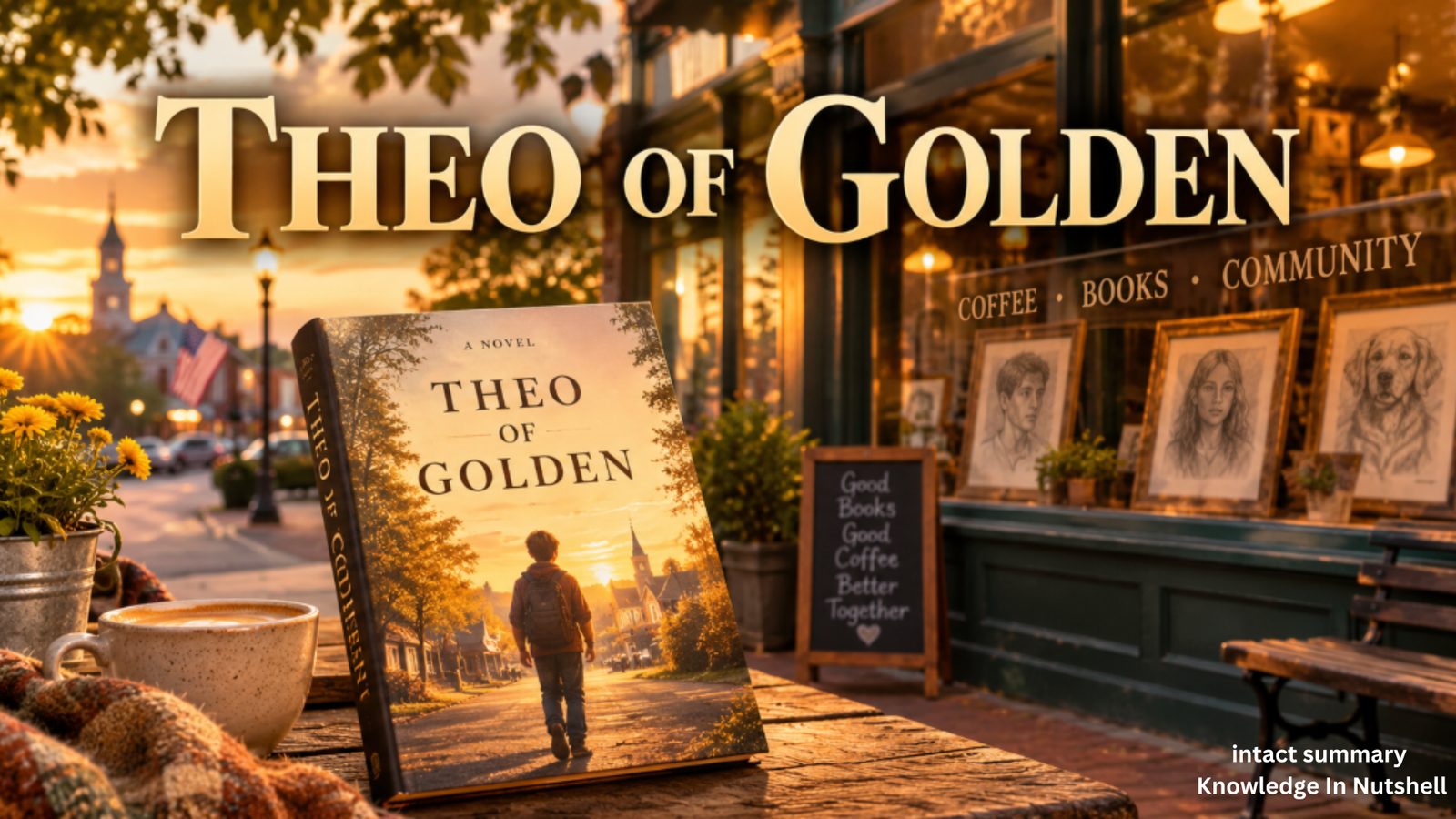
If you have just finished the last page of Theo of Golden and want to talk it through with someone, or you are trying to decide whether Allen Levi’s quiet Southern novel is worth your time, you are in the right place. This book has become one of those word-of-mouth phenomena that readers pass to friends with a simple instruction: just start it, you will understand once you are in. That instant pull, followed by an ending many readers describe as devastating in the best possible way, is exactly why so many people search for a clear, honest breakdown of what actually happens in Golden, Georgia.
Also Read:/a-court-of-silver-flames-summary/
Whether you are a casual reader trying to decide if this book fits your mood right now, a book club member preparing discussion questions, or someone who finished the final chapter in tears and needs to process what just happened, this article is built to give you a complete, accurate picture of Allen Levi’s debut novel, grounded in the actual text rather than generic summary language that could apply to any small town story.
Quick Answer
Theo of Golden is a literary fiction novel by Allen Levi about an elderly, quietly wealthy stranger named Theo who arrives in the small Southern town of Golden, Georgia. After discovering 92 unsold pencil portraits of local residents hanging in a coffee shop called The Chalice, Theo sets out to buy each portrait and personally return it to the person it depicts, asking only to hear their story in exchange. Over the course of a year, these small acts of generosity uncover hidden griefs and joys across the community, while Theo conceals a devastating secret of his own that is only revealed after his death.
Book Overview and Background of Theo of Golden
Theo of Golden is a work of contemporary literary fiction with strong Southern fiction and inspirational fiction qualities. It was written by Allen Levi, an attorney, judge, and singer-songwriter from middle Georgia, and it is his first novel. Levi originally self-published the book in 2023, and it built a devoted following almost entirely through reader recommendations and book club word of mouth rather than traditional marketing. That grassroots momentum eventually caught the attention of literary agent Suzanne Gluck, leading to a traditional publishing deal with Atria Books, an imprint of Simon & Schuster.
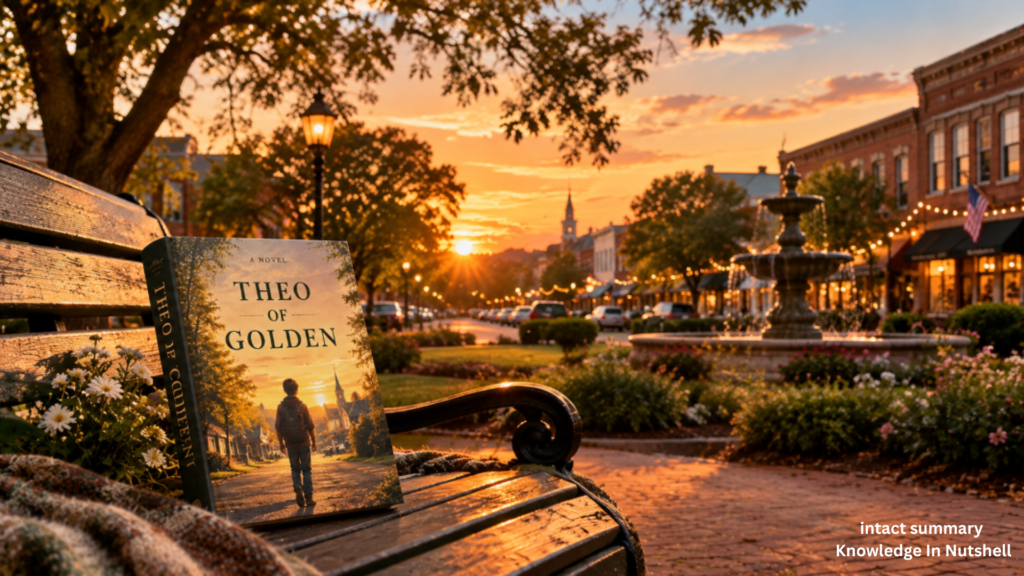
The novel is set in the fictional small city of Golden, Georgia, a picturesque Southern town with tree-lined streets, a central promenade, historic storefronts, and the Oxbow River running through it. The story unfolds over roughly one year, beginning in early spring around Easter and moving through the changing seasons as Theo settles into a rented apartment in the historic Ponder House and slowly becomes part of the town’s daily rhythm.
Readers coming to Theo of Golden should know that this is a slow-paced, character-driven story rather than a fast-moving plot machine. It is episodic in structure, built around a series of individual encounters between Theo and the people of Golden, and it blends a gentle mystery about Theo’s true identity with meditations on grief, generosity, art, and what it means to truly see another person. The book carries clear spiritual and Christian undercurrents without being heavy-handed or preachy, and it deals honestly with difficult subjects including grief, addiction, racism, violence, and loss, which gives the story’s warmth real weight rather than sentimentality.
Plot Summary (Spoiler-Free) of Theo of Golden
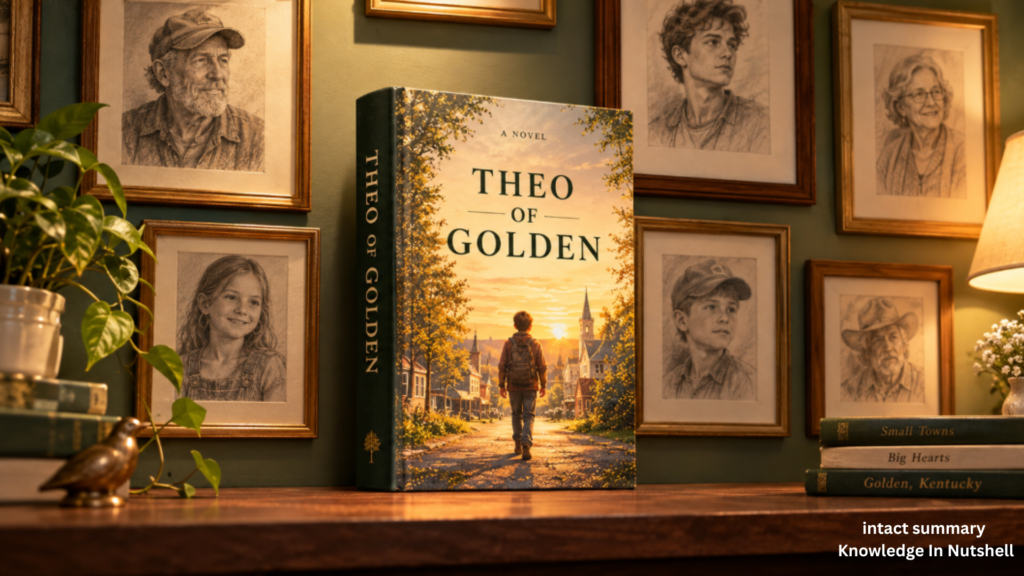
One spring morning, an elderly Portuguese man named Theo arrives in Golden, Georgia, carrying little more than a suitcase, a private sorrow, and considerable unexplained wealth. He rents an apartment in Ponder House through the reserved and discreet consultant James Ponder, and he quickly finds his way to a local coffee shop called The Chalice, where he is captivated by 92 pencil portraits of Golden residents hanging on the walls, drawn by a talented local artist named Asher Glissen. Almost none of the portraits have ever sold.
Theo decides, on impulse that soon becomes a genuine mission, to buy every portrait himself and personally deliver each one to the person it depicts, whom he considers its rightful owner. What begins as a small, eccentric gesture grows into something much larger. Each portrait becomes an invitation into someone’s life story, and Theo’s calm, attentive presence draws out confessions, griefs, and joys that many of these townspeople have never shared with anyone.
As Theo’s circle widens to include a young accountant, a night-shift custodian, a cello student, a street musician, and a woman living without a home, his quiet generosity begins to ripple outward in ways that go far beyond simply handing back a drawing. Some of his help is visible. Much of it happens behind the scenes, arranged discreetly through Ponder so that recipients rarely know where the help came from. All the while, Theo’s own past remains carefully guarded, hinted at only in small, aching moments, and the town’s curiosity about who this stranger really is and why he chose Golden builds steadily toward a revelation that reshapes everything readers thought they understood about him.
Full Plot Summary (With Spoilers) of Theo of Golden
Theo’s first bestowal, as he comes to call these portrait returns, goes to Minnette Prentiss, a young accountant unhappy in her career and married to a prosecutor named Derrick. Through their conversation at the town fountain, Theo learns Minnette is the niece of Asher Glissen, the artist behind all 92 portraits, and that she carries private grief over a distant relationship with her wealthy father, Pearce, and a loss from her past she has never fully processed. Theo tells her he chose her portrait first because of the kindness in her face, a detail that echoes a woman he loved decades earlier.
From there, Theo’s project expands. He befriends Tony Wilcox, the sardonic owner of the Verbivore bookshop, and gradually wins the trust of Kendrick Whitaker, a night-shift university custodian and single father whose daughter Lamisha was badly injured in the same accident that killed her mother. When Theo learns of Lamisha’s hospitalization, he works quietly through Ponder to arrange a top pediatric specialist, cover her medical costs, and support Kendrick’s grandmother financially, all without the family ever learning who their benefactor is. Later, Theo encourages Kendrick to confront the prosecutor about mercy for the driver responsible for the crash, a man whose own desperate circumstances complicate simple judgments of guilt.
Theo’s world in Golden keeps widening to include Simone Lavoie, a graduate cello student finding her footing in a new town, Basil Cannonfield, a street musician carrying guilt from his past, and Ellen, a woman living unhoused in Golden who is quietly grieving a daughter taken from her years earlier. Through each of these relationships, Theo reveals his own long-buried loss for the first time: decades earlier, his wife and ten-year-old daughter, Tita, died in a car accident in France, a grief that nearly destroyed him until a chance evening watching the sunset over a river gave him a reason to keep living.
Eventually, Theo visits Asher Glissen’s studio and the two men form a genuine bond, though Asher has no idea of the connection between them. As the year draws toward its close, Theo attends Simone’s graduate recital, one of the happiest nights of his time in Golden. Late that night, three drunken men attack Ellen near the town fountain. Simone intervenes and is badly beaten trying to protect her. Watching from his third-floor balcony at Ponder House, Theo leans dangerously over the railing to call for help, loses his balance, and falls to his death.

In the aftermath, a police investigation uncovers who Theo really was: Gamez Theophilus Zilavez, known around the world as Zila, one of the most celebrated and reclusive artists of his generation. Letters he left behind reveal an even deeper secret. Decades earlier in Spain, Theo had fallen in love with a young art student known to Golden as Gammy, who was Asher Glissen’s mother. When fame consumed Theo’s life, Gammy left him, returned to Golden pregnant, married someone else, and asked Theo never to contact her again. He honored that request for decades, only coming to Golden after her death to quietly be near the son he had never been allowed to know: Asher.
Asher learns the truth through Theo’s letters and a portrait of himself that Theo had painted and never shown anyone. Theo leaves his entire estate to Asher, and the bestowal mission Theo began continues to ripple outward through the people he touched, including help reuniting Ellen with her long-lost daughter, Willa. The novel closes not with tragedy overshadowing everything, but with the sense that Theo’s year of quiet attention permanently changed the town of Golden, even though almost no one there ever knew his real name until he was gone.
Meet the Characters of Theo of Golden
Character: Theo (Gamez Theophilus Zilavez, “Zila”)
Role and Arc: Theo is the novel’s central figure, an elderly, softly spoken widower who arrives in Golden carrying quiet wealth and a deep, largely unexplained grief. Secretly a world-famous artist, he spends his year in town as an anonymous benefactor, buying back Asher Glissen’s 92 pencil portraits and returning each to its subject. His arc is one of transformation through service: a man hollowed out by the loss of his wife and daughter who rebuilds meaning by attending closely to strangers, and who is ultimately revealed, after his death, to be the biological father of the very artist whose work drew him to Golden in the first place.
Character: Asher Glissen
Role and Arc: Asher is the gifted local artist whose 92 unsold pencil portraits set the entire story in motion. Warm but somewhat guarded, he forms a genuine friendship with Theo without ever suspecting their connection. By the novel’s end, Asher learns he is Theo’s biological son, inherits Theo’s estate, and effectively becomes the one who will carry Theo’s legacy of generosity forward.
Character: Minnette Prentiss
Role and Arc: A young accountant and Asher’s niece, Minnette is Theo’s first bestowal recipient. Her conversation with Theo brings a painful family history and a strained relationship with her father, Pearce, into the open. Her arc closes on a note of quiet liberation as she steps away from a career that never suited her.
Character: Kendrick Whitaker
Role and Arc: A night-shift university custodian and devoted single father, Kendrick’s daughter Lamisha was severely injured in the accident that killed her mother. Theo’s discreet financial and medical intervention changes the family’s trajectory, and Kendrick’s own moral courage later shapes how the town handles justice for the man responsible for the crash.
Character: Ellen
Role and Arc: A woman living unhoused in Golden, Ellen carries the private grief of a daughter taken from her years earlier. She becomes one of the emotional centers of the book’s climax, and the eventual reunion with her daughter, Willa, is one of the novel’s most quietly powerful threads.
Character: James Ponder
Role and Arc: The reserved, trustworthy consultant who rents Theo his apartment and becomes his discreet partner in arranging anonymous help throughout Golden. Ponder’s professional discretion is what allows Theo’s generosity to remain hidden for as long as it does.
Supporting Characters of Theo of Golden
Several additional residents round out the town of Golden, including Tony Wilcox, the sardonic owner of the Verbivore bookshop; Simone Lavoie, a graduate cello student whose recital becomes a pivotal moment near the novel’s climax; Basil Cannonfield, a street musician carrying his own private guilt; and Derrick Prentiss, the prosecutor whose sense of justice is tested by Kendrick’s plea for mercy. Each of these characters receives their own portrait, their own bestowal, and their own small but meaningful arc within the larger story of the town.
Theo of Golden Ending Explained
The ending of Theo of Golden resolves on two levels at once, and understanding both is key to understanding what the novel is actually about. On the surface, the ending is a tragedy: Theo falls to his death from his balcony while trying to help during an attack on two people he has come to love. But the deeper ending is a revelation, not a death. Theo is revealed to be Gamez Theophilus Zilavez, known to the art world as Zila, a celebrated and deliberately reclusive artist. More importantly, he is revealed to be Asher Glissen’s biological father, a connection he never claimed while alive, choosing instead to love his son from the outside by honoring his art, caring for his town, and quietly watching him grow into the man he became.
This double ending recasts everything that came before it. Theo did not simply wander into Golden by chance. He came because his son lived there, and his entire yearlong mission of buying back portraits and listening to strangers’ stories was, on some level, also a way of finally belonging to a community his son already called home. His death does not erase his impact. If anything, it multiplies it, since his estate, his letters, and the ripple effects of his bestowals continue working through the town long after he is gone, including the eventual reunion between Ellen and her daughter, Willa.
Key Themes in Theo of Golden
Kindness and Generosity Without Expectation
At its core, Theo of Golden is a meditation on what it looks like to give without needing anything in return. Theo’s bestowals are never transactional. He does not want recognition, gratitude performed for an audience, or even his real name known. This theme is reinforced by how much of his most significant help, from funding Lamisha’s medical care to arranging Ellen’s reunion with Willa, happens invisibly, discovered by readers and characters alike only after the fact.
Truly Seeing Other People
Nearly every encounter in the novel hinges on the idea that people are starving to be truly seen rather than merely looked at. The portraits themselves are the clearest symbol of this theme: each one is a literal act of attention, a record of someone’s face rendered carefully enough to notice the specific kindness, worry, or hurt in it. Theo’s gift is not really the portraits themselves but the quality of attention he brings to every conversation that follows.
Grief and Transformation
Theo’s own backstory, the loss of his wife and young daughter Tita in a car accident decades earlier, gives his generosity its emotional foundation. The novel is careful not to present Theo as someone who has simply moved past his grief. Instead, it shows grief as something that can be transformed into a deeper capacity for empathy, without ever fully disappearing. This same pattern echoes through nearly every character Theo meets, from Kendrick’s loss to Ellen’s, suggesting that Golden itself is a town quietly held together by unspoken sorrow.
Community and Human Connection
Golden functions almost like a character in its own right. As Theo moves through the town, readers see how individual acts of attention accumulate into something larger: a community that begins to trust more openly, forgive more readily, and show up for one another. The novel argues, gently but insistently, that community is built one specific relationship at a time rather than through grand gestures.
Identity, Anonymity, and Belated Love
Theo’s concealed identity, both as the famous artist Zila and as Asher’s biological father, threads a theme of belated, restrained love throughout the book. He chooses service over recognition and closeness over claiming credit, which the novel frames as a kind of quiet heroism rather than evasion.
The Role of Art and the Pencil Portraits of Theo of Golden
Art functions as the engine of the entire plot in Theo of Golden, but its deeper purpose in the novel is relational rather than aesthetic. Asher Glissen’s 92 pencil portraits are technically skillful, but what matters to Theo is that each one captures something true about its subject, a flicker of kindness or worry or hope in a face that the town had stopped noticing.
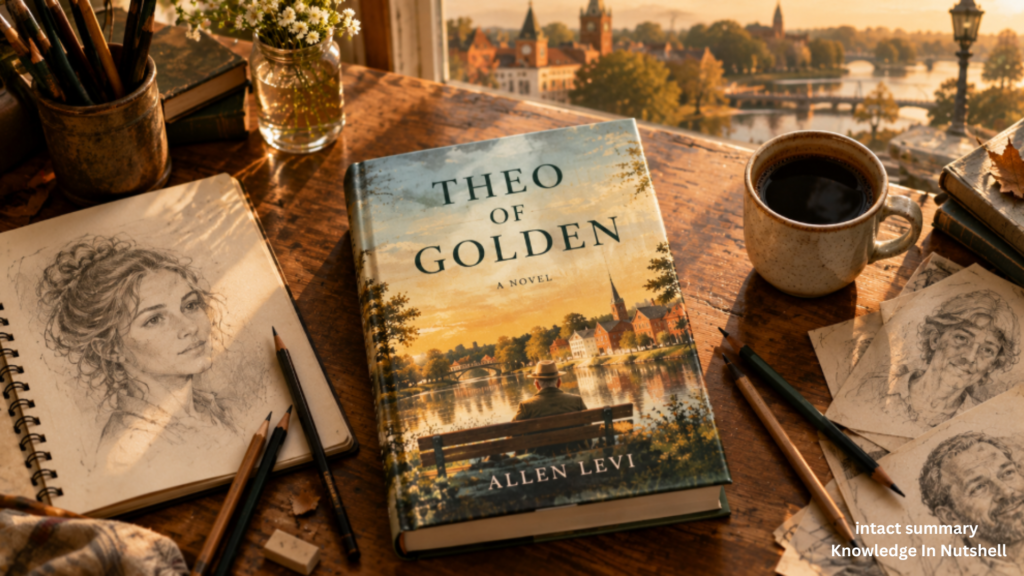
By buying back and personally returning each portrait, Theo turns a static art object into a living conversation. The novel repeatedly suggests that good art, whether a pencil portrait, a piece of music, or even a well-tended garden, exists to connect people rather than simply to be admired, and that the deepest purpose of any creative act is the attention and love behind it.
Golden, Georgia: Setting and Atmosphere
Golden itself is drawn with enough specificity to feel like a real Southern town rather than a generic backdrop. Its tree-lined central promenade, historic nineteenth-century storefronts, public fountains, and the Oxbow River running along its edge give the novel a strong sense of place.
Theo’s daily walks along the river, his habit of noticing local bird species, and his appreciation for a neighbor’s garden all reflect one of the book’s quieter arguments: that beauty and meaning are usually available close to home, to anyone willing to slow down enough to notice them. Longer-term residents also reveal a more complicated history beneath Golden’s postcard surface, including references to past racial violence, which keeps the town from feeling like an idealized fantasy and grounds its themes of grace and healing in a more honest reality.
Symbolism and Literary Devices of Theo of Golden
The pencil portraits are the novel’s central symbol, representing both the act of truly seeing another person and the idea that everyone possesses a story worth honoring. Golden’s central oak tree, a longstanding local landmark tied to the town’s difficult history, functions as a symbol of collective memory, marking the space between the town’s beauty and its unresolved past.
Letters appear repeatedly throughout the novel as a narrative device, most significantly in the final chapters, where Theo’s letters to Asher deliver the novel’s most important revelations in an intimate, unhurried form that mirrors the book’s overall pacing. The structure itself, built from short, largely self-contained chapters centered on individual bestowals, mirrors the novel’s thematic argument that meaningful change happens one relationship at a time rather than all at once.
Is Theo of Golden a Mystery?
Theo of Golden is not a mystery novel in the traditional thriller sense, but it does use mystery as a structural engine. From his first appearance, Theo’s motives, wealth, and past are deliberately withheld, and the town’s suspicion of this unexplained stranger mirrors the reader’s own curiosity.
Subtle clues accumulate gradually, including Theo’s careful study of Asher’s family and his unexplained fluency with fine art, rewarding attentive readers well before the full revelation arrives. This makes the book better described as a quiet literary mystery, where the payoff is emotional and relational rather than procedural.
Spirituality and Religious Themes
Many readers describe Theo of Golden as spiritual rather than overtly religious, and that distinction matters. The novel is shaped by Allen Levi’s Christian faith, and it draws loose but recognizable parallels to biblical ideas, including echoes of Eden in Golden’s beauty and imperfection, and echoes of grace in Theo’s unearned generosity toward people who have done nothing to deserve it. However, the book avoids sermonizing. Faith operates here as an undercurrent shaping the story’s moral logic rather than as explicit doctrine, which is part of why the novel has resonated with readers across a wide range of religious backgrounds.
Frequently Asked Questions of Theo of Golden
What is Theo of Golden about?
Theo of Golden follows an elderly, mysterious man named Theo who arrives in the small Southern town of Golden, Georgia, and spends a year buying back 92 pencil portraits from a local coffee shop and personally returning each one to its subject, uncovering hidden stories of grief and hope across the community.
Who wrote Theo of Golden?
Theo of Golden was written by Allen Levi, an attorney, judge, and singer-songwriter from middle Georgia. It is his debut novel, originally self-published in 2023 before being picked up by Atria Books, an imprint of Simon & Schuster.
Is Theo of Golden based on a true story?
No, Theo of Golden is a work of fiction. Golden, Georgia, and all of its characters are invented, though the town’s atmosphere draws on the feel of real small Southern communities.
How does Theo of Golden end?
Theo dies in an accidental fall while trying to help during an attack on two people he cares about. Afterward, his true identity is revealed: he was a world-famous reclusive artist known as Zila, and he was secretly the biological father of Asher Glissen, the artist whose portraits started his entire mission.
Is Theo of Golden sad or uplifting?
It is both. The novel is gentle, warm, and often described as a feel-good read, but it deals honestly with grief, loss, and a genuinely emotional ending, making it a story that many readers describe as moving them to tears while still leaving them hopeful.
What genre is Theo of Golden?
Theo of Golden is literary fiction with strong elements of Southern fiction, inspirational fiction, and quiet mystery.
Who is Theo really in Theo of Golden?
Theo’s full name is Gamez Theophilus Zilavez, known internationally as the artist Zila. He is also revealed to be the biological father of Asher Glissen.
What do the pencil portraits symbolize in Theo of Golden?
The 92 pencil portraits symbolize the act of truly seeing another person. Each portrait becomes an invitation for Theo to hear someone’s story and affirm their worth.
Is Theo of Golden a religious book?
The novel carries clear spiritual and Christian undercurrents shaped by author Allen Levi’s own faith, including loose parallels to biblical themes of grace and Eden, but it is not overtly preachy or doctrinal.
What are the main themes of Theo of Golden?
The novel’s central themes include kindness and generosity without expectation, truly seeing other people, grief and transformation, community and human connection, and belated, quietly expressed love.
Is Theo of Golden a mystery novel?
It functions as a quiet literary mystery rather than a traditional thriller, using Theo’s concealed identity and motives to build gentle suspense that pays off emotionally rather than through plot twists alone.
How long is Theo of Golden?
The novel runs approximately 400 pages, structured around short, largely self-contained chapters centered on individual characters and their bestowals.
Is Theo of Golden good for book clubs?
Yes, its rich themes around generosity, grief, art, and community, combined with its emotionally resonant ending, make it a strong choice for group discussion.
What books are similar to Theo of Golden?
Readers who enjoyed Theo of Golden often also enjoy Tuesdays with Morrie by Mitch Albom, A Man Called Ove by Fredrik Backman, and The Midnight Library by Matt Haig.
Conclusion
Theo of Golden is a story about a kind old man named Theo. He moves to a small town called Golden. There, he finds 92 drawings of the people who live there. Theo decides to buy each drawing and give it back to the person in the picture. This small act of kindness starts something big. As Theo gives each drawing away, he learns about the people in his new town. He listens to their stories. He helps them in quiet ways, without asking for anything back.
The book teaches us that being kind and really listening to others can change their whole day, or even their whole life. It also shows that even people who seem happy on the outside might be carrying a heavy feeling inside, like sadness or worry. Theo teaches everyone around him, and us too, that paying attention to people is one of the best gifts we can give. This story reminds us that small, caring actions can mean the whole world to someone else.