Starting a new school can feel scary. Sitting alone at lunch can feel even worse. Save Me a Seat by Sarah Weeks and Gita Varadarajan is a middle grade novel that follows two very different fifth graders who each feel like they don’t belong — until they find each other.
If you’re a parent checking whether this book is right for your child, a teacher planning a classroom read-aloud, or a student who needs a Save Me a Seat summary for a book report, this guide covers everything you need. You’ll get a full breakdown of the plot, the main characters, the biggest themes, and answers to the most common questions readers ask about this story.
Also Read:/shield-of-sparrows-summary/
This article was written after a careful read-through of the novel itself, along with a review of reader discussions and published reviews, to make sure every detail here is accurate to the actual book — not a generic summary that could describe any school story.
Quick Answer
Save Me a Seat is a 2016 middle grade novel told from two points of view: Ravi, a boy who just moved to America from India, and Joe, an American-born classmate who struggles with an auditory processing disorder (APD). Over one week of fifth grade, both boys are targeted by the class bully, Dillon Samreen, but they slowly discover that they have more in common than they thought — and that a real friend is worth more than fitting in. The book is praised for its honest look at bullying, cultural differences, and belonging in an American school.
Book Overview and Background
Save Me a Seat was published in 2016 and was co-written by two authors with very different backgrounds: Sarah Weeks, a veteran children’s author known for books like So B. It and Pie, and Gita Varadarajan, an Indian American author who drew on her own childhood experiences and years of teaching children to help shape the story.
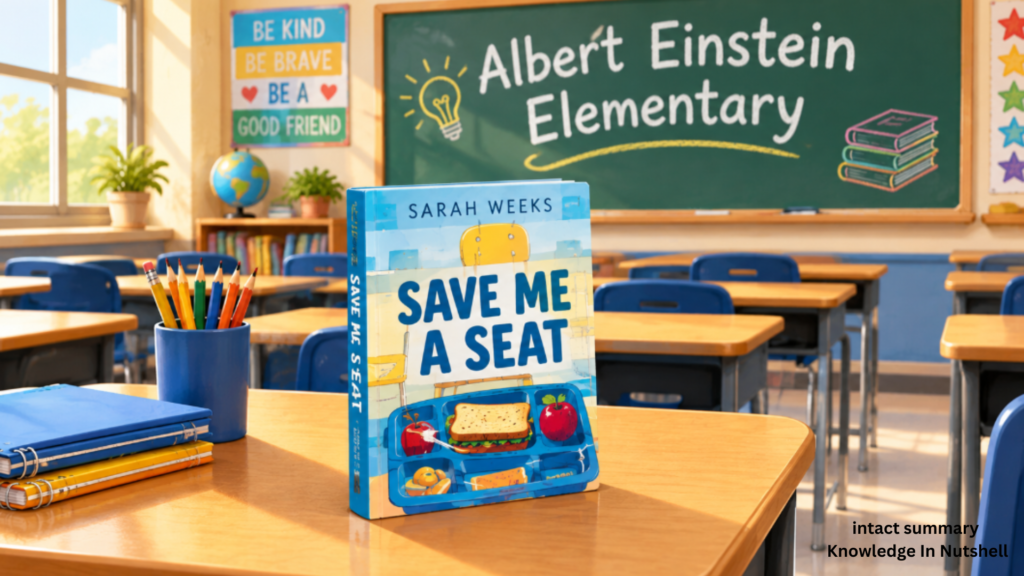
The book is set at a fictional school called Albert Einstein Elementary School in the United States, and the entire story takes place over just one week — the first week of a new school year. That tight timeline is part of what makes the book feel so real: readers experience the same rush of small, stressful moments that a real fifth grader would face in their first days at school.
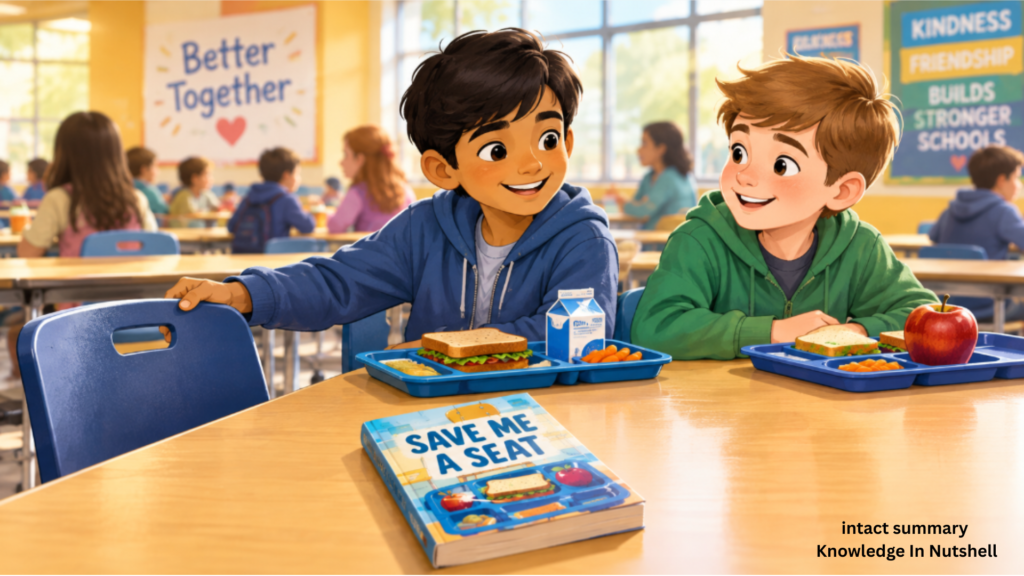
The novel belongs to the contemporary realistic fiction genre, meaning nothing magical or fantastical happens — every event could realistically happen at an American school today. This is part of why the book is so widely used in classrooms: it mirrors real conversations about immigrant experience, racial diversity, learning differences, and bullying that many students actually live through.
A key concept readers should know going in: Save Me a Seat uses alternating perspectives. Each chapter is told from either Ravi’s or Joe’s point of view, which lets readers understand both boys’ inner thoughts, fears, and misunderstandings about each other — something a single-narrator book couldn’t do as effectively.
The book has been well received by teachers, librarians, and parents for its balance of humor and heart, and it’s frequently recommended as a classroom read for discussions about kindness, empathy, and acceptance.
Spoiler-Free Summary
Save Me a Seat takes place over five school days and follows two fifth graders at Albert Einstein Elementary School. Ravi, who recently moved from India, is used to being a top student and a cricket star back home — but in his new school, his accent gets mocked, his lunch looks “weird” to classmates, and nothing feels familiar. Joe, born and raised in America, has his own struggle: an auditory processing disorder makes it hard for him to follow spoken instructions, and he’s terrified his new teacher will send him back to the Resource Room, where he was teased the year before.
Both boys become targets of Dillon Samreen, the loudest and most popular kid in class, who uses jokes and pranks to make himself look tough at other people’s expense. Ravi and Joe start out believing the other boy is one of Dillon’s friends — which keeps them from trusting each other. As the week goes on, through school cafeteria mishaps, classroom mix-ups, and shared moments of embarrassment, the two boys slowly realize they’re facing the same enemy, not each other.
Full Summary (With Spoilers)
Early in the week, Ravi struggles to make sense of American classroom habits, slang, and food, while quietly missing his grandfather and friends back in India. He tries to impress classmates by boasting about his cricket skills, which backfires and makes him seem arrogant rather than likeable. Meanwhile, Joe dreads being called on in class, since mishearing directions has embarrassed him before. Dillon targets both boys separately — spreading rumors about Ravi’s lunch and mocking Joe’s need for extra help — while keeping his bullying just quiet enough that adults don’t notice.
A turning point comes through a school cafeteria incident involving Ravi’s homemade Indian lunch, which Dillon twists into a joke that spreads through the class. Around the same time, Joe faces his own low point when a misunderstanding in gym class, fueled by Dillon, makes him look foolish in front of everyone. Both boys reach their lowest point separately, each convinced the other is against him too.
By the end of the week, a shared moment of standing up to Dillon — where Ravi and Joe finally see each other clearly instead of through Dillon’s lies — brings them together. The book closes with the two boys choosing to sit together, literally saving each other a seat, symbolizing the friendship and acceptance neither expected to find in his first week.
Main Characters in Save Me a Seat
Character: Ravi
Role & Arc: Ravi is one of the two narrators. He arrives from India full of confidence about his academic and cricket achievements, only to feel invisible and mocked in his new school. Over the week, his arc moves from frustration and pride to humility and genuine connection, as he learns that confidence built on showing off isn’t the same as belonging.
Character: Joe
Role & Arc: Joe is the second narrator. He lives with auditory processing disorder, which makes classroom instructions hard to follow and has made him a frequent target for teasing. His arc is about facing his fear of being labeled “different,” and discovering that opening up to a friend — rather than hiding his struggles — is what actually helps him.
Character: Dillon Samreen
Role & Arc: Dillon is the class bully whose teasing pushes Ravi and Joe apart before ultimately pushing them together. He isn’t given a deep redemption arc in the story; instead, his role is to show how bullying thrives when kids don’t talk to each other — and how it loses its power once targets team up instead of staying isolated.
Key Themes Explained
Friendship Across Differences
The heart of Save Me a Seat is an unlikely friendship between two boys who seem to have nothing in common. Ravi is an outgoing newcomer proud of his heritage; Joe is a quiet American kid managing a learning difference. Their friendship shows readers that shared struggle — not shared background — is often what actually connects people. This matters to readers because it challenges the idea that you can only be friends with people who look or sound like you.
Bullying and How It Spreads
Dillon’s bullying works because he isolates his targets — he tells Ravi that Joe is making fun of him, and lets Joe believe Ravi is one of Dillon’s friends. The novel makes a subtle but important point: bullying often depends on keeping victims from talking to each other. Once Ravi and Joe compare notes, Dillon’s power over them shrinks. This theme gives readers a real, usable lesson: responding to bullies is easier as a team than alone.
Belonging and Acceptance
Both boys spend the book longing to belong — Ravi to his new country and classmates, Joe to a classroom that doesn’t see him as “the kid with problems.” Their arcs show two different paths to the same goal: Ravi learns that acceptance doesn’t require hiding who he is, and Joe learns that letting people see his struggle is safer than hiding it. Together, they model self-acceptance as much as social acceptance.
Cultural Identity and the Immigrant Experience
Ravi’s chapters give readers an honest window into the immigrant experience — the discomfort of unfamiliar food being mocked, the frustration of an accent drawing stares, and the ache of missing home. The book treats Indian culture, Indian food, and Ravi’s cultural heritage with respect rather than as a punchline, which is part of why it’s praised for handling cultural differences thoughtfully.
Hidden Struggles and Empathy
Joe’s auditory processing disorder isn’t visible the way an accent is, but it’s just as real a barrier. By pairing Joe’s invisible struggle with Ravi’s visible one, the authors remind readers that everyone is fighting something — even people who seem to “fit in” easily. This builds empathy by showing that judging people at first glance almost always misses the full picture.
Symbolism and Literary Devices
The title itself is the book’s central symbol. “Save me a seat” refers to the literal act of holding a place for someone in the school cafeteria — but by the end, it represents something bigger: making room for someone in your life, regardless of their differences. The final scene, where the boys save each other a seat, ties the whole story’s emotional arc into one small, concrete action.
The use of alternating perspectives is itself a literary device worth noting. By switching between Ravi’s and Joe’s chapters, the authors let readers see how easily two kids can misread each other’s intentions — a structural choice that reinforces the book’s message about assumptions and misunderstanding.
Setting and Cultural Context
The story’s setting — a single American school, over a single week — keeps the focus tight on classroom dynamics and school life, rather than sprawling into unrelated subplots. This makes Save Me a Seat especially useful for classroom discussion, since every event happens somewhere students recognize: the classroom, the Resource Room, the school cafeteria, and the playground.
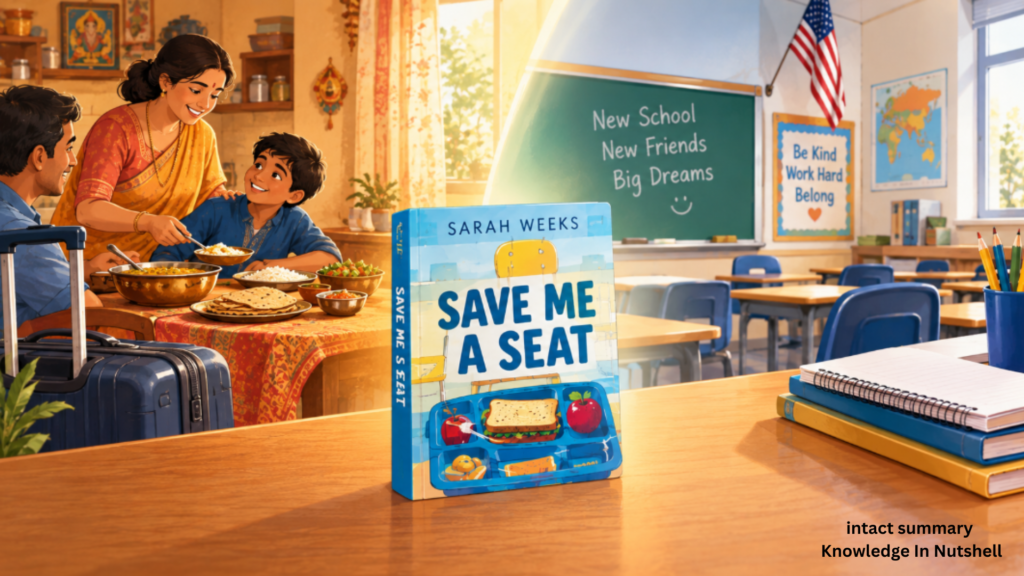
Gita Varadarajan’s own background brought authenticity to Ravi’s Indian American experience, while Sarah Weeks’ experience writing for middle grade readers shaped the pacing and voice. This collaboration is part of why reviewers often point to the book’s cultural diversity as feeling genuine rather than performative.
Frequently Asked Questions
1. What is Save Me a Seat about?
Save Me a Seat is about two fifth graders, Ravi and Joe, who each struggle to fit in at their American school for different reasons — one as a newcomer from India, the other because of an auditory processing disorder — and who become friends after realizing they share a common bully.
2. Who wrote Save Me a Seat?
The book was co-written by Sarah Weeks, a well-known children’s author, and Gita Varadarajan, an Indian American author, who combined their perspectives to write an authentic dual-narrator story.
3. What is the main theme of Save Me a Seat?
The central theme is friendship across differences — how two very different kids overcome misunderstanding and bullying to find acceptance and belonging with each other.
4. How does Save Me a Seat end?
By the end of the book, Ravi and Joe move past their misunderstandings, stand up to Dillon Samreen together, and choose to sit together — literally saving each other a seat, which gives the book its title.
5. Who is the bully in Save Me a Seat?
Dillon Samreen is the class bully who targets both Ravi and Joe throughout the story, using teasing and rumors to keep them isolated from each other.
6. What disorder does Joe have in Save Me a Seat?
Joe has an auditory processing disorder (APD), which makes it difficult for him to process and follow spoken instructions, leading to embarrassment and fear of the Resource Room.
7. Is Save Me a Seat based on a true story?
No, Save Me a Seat is a work of realistic fiction. However, co-author Gita Varadarajan drew on her own childhood experiences and cultural background to make Ravi’s story feel authentic.
8. What grade level is Save Me a Seat appropriate for?
The book is generally recommended for ages 8–12, roughly grades 4–6, making it a strong fit for fifth graders and middle grade readers.
9. How many perspectives does Save Me a Seat have?
The novel uses alternating perspectives, switching between chapters narrated by Ravi and chapters narrated by Joe.
10. Is Save Me a Seat a good book for discussing bullying?
Yes. Many teachers use it specifically because it shows how bullying isolates victims and how friendship and communication can counter it, making it useful for classroom discussion.
11. What school do Ravi and Joe attend?
Both boys attend Albert Einstein Elementary School, where the entire story takes place over one week.
12. Is Save Me a Seat a sad book?
It has emotional and difficult moments involving bullying and cultural isolation, but it ultimately ends on a hopeful, uplifting note about friendship and acceptance.
13. How long does the story take place over?
The entire novel takes place over just one week — the first week of the school year.
14. Why is cultural diversity important in Save Me a Seat?
The book portrays Indian culture and the immigrant experience respectfully through Ravi’s eyes, helping readers understand cultural differences without reducing them to stereotypes.
15. Is Save Me a Seat worth reading?
Yes — it’s widely recommended for its honest, age-appropriate handling of bullying, empathy, and belonging, told through two relatable and distinct voices.
Our Research Approach
This Save Me a Seat summary and analysis was created by carefully reading the novel and cross-referencing plot details, character arcs, and thematic content against the original text to ensure accuracy. We also reviewed published reader discussions and reputable book review sources to confirm that our interpretation of the book’s themes and message reflects how the story is actually understood by teachers, parents, and young readers.
Every plot detail, character description, and theme discussion in this article was written from scratch in original language — no content was copied or closely paraphrased from the book itself or from other articles. Direct quotations, where used, are kept short and used only when a paraphrase would lose meaning.
This guide is intended for parents, teachers, students, and casual readers looking for a trustworthy, accurate resource on Save Me a Seat — not a substitute for reading the book itself.
Conclusion
Save Me a Seat is a story about two boys who feel alone at their new school — but who find out they are not so different after all. Ravi comes all the way from India and misses his home. Joe finds it hard to listen and follow directions because of his auditory processing disorder. A mean boy named Dillon tries to keep them apart by being unkind to both of them. But by the end of the week, Ravi and Joe stop believing the mean things Dillon says and become real friends.
This book teaches us that everyone is fighting a hard battle we can’t always see. It shows that kindness and friendship can beat bullying, especially when people stick together instead of staying alone. The title says it all: sometimes the kindest thing you can do is save someone a seat.