Frederick Fife gets something close to that, but not in the way he would ever pick. He is 82 years old, broke, and about to lose his home. Then, on one strange day by a river, a case of mistaken identity changes everything.
If you landed here, you may be asking a few simple things. Is The Borrowed Life of Frederick Fife worth reading. What really happens in the story. Who are Fred, Denise, and Bernard Greer. Maybe you are picking a book for your book club, or helping a student write a report. Or maybe you just finished the book and want to talk about that ending. Either way, you are in the right place.
Also Read:/james-and-the-giant-peach-summary/
The Borrowed Life of Frederick Fife is a debut novel by Anna Johnston, an Australian author. It is a heartwarming story full of laughs, tears, and unconditional kindness. It belongs to contemporary fiction and explores second chances, grief, forgiveness, and finding family. Readers often compare it to the cozy, quirky stories of Fredrik Backman. For most readers, yes. It is a feel-good novel with lovable people, though it can feel a bit sappy and leans on big coincidences.
Quick Answer of The Borrowed Life of Frederick Fife
The Borrowed Life of Frederick Fife by Anna Johnston is a 2024 contemporary fiction novel about an 82-year-old widower who is mistaken for his look-alike, a nursing home resident named Bernard Greer. Fred is broke and alone, so he lets the mix-up stand and starts living Bernard’s life at Wattle River Nursing Home.
There he spreads kindness, makes friends, and tries to repair Bernard’s broken relationship with his estranged daughter. It is a funny, bittersweet story about identity, redemption and forgiveness, and found family.
What Is The Borrowed Life of Frederick Fife About?
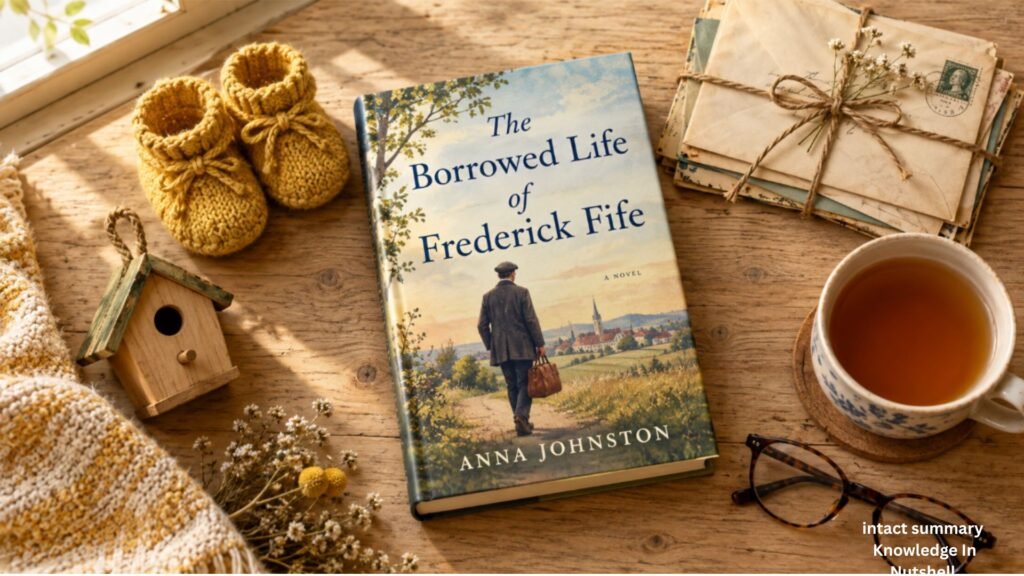
In simple words, it is a story about a very kind man who gets a very odd second chance. Frederick “Fred” Fife is a lonely widower who ends up living as someone else inside a nursing home. The title tells you the big idea. Fred borrows another man’s life, including his name, his room, and his family trouble, and he does his best to take good care of it.
Genre and tone. The book is contemporary fiction with plenty of humor. It is character-driven, which means the people matter more than big action scenes. Expect laugh-out-loud moments, quiet tears, and a slow, steady kind of emotional healing.
Setting and time. The story happens in modern times, mostly inside Wattle River Nursing Home, with scenes in the nearby park and by the river. It also looks back at the past, especially in the parts told from Hannah’s point of view. The author uses three viewpoints: Fred, Denise, and Hannah. This lets you see the same events through different hearts.
Many stories treat older adults like sad background characters. This one puts an elderly protagonist in the middle and shows the full picture: jokes, crushes, grief, bad moods, and brave acts. Reviewers often point to how it shows the invisibility of the elderly and the power of human connection.
Reception. Publishers Weekly described the book as a gentle, sweet tale about a mix-up and fresh starts. Booklist gave it a starred review and pointed to ideas of community, family, and starting over. Bestselling authors Phaedra Patrick and Amy Meyerson also praised its warmth and humor.
Good to know before you start. The book touches on grief, serious illness, dementia, and money worries. It handles them gently, but if those topics are tender for you, keep that in mind. The plot also depends on some big coincidences. Most readers treat that like the setup of a fable and happily go along with it.
Meet the Author: Who Is Anna Johnston?
Anna Johnston is an Australian author, and this is her debut novel. She grew up in country Victoria and now lives near the beach in Melbourne with her family. Her path to writing is a lovely story on its own.
Anna started down a career in medicine, then chose a different road. She went to work in her grandfather’s nursing home as the social support coordinator, planning fun activities for the residents. When her grandfather was diagnosed with dementia, the job let them spend more time together. Later, an injury meant she could not keep working in aged care, so she began to write about the world she loved.
Her grandfather was the main inspiration for Fred. She has said he had a special gift for making everyone feel they mattered. She even gave the character her grandparents’ first names, Fred and Dawn.
The idea first showed up in 2019 during a holiday in Cornwall, England, and it grew during the 2020 lockdown. Anna has always been curious about doppelgängers and mistaken identity. To get the details right, she talked with a personal carer, a nurse, a doctor, and a police officer. She also read about look-alikes and watched interviews with families who have faced addiction, homelessness, and cancer.
Her second novel, When Lemons Give You Life, is about a grumpy retired chef living in a nursing home. It is another story about older people, purpose, and connection.
The Borrowed Life of Frederick Fife Plot: Spoiler-Free Summary
Fred Fife has run out of luck. He is 82, his wife Dawn passed away about ten years ago, and his money is gone. His landlord has told him to leave, and he has no friends left to call. So he wanders to a park by the river to think.
What happens next is hard to believe. A sad accident takes place near the water, and a group from Wattle River Nursing Home finds Fred at the wrong place at the wrong time. Because he looks almost exactly like a grumpy resident named Bernard Greer, the caregivers decide he is Bernard. Fred tries to explain. Nobody listens. Bernard had been showing signs of dementia, so the staff think Fred is simply confused.
Soon Fred is eating warm meals and sleeping in a real bed. Going back to the street feels far scarier than staying put for a while. So he makes a choice that is not exactly honest. He decides to borrow Bernard’s life, just for now.
But Fred cannot help being Fred. He is kind to everyone, and the whole home slowly gets brighter. A caregiver named Denise Simms, who has her own troubles at home, starts to wonder why “Bernard” seems so different. And somewhere out there is a daughter Bernard has not spoken to in years.
The Borrowed Life of Frederick Fife: Full Summary (With Spoilers)
The mix-up. Fred is evicted and wanders to the park by the river. There he finds a man in a wheelchair who has died while feeding the seagulls. This is Bernard Greer. Fred panics and tries to get help, but he trips, and the body tumbles into the river and floats away. Earlier, Fred had put his sweater over the man’s shoulders, and his wallet was in the pocket. Caregivers from Wattle River Nursing Home arrive and take Fred back as Bernard.
Stuck in the lie. Fred insists he is not Bernard, but because Bernard showed early signs of dementia, nobody believes him. Even the police return him to the home. Then Bernard’s body is found, and the wallet makes everyone think the dead man is Frederick Fife. On paper, Fred has died. Since he has no home and no money, he decides to keep living as Bernard.
Read More:/the-symbol-and-the-sword-summary/
A new family. Fred slowly becomes part of the home. Albert, a resident with dementia, thinks Fred is his long-lost brother. Albert’s wife Val visits every day and welcomes Fred warmly. Fred also becomes friends with Linh and Kevin, and he plays matchmaker for them. A bold resident named Patricia chases after him, and Fred and Albert even take a scooter on a wild trip to buy suits for a wedding.
Bernard’s secret past. Fred finds letters Bernard wrote to his daughter but never mailed. We learn more through Hannah’s point of view. When she was a girl, her little sister Sadie got leukemia and died. Bernard fell apart from grief, depression, and gambling, and then he left his family. Hannah grew up angry and hurt.
Hannah arrives. Hannah comes to the home after getting one of her father’s letters. She is pregnant, short on money, and alone because her baby’s father walked away. Fred knows he is lying to her, yet he sees how much she needs an apology. He says sorry and gives her a letter. Over time, “Bernard” becomes the gentle father she never had. He goes to her doctor visits, worries about her bills, knits yellow booties for the baby, and fixes up a birdhouse.

Denise figures it out. Denise Simms notices that “Bernard” can hear better and remember more than his files say. She is also struggling at home and has started drinking too much. One night she is not fit to work, and Fred quietly helps her care for a resident. After that, Denise understands that Fred is not a bad man, and she keeps his secret.
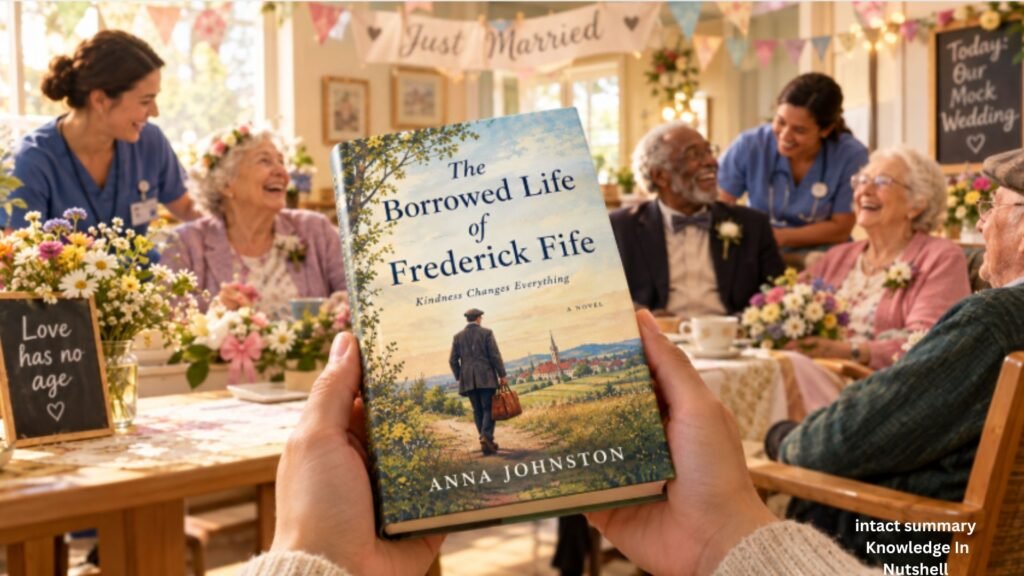
The wedding and the loss. Fred and Val set up a happy mock wedding for Albert, who believes his wedding day has come again. It is a joyful, tearful scene. Soon after, Albert dies, and Fred is heartbroken.
The money and the crash. Fred learns from Bernard’s lawyer that Bernard left a trust fund for Hannah. She can only get it if Bernard is officially dead. Fred starts planning how to end the lie. But missing sleeping pills cause an alarm, police arrive, and the truth comes out. Fred is arrested and tells everything.
Forgiveness. Fred writes Hannah a letter confessing and telling her he loves her like a daughter. It hurts, but Hannah slowly forgives both men. At Bernard’s funeral, she talks about the care Fred showed her. Afterward, she calls him “Dad.”
How Does The Borrowed Life of Frederick Fife End? (Ending Explained)
Hannah forgives Fred, invites him to live with her and her baby, and names her daughter Dawn Sadie Greer.
Here is what that ending means in simple words:
- Fred gets his own life back, in a new way. He starts the book invisible and alone. He ends it chosen and loved. The “borrowed life” becomes truly his, but only after he tells the truth.
- Honesty matters. The story does not let Fred stay good while hiding a lie forever. His confession is the turning point.
- Hannah finds peace. She understands that Bernard loved her in a broken way, and that Fred loved her in a whole way. Forgiving does not mean the pain was fine. It means she is ready to move on.
- The baby’s name joins two losses. Dawn is Fred’s late wife. Sadie is Hannah’s lost sister. Together, they turn old grief into new hope.
- Other threads wrap up too. Denise admits she needs help and asks for leave. An epilogue includes a wedding invitation from Linh and Kevin.
Some readers find the ending a little too neat. Others say that is exactly the point of a feel-good novel.
The Borrowed Life of Frederick Fife Characters Explained: The Main Four
Character: Frederick “Fred” Fife
Role and arc: Fred is the heart of the story. He begins as an 82-year-old, lonely, broke, and nearly homeless widower who still grieves his wife, Dawn. He is also a man who longed for children and never had them. When he takes over Bernard’s life, he lies at first to survive. Then he keeps going because he loves the people around him. His growth comes when he learns that real belonging needs the truth.
Character: Hannah Greer
Role and arc: Hannah is Bernard’s estranged daughter. She carries deep hurt from her sister’s death and her father leaving. She is tough, careful, and slow to trust. When she meets the “new” Bernard, she softens bit by bit. Her arc moves from anger to forgiveness, and from being alone to having a found family.
Character: Bernard Greer
Role and arc: Bernard is the man whose life Fred borrows, yet he is mostly dead during the story. We know him through memories, letters, and what others say. At first he seems like a villain. Then we learn he was crushed by grief, depression, and gambling, and that he tried too late to make things right. He shows the difference between feeling sorry and actually repairing harm.
Character: Denise Simms
Role and arc: Denise is a caregiver at the home and one of the story’s three viewpoints. She is tired, sharp, and sees what others miss. Her crumbling marriage, her daughter’s health worries, and her drinking pull her down. As a suspicious caregiver, she is a danger to Fred’s secret. As a person in pain, she becomes his friend. Her arc ends when she asks for help.
Supporting Characters in The Borrowed Life of Frederick Fife
- Albert: A resident with dementia who thinks Fred is his brother. His love for his wife stays strong even as his memory fades. His mock wedding is a favorite scene for many readers.
- Val (Valerie): Albert’s loyal wife. She visits daily and shows that love in later life can be deep and steady. She also helps Hannah trust “Bernard.”
- Kevin: A kind young nurse who listens. He is easy to talk to and treats residents with respect.
- Linh: A caring aide who brings warmth and humor. Her own family hurts help her understand Hannah. Her romance with Kevin adds a sweet, light thread.
- Patricia: A bold, funny resident who shows that older adults still have big personalities and desires.
- Sadie: Hannah’s little sister. She never appears in the present, but her memory shapes everyone.
- Dawn: Fred’s late wife. Her love explains why Fred longs for family.
- Andrew Mora: Bernard’s lawyer, who reveals the trust fund and proves Bernard did care.
- Mike and Greg: Hannah’s ex and Denise’s husband. They are not main players, but they show the pain of people who walk away or cause harm.
Key Themes Explained in The Borrowed Life of Frederick Fife
Second Chances and Starting Over of The Borrowed Life of Frederick Fife
This is the biggest theme. Fred has lost almost everything, and a strange accident hands him a new beginning. The book asks a simple question: what would you do with a second chance? Fred uses his to help others. The story also shows that a second chance is not free. Fred has to face the truth before his new life can last.
Identity in The Borrowed Life of Frederick Fife
Fred spends most of the book wearing Bernard’s name. Yet he learns more about himself in that time than ever before. The story suggests that identity is not just a name on a paper. It is what you do, how you treat people, and who you choose to love. The “legal” Fred is dead, but the real Fred is more alive than he has been in years.
Kindness and Positivity of The Borrowed Life of Frederick Fife
Fred’s natural kindness changes the whole nursing home. He listens, jokes, and makes people feel they matter. Nobody in the book is saved by one big act. They are lifted by many small ones, like a warm word, a shared meal, or a silly wedding. The book is clear that kindness is a strength, not a weakness.
Aging, Loneliness, and Being Invisible of The Borrowed Life of Frederick Fife
Fred is poor and old, and the world has stopped looking at him. That is how the mix-up can happen at all. Once inside the home, the story shows older people as full humans. They flirt, argue, laugh, and grieve. The book pushes back on the idea that elderly loneliness is just a sad fact of life. It shows that being seen and spoken to is a basic need at every age.

Grief and Healing of The Borrowed Life of Frederick Fife
Almost everyone in the story is carrying a loss. Fred misses Dawn and the children he never had. Hannah lost her sister and her father. Bernard fell apart after Sadie died. Albert is losing his memory. The book does not say grief goes away. It says people can carry it and still find hope. The baby’s name at the end is the best example.
Forgiveness and Redemption of The Borrowed Life of Frederick Fife
Forgiveness here is never quick or cheap. Hannah forgives slowly, and she does it with her eyes open. The book also separates being sorry from fixing the harm. Bernard felt sorry but stayed away. Fred felt sorry and stayed close. Both men get a kind of redemption, but it comes through honesty and action, not just feelings.
Found Family of The Borrowed Life of Frederick Fife
Blood does not make a family in this book. Care does. Fred becomes a father figure to Hannah, a brother to Albert, and a friend to the whole home. By the end, a group of near strangers has become an unconventional family.
Final Verdict: Is The Borrowed Life of Frederick Fife Worth Reading?
Yes, if you want a warm, funny, hopeful novel. The book’s greatest strength is Fred himself. He shows that kindness is not weak, and that people at any age can still change a life. The story also treats older adults with humor and dignity, which is rare. The weak spots are small: some coincidences are big, and the ending is very tidy. But as a feel-good novel about redemption, forgiveness, and finding family, it delivers. Think of it as a warm blanket with a few tears folded inside.
Frequently Asked Questions About The Borrowed Life of Frederick Fife
1. Who wrote The Borrowed Life of Frederick Fife?
It was written by Anna Johnston, an Australian author. It is her debut novel and came out in 2024.
2. What is The Borrowed Life of Frederick Fife about?
It is about an 82-year-old, broke widower named Fred who is mistaken for a look-alike nursing home resident, Bernard Greer. Fred decides to live Bernard’s life for a while, makes friends, and tries to repair Bernard’s relationship with his estranged daughter.
3. Is The Borrowed Life of Frederick Fife based on a true story?
No, the plot is made up. The author was inspired by her late grandfather’s kindness and by her own time working in a nursing home.
4. How does The Borrowed Life of Frederick Fife end?
Fred tells the truth after being caught. Hannah forgives him, calls him “Dad,” and invites him to live with her and her baby. She names her daughter Dawn Sadie Greer.
5. What is the main theme of the book?
The main themes are second chances, identity, kindness, forgiveness, grief, and found family. The invisibility of older people is also a strong thread.
6. Who is Bernard Greer?
He is a grumpy nursing home resident who dies near the river at the start. He abandoned his family after his daughter Sadie died. Fred takes on his identity.
7. Why does Fred pretend to be Bernard?
At first, nobody believes he is Fred, and he has nowhere else to go. Later, since Fred is thought to be dead, he keeps the lie going because he has a home, food, friends, and a chance to help Hannah.
8. Is The Borrowed Life of Frederick Fife a sad book?
It is funny and uplifting but also bittersweet. Expect a few tears, especially around Albert, Sadie, and the funeral, though the overall mood is hopeful.
9. Is The Borrowed Life of Frederick Fife worth reading?
Yes, for readers who like cozy, character-driven stories. If you cannot stand coincidences or very sweet endings, it may feel too neat.
10. Is it part of a series?
No. It is a standalone novel. Anna Johnston’s second book, When Lemons Give You Life, has different characters.
11. Is the book suitable for teens?
It is mostly gentle, but it includes grief, a child’s illness, dementia, gambling, alcohol misuse, and some cheeky adult jokes. Many teens could handle it, but parents may want to review the content notes first.
12. Will there be a movie?
The author has said a film is her big dream and has shared fun casting ideas, including Harrison Ford for Fred. We did not find an announced film, so check current news for updates.
About This Article: Research and Quality Approach
How we researched. We read the publisher’s description and compared it with trade reviews, blog reviews, reader reviews, and an interview with the author. We cross-checked key facts such as names, plot turns, and publication details across more than one source.
How we wrote it. Everything here is written in our own words. We did not copy competitor pages or reproduce passages from the novel. We used only tiny, fair references to the story’s ideas and kept spoilers inside labeled sections.
How we checked accuracy. Plot points, character names, and the ending were compared across multiple sources. Where reviewers disagreed on opinions, we showed both sides. Small details can differ by edition, so please check the book itself if you need an exact detail for a class or a club.
Our limits. This is an editorial guide, not a substitute for reading the novel. We make no claim of special credentials, and we welcome corrections.
Conclusion of The Borrowed Life of Frederick Fife
The Borrowed Life of Frederick Fife is a story about a very kind man named Fred. He is 82 years old, very lonely, and has no money. Then a big mix-up happens, and people think he is a man named Bernard Greer. Fred ends up living in a nursing home, where he gets warm food and a soft bed.
But Fred does not just sit and rest. He helps everyone he meets. He becomes a friend to Albert, a helper to Denise, and a kind father figure to Bernard’s daughter, Hannah. In the end, Fred tells the truth, and Hannah forgives him. She even invites him to live with her and her baby.
This book by Anna Johnston teaches us some simple things. Fred shows us that one kind person can make a whole place brighter. Being kind matters. Telling the truth matters. Family is not only people who share your blood. It can also be people who care about you. And it is never too late for a second chance.