Picture an old house full of women who barely say hello to each other. Then a new tenant moves into the attic, and soon everyone is sharing dinner, recipes, and secrets. Then, on Thanksgiving night, there is a dead body upstairs. That is the spark behind The Briar Club by Kate Quinn, one of the most talked about historical mystery novels of 2024.
Maybe you are deciding whether this book is worth your time. Maybe you read it months ago and need a quick refresher before your book club meets. Maybe you just turned the last page and want to know exactly what happened to Grace. This guide is for all of you.
Read More:/go-as-a-river-summary/
Here is the short answer. The Briar Club is a historical fiction story with a murder mystery at its heart. It takes place in Washington, D.C., in a boarding house called Briarwood House, during the McCarthy era of the early 1950s. It follows the women who live there and the mysterious widow, Grace March, who pulls them together. It is a story about female friendship, fear, and the secrets people hide to stay safe.
In this article you will find a spoiler-free overview, a full plot summary with a clear warning, character guides, themes, symbols, and the ending explained. You will also get honest pros and cons, similar books to try next, book club questions, and 14 FAQs. Everything is written in simple words and checked against how the story really goes, so you can trust it.
Quick Answer of The Briar Club
The Briar Club is a 2024 historical mystery novel by Kate Quinn. It is set in an all-female boarding house in 1950s Washington, D.C., where a mysterious widow named Grace March turns a group of lonely lodgers into close friends. The story opens with a murder on Thanksgiving 1954, then goes back four years to show how each woman’s life, and Grace’s hidden past, led to that night. It is told through multiple points of view, including the house itself.
What Is The Briar Club About?
The Briar Club is about women’s lives in a time when the world told them how to live. Each woman in Briarwood House carries a problem she cannot share. One is a lonely young mother. One is a hard-working secretary. One is a former athlete whose sport disappeared. One is an older artist. One is a fierce hunter of communists. Then Grace March arrives and begins to host a Thursday night supper in her small attic room.
Those suppers are the heart of the book. They are warm and full of food, chatter, and small kindnesses. They also give the women a safe place to be honest, which matters a lot in a city where neighbors are afraid of each other. The group slowly becomes something like a family.

The name belongs to the supper group at Briarwood House. It ties the friends to the house where they found each other. As you will see later, the house is almost a character in its own right.
Who Is Kate Quinn?
Kate Quinn is an American author known for historical fiction starring smart, brave women. Many readers first met her through The Alice Network, The Huntress, The Rose Code, and The Diamond Eye. Those books mostly take place during the two World Wars. Before those, she also wrote a series of novels set in ancient Rome.
The Briar Club is a little different. It moves into the post-war years and shrinks the stage down to one house and one street. Instead of battlefields and codebreaking rooms, the drama happens in kitchens, on front stoops, and in a tiny attic. Quinn still keeps her trademark mix of friendship, danger, and secrets. Her author’s note also explains the real history behind the story, which many readers enjoy.
If you have read her earlier work, expect a slower, more character-driven rhythm here. If The Briar Club is your first Kate Quinn book, it is a good place to start because you do not need to read anything else first. It is a standalone novel.
Historical Background: Washington, D.C. in the 1950s
You do not need to be a history expert to enjoy this book. Still, a little background makes the story feel much more real. Here are the big pieces of the world the characters live in.
The Red Scare and McCarthyism
After World War II, many Americans became afraid that communists were hiding inside the country. This fear is called the Red Scare. In 1950, Senator Joseph McCarthy became famous for claiming that communists had crept into the government. His name gave us the word McCarthyism, which means accusing people of disloyalty without good proof.
In The Briar Club, this fear is everywhere. People are afraid of being denounced by a friend, a boss, or a neighbor. A single rumor could cost someone a job or a reputation. That is why trust is such a big deal among the women of Briarwood.
HUAC and the Communist Witch Hunts
The House Un-American Activities Committee, called HUAC, was a group in Congress that questioned people about their beliefs and their friends. Many people lost their careers after being named. Because the story takes place in the nation’s capital, these communist witch hunts are close by, and one character throws herself into them with great energy.
The Korean War
The Korean War began in 1950 and shaped many families. In the book, it keeps one young mother’s husband far from home. It also adds to the feeling that the world is unsafe and that everyone is waiting for news.
Women in 1950s America
After the war, women’s chances were changing but not always for the better. Many wartime jobs went back to men. Pay for women was low. Marriage and motherhood were treated as the main goal. The book shows all of this through the lodgers’ daily struggles, including money worries, unequal pay, and pressure to be a “perfect” wife.
Racism, Immigration, and Crime
Washington in the 1950s was a city where Black and white residents often lived very separate lives. The book also touches on immigration, showing how newcomers could be treated with suspicion, and on organized crime, with gangsters lurking near some characters’ lives. The author’s note also mentions early trials of the contraceptive pill, which is one of the real historical details woven into the story.
The Women’s Baseball League
During World War II, a professional women’s baseball league gave female athletes a chance to play in front of crowds. The league faded away in the 1950s. In the book, this real event explains why one lodger’s dream suddenly has nowhere to go.
Because the mystery cannot be understood without it. The fear, distrust, and pressure of the era are the reasons the women hide things, and the reasons Grace’s secret is so dangerous.
Setting: Why Briarwood House Feels Like a Character
Briarwood House is a worn-out all-female boarding house in the middle of Washington, D.C. From the outside, it looks like a neat home behind white picket fences. Inside, it is a place of thin walls, small rooms, and people who keep to themselves. When Grace first sees her attic room, it is tiny and drab, with dull green walls. Yet by the end, that room is the warmest place in the whole house.

The setting works so well because it is small. Almost everything happens in a few spots.
- The front stoop: Where new faces arrive and where Pete tinkers with a broken screen door.
- The kitchen: Where the residents mix, argue, and gossip.
- The attic apartment: Where Grace hosts the Thursday supper when the landlady is away.
- The boarders’ rooms: Where each woman hides her worries.
In the 1950s, a woman who lived alone often had few choices. A rented room was cheap and safe-ish, but it was also lonely. Quinn uses that loneliness to make the friendships feel earned. When strangers under one roof learn to trust each other, it feels like a real victory.
The house also has its own voice. It watches everything and remembers everything. We will look at that next.
How The Briar Club Is Told: Multiple Perspectives and a House Narrator
The Briar Club uses an unusual narrative structure. Instead of following one hero, it hands the story to many people, one after another. Each point of view gets a long chapter of its own. Some readers call this an ensemble cast approach.
The Opening Prologue
The book begins on Thanksgiving 1954. The house itself speaks, describing the scene: a body in the attic, blood, police in the halls, and a landlady falling apart. Then the story jumps back to June 1950 and starts again from the beginning. This trick hooks you right away, because you know something terrible will happen but not who or why.
Each Woman Tells Her Own Story
The first voice after the prologue belongs to Pete Nilsson, the landlady’s teenage son. Then other residents take turns. This has a smart effect. First you see each woman through other people’s eyes, with all their guesses and judgments. Then you step into her own head and learn who she really is. Many of those first impressions turn out to be wrong, which is one of the book’s quiet lessons.
The Good and the Tricky
What works: The structure builds deep characterization. You end up caring about people you first found annoying.
What is tricky: Because each viewpoint is one very long chapter, the first half can feel slow. Reviewers said the story only really tightens once the lives begin to tangle, somewhere around the 60 percent mark. One reader also disliked having no smaller chapter breaks, especially on an e-reader.
A tip for new readers: Take it one voice at a time. Pause between each perspective. The payoff in the second half is worth the patience.
The Briar Club Plot Summary
Spoiler-Free Summary of The Briar Club
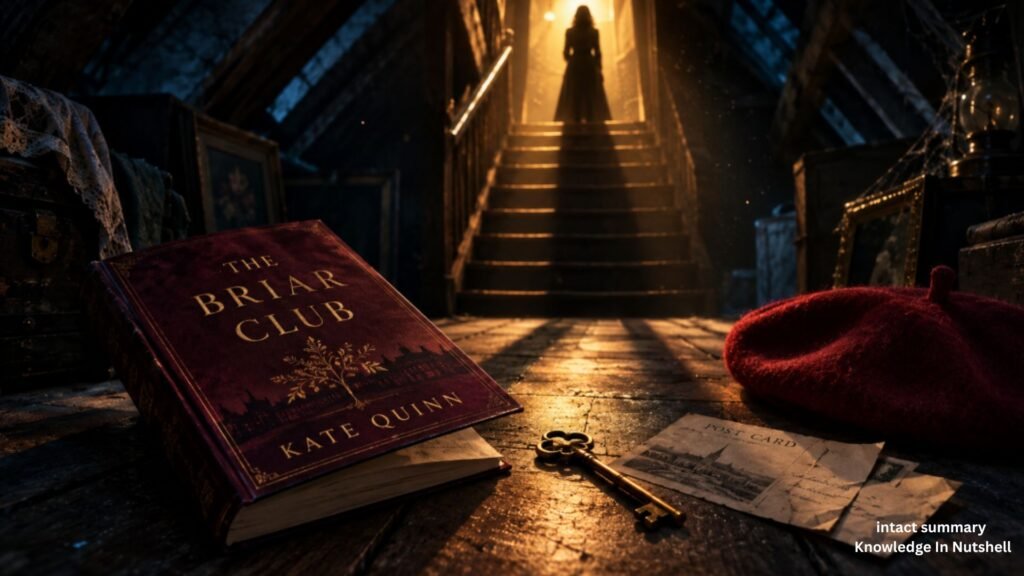
In June 1950, a tall woman in a red beret named Grace March rents an attic room at Briarwood House in Washington, D.C. The house is gloomy, and the women living there mostly ignore each other. Grace changes that by inviting them to Thursday night suppers. Slowly, the lodgers begin to share food, stories, and problems. Meanwhile, the Red Scare grows louder outside, and every woman has private troubles at home, at work, or in her heart.
Four years later, on Thanksgiving 1954, a murder shakes the house. The police arrive, and the women must face a scary question: who among them can be trusted? As the truth comes out, we learn that Grace was hiding something far bigger than any of them guessed.
Full Summary (With Spoilers) of The Briar Club
The story begins on Thanksgiving night in 1954, with the house describing a body in the attic. It then rewinds to 1950. Grace settles into Briarwood and slowly wins over the residents. She suggests the Thursday suppers, helps the landlady’s daughter Lina get glasses, and encourages her to bake. Each woman’s story unfolds: Fliss struggles with motherhood and her husband’s absence during the Korean War, Nora wrestles with money worries and dangerous men, Bea mourns her lost baseball career, and Arlene hunts for communists.
Also Read:/wild-dark-shore-summary/
As the years pass, the danger tightens. Nora’s life becomes tied to the world of organized crime. Fliss feels crushed by expectations. Arlene’s fear of communism turns into something poisonous. Through it all, the Briar Club stays a shelter.
Then comes Thanksgiving 1954. The violence that opens the book finally makes sense. Two people die. One is Grace’s fake American husband, who was also a spy. The other is a senator who was in the wrong place at the wrong time. We learn that Grace is a Russian spy who defected to America, and her calm, kind attic-dinner persona was built over a dangerous past. The women must then decide what Grace means to them, and how far their loyalty goes.
Meet the Characters in The Briar Club
Character: Grace March
Role & Arc: Grace is the heart of the book. She arrives as a mysterious widow and becomes the glue for the Briar Club, bringing flowers, food, and quiet advice. Almost everyone loves her, yet nobody knows her. Her hidden past drives the mystery, and her secret identity is the biggest twist. Readers often say she is warm and enigmatic at the same time, and her backstory is what many people remember most.
Character: Fliss
Role & Arc: Fliss is a young English-born mother with a baby named Angela and a doctor husband, Dan, who is overseas in the Korean War. On the surface she looks like the perfect wife. Underneath, she feels tired, guilty, and unsure she is a good mother. Her arc is about facing what she really needs. Many readers say her motherhood struggles feel true to life, especially when her husband hopes for another baby.
Character: Nora
Role & Arc: Nora works as a secretary at the National Archives. She is a police officer’s daughter, but her family is far from simple. Her brother takes her rent money, and she has been caught up in a hurtful relationship. Later she meets Xavier, a man connected to organized crime. Nora’s arc is about independence. She learns to protect herself, stand up for herself, and decide what she will and will not accept in her life.
Character: Bea (Beatrice)
Role & Arc: Bea is a former women’s baseball league player whose career ended when the league faded. She has a sore knee and a lost dream. She feels stuck in a world with no place for a female athlete. Her story is about finding a new purpose and shows how post-war changes left some women behind.
Character: Arlene
Role & Arc: Arlene is prickly and fierce, and she throws herself into the Red Scare. She believes she is protecting her country. Instead, she becomes one of the most dangerous voices in the house because her fear makes her want to name enemies. Even so, the book gives her a point of view, which helps readers understand her.
Character: Reka
Role & Arc: Reka is an aging artist among the boarders. She brings a quieter, older perspective and shows how immigration and loneliness follow people through the years. She is a reminder that not every story in the house is loud.
Character: Claire
Role & Arc: Claire is another of the boarders, and readers describe her as prickly at first. Like several others, she turns out to be more layered than the first look suggests. She is a good example of the book’s promise that a person’s rough edges often hide a reason.
Character: Pete Nilsson
Role & Arc: Pete is the landlady’s teenage son. He is thirteen when Grace arrives and falls for her right away. He dreams of being a tough detective like the hero of his favorite crime novels, but in real life he is stuck running errands for his mother. He gives the book its first voice and its youngest heart.
Character: Lina
Role & Arc: Lina is Pete’s younger sister. She is the one Grace helps most gently, first by rallying the women to buy her glasses and then by cheering on her baking, even when the cakes burn. Lina shows how Grace’s kindness reaches beyond the adults.
The Landlady
Role & Arc: The landlady is a grumpy, worn-out woman who keeps the house running and is often away on Thursdays, which is why the suppers can happen. Her collapse in the opening scene sets the tone for the murder.
Key Themes Explained of The Briar Club
Found Family and Female Friendship
This is the main theme. The women of Briarwood House begin as strangers with closed doors. Through Thursday suppers, shared recipes, and small acts of help, they become a found family. The book shows that female friendship is not just a nice extra. It is a survival tool. When the law cannot or will not protect them, the women protect each other.
Secrets, Lies, and Hidden Identities of The Briar Club
Almost everyone in the house is hiding something. Grace’s secret is the biggest, but the others matter too. The book asks a fair question: is hiding always a lie, or can it be a way to stay alive? Many characters hide their pasts because the world punishes them for who they are or what they have been through.
Fear and Political Persecution in The Briar Club
The Red Scare is not just a backdrop. Its fear and suspicion get inside the house. Arlene believes she is protecting her country, but her eagerness to name enemies shows how McCarthyism turned neighbors into suspects. The book also shows how ideas like “us” and “them” can hurt people who did nothing wrong.
Women’s Freedom and Limits in The Briar Club
Each woman bumps up against the rules of the 1950s. Fliss feels trapped by the idea of the perfect wife and mother. Nora fights for independence from family and dangerous men. Bea loses her career when her sport disappears. The book does not say every problem has one simple fix. It shows women finding their own ways forward.
Domestic Abuse and Violence in The Briar Club
Several storylines involve domestic abuse and violence against women. The book treats these topics seriously and does not turn them into entertainment. It also shows that danger could come from inside a home as well as from outside. If these topics are hard for you, it is good to know in advance.
Trust, Loyalty, and Justice of The Briar Club
The final question of the book is a hard one: when the law and what is right do not match, what should a friend do? The women’s choice after the Thanksgiving violence is the book’s answer. Readers often disagree on whether they were right, which makes it great for discussion.
Symbols and Motifs in The Briar Club
Quinn uses a few simple images again and again. Spotting them makes the book richer.
- The Thursday supper: Food is love in this book. Every recipe shared is a small act of trust. The supper table is where strangers turn into friends.
- Sun tea in the window: This gentle, slow-brewed drink shows Grace’s patience and warmth. It also shows how kindness can take time to “steep.”
- The attic: It is the highest, smallest, most private space in the house. It holds Grace’s secrets, and it becomes both the heart of the club and the scene of the crime.
- The briar: A briar is a thorny plant. It can look pretty and still scratch you. That is a fair picture of both the house and the women, who are soft and sharp at once. In the story Grace also paints a vine in her attic room, which ties the plant to the club.
- The house as narrator: Giving Briarwood House a voice makes it a silent witness. It also suggests that places remember the people who lived in them.
- Spectacles for Lina: When the women pool their money to buy glasses for the landlady’s daughter, it is a tiny act that shows how the club works. They notice needs and fix them together.
The Briar Club Ending Explained (Spoilers)
What happens on Thanksgiving 1954?
The opening scene finally makes sense. Grace March has been hiding for years. Her real name is Galina Stepanova, and she is a Soviet spy who defected. She left her old life and her old partner because she came to prefer life in America. That partner, a Soviet agent who had posed as her husband, eventually finds her again.

According to detailed spoiler summaries, Grace kills him in self-defense in the attic. While the women are trying to decide what to do, another danger arrives. The abusive husband of Sydney, a woman connected to one of the boarders, storms into the house. Arlene, who has spent years afraid of hidden enemies, kills him, apparently believing he is another dangerous intruder. Reviewers do not all agree on the smaller details of this scene, so it is worth reading the final chapters yourself.
The Cover Story of The Briar Club
The women do not turn each other in. With help from a friend in the FBI, they build a cover story. In it, an intruder killed the husband, and the women then defended themselves and killed the intruder. The police accept this. That is why the book is full of witnesses who say very little.
What Happens to Grace and the House?
Grace leaves, and the club scatters to new lives. Some summaries say Briarwood House continues on, later cared for by Pete Nilsson. The community remains, even without its center.
Why Does the Twist Work?
Several readers say the twist makes sense when you look back. Grace’s calm, her knack for keeping secrets, and her habit of watching people closely all fit a person trained to observe. Some readers guessed the twist early, especially because the book keeps talking about communism. Others found it a delightful surprise. Both reactions are common.
What Does the Ending Mean?
The ending says that loyalty between friends can matter more than rules, especially in a world that treats women and outsiders unfairly. It is also a little bit uncomfortable on purpose. The women lie to protect each other, and the book invites you to decide whether that was right.
Frequently Asked Questions About The Briar Club
1. What is The Briar Club about?
The Briar Club is a historical mystery by Kate Quinn about the women who live in Briarwood House, an all-female boarding house in Washington, D.C., from 1950 to 1954. A mysterious widow named Grace March starts weekly suppers that turn the residents into close friends. The story opens with a murder on Thanksgiving 1954, then goes back to show how everyone ended up there.
2. Who wrote The Briar Club, and when was it published?
Kate Quinn wrote it, and it came out in 2024. Quinn is a historical fiction author also known for The Alice Network, The Huntress, The Rose Code, and The Diamond Eye. The Briar Club is a standalone novel, so you can read it without knowing her other books.
3. Is The Briar Club based on a true story?
No. The characters, the house, and the murder are made up. However, the historical background is real. That includes the Red Scare, McCarthyism, HUAC, the Korean War, and the real women’s baseball league. The author’s note explains some of the research behind the story.
4. Who is Grace March in The Briar Club?
Grace is the mysterious widow who rents the attic room and starts the Thursday suppers. She is warm, calm, and helpful, but she hides her past. In the end, we learn that her real name is Galina Stepanova and that she is a Soviet spy who defected to America.
5. Who dies in The Briar Club?
Two men die on Thanksgiving 1954. One is Grace’s former partner, a Soviet agent who had posed as her husband. The other is the violent husband of a woman named Sydney, who comes from a powerful political family. Some summaries describe him as a senator or a senator’s son. The women then agree on a cover story for the police.
6. How does The Briar Club end?
The women protect each other and tell a false story to the police, with help from a friend in the FBI. Grace leaves, and the club scatters to new lives. Some summaries say Briarwood House continues on afterward, with Pete Nilsson looking after it. The ending focuses on loyalty, trust, and found family.
7. Who narrates The Briar Club?
The book uses multiple points of view. Each key character gets a long chapter in her own voice, and the house itself speaks in the opening. The first voice after the prologue belongs to Pete Nilsson, the landlady’s teenage son. This is a big part of what makes the book feel unusual.
8. What are the main themes of The Briar Club?
The main themes are female friendship, secrets and hidden identities, fear and political persecution, women’s independence, domestic abuse, and loyalty versus the law. The book also explores racism, immigration, and the pressures women faced in 1950s America.
9. What time period and setting does the book use?
It takes place from June 1950 to Thanksgiving 1954 in Washington, D.C. Most of the action happens inside Briarwood House, especially the kitchen, the front stoop, and Grace’s attic apartment. The background is the McCarthy era and the early Cold War.
10. Is The Briar Club worth reading?
Yes, for many readers. It has rich characters, a strong twist, and a lot to discuss. It is best for people who enjoy character-driven historical fiction. The first half is slow, and the chapters are very long, so it may frustrate readers who want fast action. Most reviewers still rate it highly.
11. Is The Briar Club a slow read?
The first half is gentle and slow, because the book takes time to introduce each woman. One reviewer noted that the strands only truly come together around the 60 percent mark. After that, the pace picks up quickly. Taking short breaks between each perspective makes it easier.
12. Is The Briar Club a series or a standalone?
It is a standalone novel. You do not need any other book to understand it. Readers who want more in the same spirit often move on to Kate Quinn’s other historical novels.
13. What is the Briar Club in the story?
The Briar Club is the group of women who gather in Grace’s attic on Thursday nights for supper. It grows from a simple meal into a safe place to share problems and secrets. The name connects the group to Briarwood House, where they live.
14. Is The Briar Club appropriate for young readers?
It is written for adults. It includes violence, domestic abuse, and mature themes. Parents of teens may want to read it first. Readers who are sensitive to these topics should know about them before they begin.
Final Thoughts: Is The Briar Club Right for You?
The Briar Club is a story about how people find safety in each other. It starts as a quiet tale about lonely women in a shabby house and ends as a story about loyalty, fear, and hard choices. Its history is real, its characters are memorable, and its twist stays with you.
If you enjoy historical fiction, female friendship, and slow-building mystery, it is well worth your time. Give the first half some patience, and you will likely be rewarded.
Conclusion of The Briar Club
The Briar Club is a story about friends who find each other in a big, scary world. It happens in Washington, D.C., a long time ago, in the 1950s. The women live in an old house called Briarwood House. At first, they are strangers who keep to themselves.
Then Grace March moves into the attic. She cooks food and invites everyone to supper on Thursday nights. Soon the women share stories, laughs, and even their biggest secrets. They become like a family.
But the book is also a mystery. It starts with a shocking night at the house. Then it goes back in time to show how everything happened. Grace is hiding something big, and the surprise at the end is one readers remember.
The story teaches us that good friends look out for each other. It also shows how fear can make people act in unkind ways.
The first half moves slowly, so be patient. The second half is full of twists. If you like historical fiction, friendship stories, and clever mysteries, The Briar Club by Kate Quinn is a great book to pick up next.