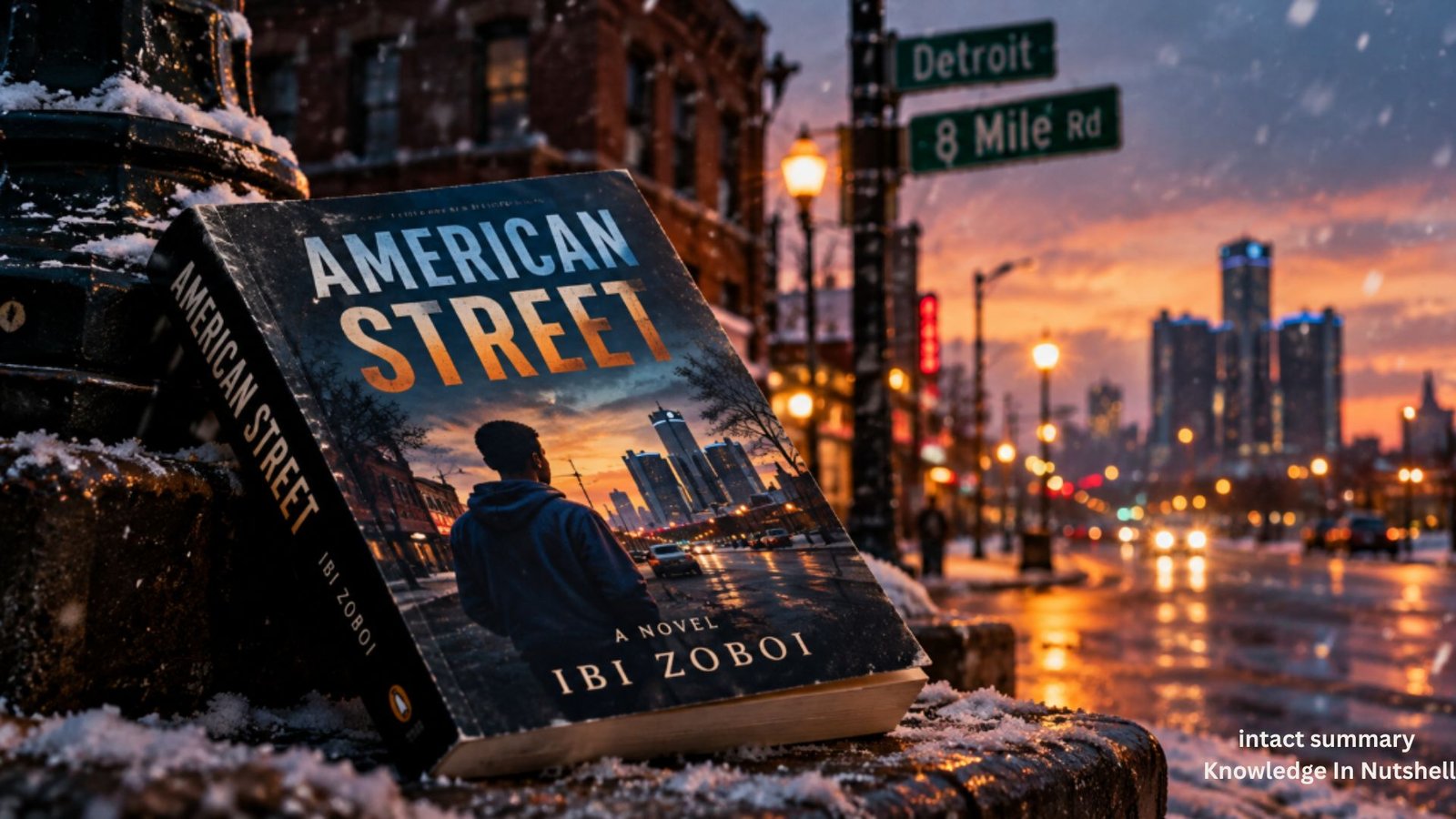
American Street by Ibi Zoboi is one of the most talked about young adult novels of the last ten years. It tells the story of Fabiola Toussaint, a Haitian girl who comes to Detroit hoping for a better life, only to find that the American Dream comes with a very high price. This book mixes real, hard topics like immigration, poverty, and violence with beautiful Haitian Vodou magic, making it feel like nothing else on the shelf.
In this guide, you will get a full, easy to follow American Street summary, a look at every major character, a clear breakdown of the book’s biggest themes, and an explanation of the ending. We also cover why this book has become a banned book in some schools, what the title itself really means, and questions you can use for a book club or class discussion.
Also Read:/the-stolen-life-of-colette-marceau-summary/
Everything here is written in plain, simple language so anyone can follow along, whether you already read the book or are just deciding if it’s worth your time. Let’s start with a quick answer, then dig into the full story.
Quick Answer
American Street is a 2017 young adult novel by Ibi Zoboi about Fabiola Toussaint, a Haitian immigrant teen whose mother is detained by U.S. immigration the moment they arrive in New York. Left to start a new life alone with her aunt and cousins in Detroit, Fabiola must balance her Haitian Vodou faith, a new romance, and a dangerous deal with the police, all while trying to free her mother. The book explores family, identity, and what the American Dream truly costs.
What Is American Street About? (Book Overview)
American Street is a contemporary young adult novel written by Ibi Zoboi, a Haitian American author. It was first published on February 14, 2017, by Balzer + Bray, an imprint of HarperCollins. The book was a finalist for the National Book Award for Young People’s Literature in 2017 and earned five starred reviews from major publications, along with honors from Publishers Weekly, School Library Journal, Kirkus Reviews, and The New York Times.
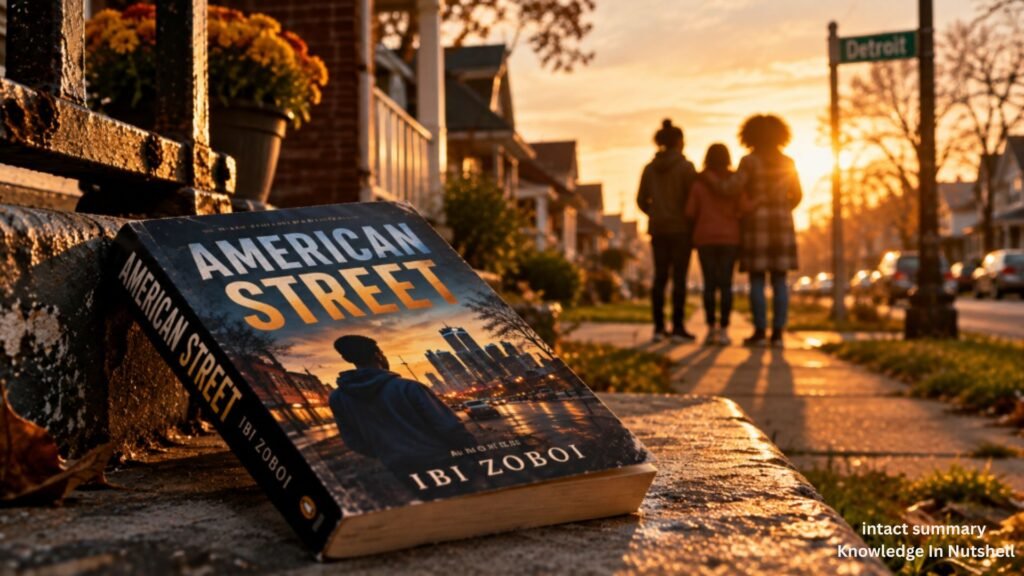
The story is told in first-person narration through the eyes of Fabiola Toussaint, a 16-year-old girl who was technically born in the United States but grew up her whole life in Port-au-Prince, Haiti, with her mother. The book’s setting shifts almost entirely to Detroit’s West Side, specifically the real intersection of American Street and Joy Road, once Fabiola arrives in the U.S.
At its heart, this is a coming-of-age story about an immigrant experience that many readers rarely see in mainstream fiction. Zoboi drew directly from her own life. She immigrated to Brooklyn, New York, from Haiti when she was four years old, and she has said publicly that she poured her own memories of living in between cultures into Fabiola’s journey. This personal history gives the book a level of honesty and detail that reviewers often praise.
Spoiler-Free Summary
Fabiola Toussaint and her mother, Manman, leave their home in Port-au-Prince, Haiti, hoping to build a new life in Detroit with Fabiola’s aunt and cousins. The moment they land in New York, immigration officers detain Manman, believing she does not have the right paperwork to stay. Fabiola is allowed to continue on alone.
She arrives in Detroit and moves in with her Aunt Jo and three cousins, Chantal, Primadonna (Donna), and Princess (Pri), known around their neighborhood as the “Three Bees.” Fabiola must adjust to a new school, a new language, freezing weather, and a family that is far rougher and more complicated than she imagined. She leans on her Haitian Vodou faith, praying to spirits called lwa for guidance, and finds comfort in a growing romance with a boy named Kasim.
But as Fabiola settles in, she slowly discovers that her family’s money and safety are tied to something dangerous. A detective offers her a way to free her mother from detention, but only if Fabiola agrees to a plan that could put the people she loves most at risk. Fabiola is forced into an impossible choice between protecting her new family and saving her mother, and the decision she makes changes everything.
Full Plot Summary (With Spoilers)
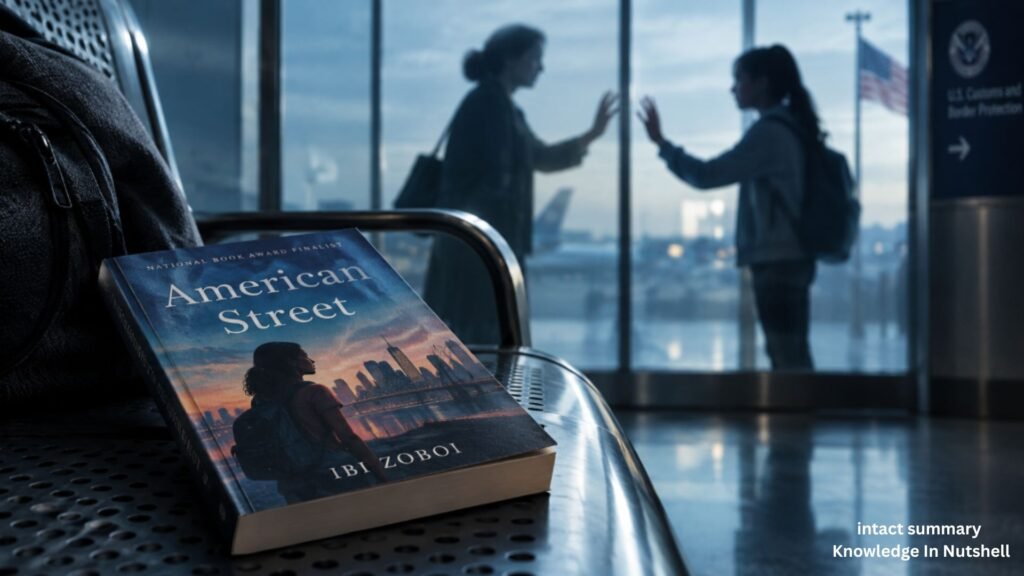
Fabiola and Manman arrive at the airport in New York, holding hands “for courage.” Because Fabiola was technically born in Detroit, she is a U.S. citizen and is allowed through customs. Manman is stopped and taken into an immigration detention center, leaving Fabiola completely alone. She continues on to Detroit by herself, arriving at her Aunt Jo’s house at the corner of American Street and Joy Road.
Life in Detroit is nothing like Fabiola pictured. Her cousins, Chantal, Donna, and Pri, are tough, loud, and protective, known at school as the “Three Bees,” with Chantal as the brains, Donna as the beauty, and Pri as the brawn. Aunt Jo, who had a stroke and struggles with pain medication and money, is not the warm helper Fabiola hoped for. Lonely and homesick, Fabiola sets up a small Vodou altar in her room, lighting candles and praying to the spirits for her mother’s safety.
Fabiola soon meets Kasim, a friend of Donna’s boyfriend Dray. Despite her worry about his connection to Dray, Fabiola and Kasim fall for each other, and their relationship becomes one of the few bright spots in her new life. At the same time, Fabiola begins noticing a strange, limping old man on the corner known as Bad Leg, who sings cryptic songs. Fabiola becomes convinced he is actually Papa Legba, the lwa of the crossroads, appearing to guide her.
A woman who keeps appearing around Fabiola finally reveals herself as an undercover detective. She offers Fabiola a deal: if Fabiola helps provide information that leads to Dray’s arrest for drug dealing, the detective will work to get Manman released from detention. Fabiola is torn. She has learned that Dray is dangerous and abusive toward Donna, but exposing him could put her cousins in danger too. She eventually agrees, hoping it’s the only way to save her mother.
Fabiola sets up a plan to have Dray caught delivering drugs at a party, making sure her cousins stay away that night. What she does not expect is that Dray, unwilling to do the delivery himself, sends Kasim in his place. When Fabiola realizes what has happened, she rushes to the party, but she is too late. Police have already shot and killed Kasim.
Devastated, Fabiola returns home, where a grief-stricken Dray confronts her with a gun. Just as he is about to hurt her, Papa Legba, in the form of Bad Leg, appears and shoots Dray, then vanishes without a trace. It is later revealed that Dray has been haunted for years by the ghost of a boy named Phillip, someone he accidentally killed when they were children, which explains much of his rage and guilt.
In the aftermath, the detective keeps her promise, and Manman is finally released from detention. Grieving Kasim but changed forever by everything she has survived, Fabiola leaves Detroit with her aunt and cousins, heading to New Jersey to reunite with her mother. By the story’s end, Fabiola has earned a new title among her cousins. She is no longer just visiting the Three Bees. She has become the Fourth Bee, the brave one.
Character: Fabiola Toussaint
Role & Arc: Fabiola is the 16-year-old narrator and protagonist of the story. She is a Haitian girl who grew up in Port-au-Prince with her mother and arrives in Detroit technically as a U.S. citizen, since she was born there before her mother took her back to Haiti as a baby.
At the start of the book, Fabiola is quiet, spiritual, and deeply attached to her Haitian roots and her Vodou faith. Over the course of the novel, she is forced to make harder and harder choices, and by the end she has transformed from an outsider into someone her cousins respect enough to call “the Fourth Bee.” Her journey is the clearest example of coming-of-age and personal growth in the book.
Character: Manman
Role & Arc: Manman is Fabiola’s mother. She is detained by immigration officers the moment she and Fabiola land in New York, and she spends most of the book in an immigration detention center. Even though she is physically absent for almost the entire story, her presence drives everything Fabiola does. The mother-daughter relationship between Fabiola and Manman is the emotional engine behind Fabiola’s biggest decision in the book.
Character: Aunt Jo (Matant Jo)
Role & Arc: Fabiola’s aunt, who left Haiti years earlier and built a life in Detroit. She had a stroke before the story begins and now depends on pain medication, which has made her softer and more distant than Fabiola expected. She owns a beauty shop and struggles to keep her family financially afloat, which ties directly into the book’s themes of poverty and survival.
Character: Chantal, Donna (Primadonna), and Pri (Princess) — The Three Bees
Role & Arc: Fabiola’s three cousins are known around the neighborhood as the “Three Bees.” Chantal is the “Brains,” a serious student hoping to attend Princeton. Donna is the “Beauty,” caught in an abusive relationship with a drug dealer named Dray. Pri is the “Braun,” tough and fiercely protective of her sisters. Together they represent different paths a young woman can take while growing up in a dangerous neighborhood, and each cousin’s storyline adds another layer to the book’s look at family loyalty and survival.
Character: Kasim
Role & Arc: Kasim is Dray’s friend and Fabiola’s love interest. He is gentle, funny, and represents hope and softness inside a hard environment. His relationship with Fabiola is her first real teenage romance, and his fate becomes the most devastating turning point in the book, tied directly into the tragic ending.
Character: Dray
Role & Arc: Donna’s boyfriend and a drug dealer operating in the neighborhood. He is controlling and abusive toward Donna, but the book also reveals he is haunted by guilt over a boy named Phillip he accidentally killed as a child. Dray represents how trauma, poverty, and systemic injustice can trap people in cycles of violence.
Character: Bad Leg (Papa Legba)
Role & Arc: A mysterious, limping old man who sits on the corner of American Street and Joy Road. Fabiola becomes convinced he is actually Papa Legba, the lwa (spirit) of the crossroads in Haitian Vodou. He functions as both a real character and a spirit guide, blurring the line between magical realism and reality throughout the book.
Character: The Detective
Role & Arc: An undercover police detective who offers Fabiola a dangerous deal: help build a case against Dray in exchange for Manman’s release from immigration detention. She represents the theme of corruption and systemic injustice, showing how institutions meant to help people can also exploit them.
Where Does American Street Take Place? (Setting Explained)
The setting of American Street is just as important as its characters. Almost the entire book unfolds in Detroit’s West Side, centered on the real-life intersection of American Street and Joy Road. This isn’t a random choice. The street names themselves work as a kind of built-in symbolism: “American Street” points to the promise of the American Dream, while “Joy Road” hints at the happiness Fabiola is searching for but struggles to find.
Also Read:/theo-of-golden-summary/
Detroit is shown honestly, with both its urban poverty and its sense of community. Zoboi doesn’t romanticize the city, but she also doesn’t reduce it to only crime and violence. Fabiola’s neighborhood is full of people trying to survive, protect their families, and hold onto hope, which mirrors much of the immigrant experience in inner-city America.
In contrast, Port-au-Prince, Haiti, appears in short flashbacks and memories throughout the book. These glimpses of Haiti show a warmer, more spiritually connected version of home, one filled with Haitian traditions, family closeness, and a slower pace of life. The contrast between Haiti and Detroit highlights just how disorienting cultural adjustment can be for a young immigrant starting over in a brand new country.
Haitian Vodou and Magical Realism in American Street
One of the most unique things about American Street is how openly it brings Haitian Vodou into a modern, realistic story. This is not the exaggerated, scary version of “voodoo” often shown in movies. Zoboi treats Vodou as a real, respected religious belief system, the same way another author might treat Christianity or Islam.
In Haitian Vodou, people can pray to spirits called lwa, who each represent different parts of life. Fabiola keeps a small altar in her room and prays to these spirits throughout the book, especially for her mother’s safety. This isn’t shown as strange or “extra.” It’s shown as a normal, comforting part of Fabiola’s cultural identity.
The most important lwa in the book is Papa Legba, the spirit who guards the crossroads and decides who is allowed to pass between the human world and the spirit world. Fabiola becomes convinced that the strange old man called Bad Leg is Papa Legba in disguise, watching over her and quietly guiding her toward the choices she must make. By the book’s climax, this magical realism stops feeling like just a symbol. It becomes something that actually shapes the plot, blurring the line between what is real and what is spiritual guidance.
For readers unfamiliar with Haitian culture, this element of the book offers a rare and respectful introduction to a religion that is often misunderstood in American pop culture, adding real educational value alongside the emotional story.
Key Themes in American Street Explained
American Street works on many levels at once. Below are the book’s most important themes, explained simply, with a look at how each one plays out in Fabiola’s story.
The American Dream and Its Real Cost
The American Dream is the idea that anyone who works hard enough in America can build a better life. Fabiola and Manman believe in this dream completely before they arrive. But the very first thing that happens is Manman’s detention, which immediately shows readers that the American Dream comes with hidden costs that immigrants rarely see coming. By the end of the book, Fabiola has gained safety and a new family bond, but only after losing Kasim and watching her family go through violence and fear. The book asks readers to consider whether freedom that comes at such a high price is really freedom at all.
Immigration and Family Separation
Immigration is not a background detail in this book. It’s the event that starts the entire plot. Manman’s time in an immigration detention center keeps the emotional stakes high throughout the story, and it reflects a real and painful experience shared by many immigrant families in the United States. The book never turns this into a simple political statement; instead, it shows the very personal, everyday pain of a daughter not knowing when, or if, she will see her mother again.
Identity and Belonging
Fabiola spends much of the book caught between two identities: the Haitian girl she has always been, and the new life she must build in Detroit. This tension is a classic part of the immigrant experience, often called culture clash or the pressure toward assimilation. Fabiola never fully gives up her Haitian identity, but she does grow and adapt, eventually finding a version of belonging that includes both where she came from and where she is now.
Family Loyalty and Sacrifice
Almost every major decision in the book comes down to family loyalty. Fabiola risks her cousins’ safety to try to save her mother. Donna stays with an abusive boyfriend partly out of fear and partly out of complicated loyalty. Aunt Jo holds her fractured family together despite her own struggles. The book shows that family is not always simple or safe, but it is still the thing everyone in the story is fighting for.
Violence, Poverty, and Systemic Injustice
American Street does not shy away from poverty, drug dealing, and police brutality. These issues are shown as connected to bigger, systemic problems rather than personal failures. Dray’s violence is tied to his own unresolved trauma. The detective’s offer to Fabiola shows how institutions can pressure vulnerable people into risky choices. Through these threads, the book quietly critiques the systems that make life harder for low-income communities.
Coming of Age Through Impossible Choices
At its core, this is a coming-of-age story. Fabiola starts the book as someone who mostly reacts to what happens around her. By the end, she has made a life-changing decision, faced real loss, and earned a new identity within her family as the Fourth Bee. Her growth is not shown as easy or clean. It comes through pain, which makes it feel honest rather than like a simple fairy-tale transformation.
Symbolism and Literary Devices in American Street
American Street and Joy Road
The intersection where Fabiola lives is not a random detail. American Street represents the promise of the American Dream, while Joy Road represents the happiness and peace Fabiola is chasing. The fact that these two roads meet, but don’t fully align, mirrors Fabiola’s entire experience: she gets to America, but true joy is much harder to find.
The Crossroads
In Haitian Vodou, a crossroads is a powerful, symbolic place where different paths and worlds meet. Papa Legba is the spirit who guards this crossing point. Fabiola’s entire story takes place at a literal and symbolic crossroads: between Haiti and America, between her old life and her new one, and between the choice to protect her family or save her mother.
The Three Bees and the Fourth Bee
Fabiola’s cousins are nicknamed “Brains,” “Beauty,” and “Braun” long before she arrives. By the end of the book, Fabiola earns the title of the Fourth Bee, representing courage. This nickname system works as a simple but effective way to track each character’s role and Fabiola’s own transformation from outsider to accepted family member.
Bad Leg as Papa Legba
The mysterious old man on the corner is one of the book’s clearest uses of magical realism. Whether readers interpret him as a literal spirit or as a symbol of guidance and fate, his presence reinforces the idea that Fabiola is never entirely alone, even in her darkest moments.
Why Is American Street a Banned Book?
American Street has been challenged and restricted in some schools and libraries in the United States. The most common reasons cited include its depictions of drug dealing, gun violence, domestic abuse, and sexual content, as well as its frank discussion of the immigration system.
Supporters of the book argue that these same elements are exactly why it matters. American Street gives voice to an immigrant perspective that is rarely centered in mainstream young adult fiction, and it treats teenage readers as capable of handling honest, real-world topics. Many literary organizations that track book censorship point to titles like this one as examples of diverse literature facing extra scrutiny specifically because they center marginalized communities and immigrant experiences.
Frequently Asked Questions About American Street
What is American Street by Ibi Zoboi about?
American Street follows Fabiola Toussaint, a Haitian teen whose mother is detained by immigration officers upon arrival in the U.S. Fabiola must start a new life alone with relatives in Detroit while trying to secure her mother’s release.
Is American Street based on a true story?
No, it is a work of fiction, but author Ibi Zoboi drew heavily on her own experience as a Haitian immigrant who moved to Brooklyn as a child, giving the story an authentic emotional foundation.
How does American Street end?
Kasim is killed during a police operation tied to a deal Fabiola made with a detective. Dray is shot by the mysterious figure known as Bad Leg, or Papa Legba. Manman is released from immigration detention, and Fabiola becomes known as the Fourth Bee among her cousins.
Who is Papa Legba in American Street?
Papa Legba is a lwa, or spirit, in Haitian Vodou who guards the crossroads between worlds. In the book, Fabiola believes an old man called Bad Leg is Papa Legba in disguise, watching over and guiding her.
Why is American Street considered a banned book?
It has been challenged in some schools due to its depictions of violence, drug dealing, abuse, and sexual content, though many educators defend it for its honest immigrant perspective and value as diverse literature.
What genre is American Street?
It is a young adult, contemporary fiction novel with strong elements of realistic fiction and magical realism.
What are the Three Bees in American Street?
The “Three Bees” are Fabiola’s cousins, Chantal, Donna, and Pri, nicknamed “Brains,” “Beauty,” and “Braun.” By the end, Fabiola becomes the “Fourth Bee.”
What is the main theme of American Street?
The American Dream and its real cost is the central theme, along with family loyalty, identity, and the immigrant experience.
Is American Street appropriate for middle schoolers?
Due to mature content including violence, drug themes, and abusive relationships, it is generally recommended for readers age 14 and older.
What happens to Fabiola’s mother in American Street?
She is detained by immigration officers when she and Fabiola arrive in New York and remains in detention for most of the book until a detective helps secure her release near the end.
How is Haitian Vodou portrayed in American Street?
It is portrayed respectfully and seriously, as a real spiritual practice that gives Fabiola comfort and guidance, rather than as a stereotype or source of fear.
Is American Street a true crime or nonfiction book?
No, it is entirely fictional, though it reflects real issues around immigration and urban poverty.
Did Ibi Zoboi write other books like American Street?
Yes, she has written other young adult titles, including Pride, that also explore identity, culture, and community.
Conclusion
American Street is a powerful story about a Haitian girl named Fabiola who has to be brave in ways no teenager should have to be. When her mom gets stopped by immigration officers, Fabiola is left all alone in a brand new city called Detroit. She misses her mom, misses Haiti, and has to figure out a whole new life with cousins she barely knows.
But Fabiola is not really alone. She has her Haitian Vodou faith, a sweet boy named Kasim who cares about her, and a strange old man who might be a spirit watching over her. Along the way, she has to make a really hard choice to try to save her mom, and that choice changes everything.
This book teaches us that being brave does not mean never being scared. It means doing the right thing even when it hurts. By the end, Fabiola becomes stronger, and her family finally sees just how brave she really is.