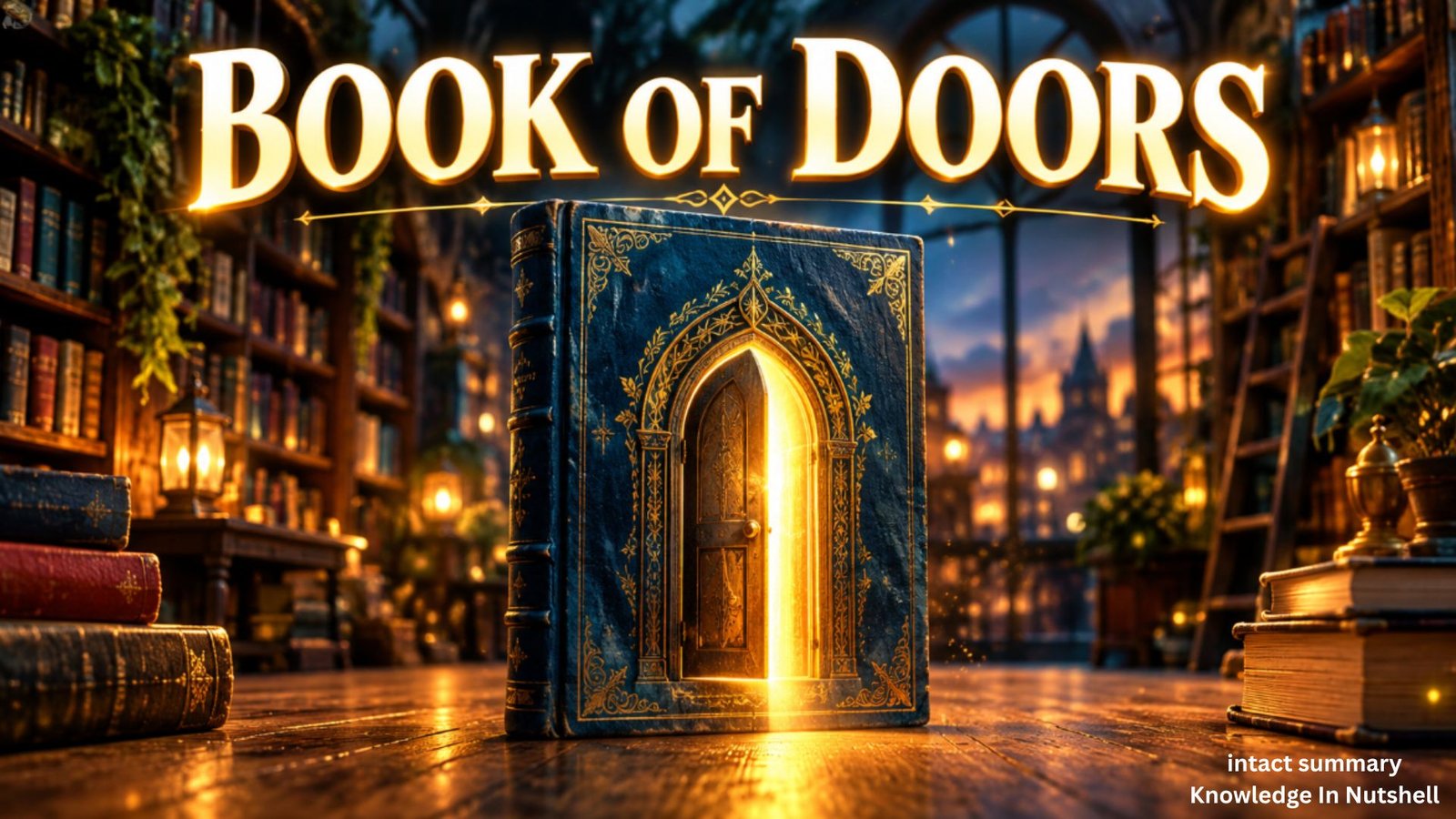
That is the big, shiny idea behind The Book of Doors by Gareth Brown. It is a fantasy novel about a quiet bookstore clerk who gets a very special gift. It is also a popular 2024 fantasy book that many readers are still talking about.
Maybe you are standing in a bookstore right now, holding the cover and asking, “Is The Book of Doors worth reading?” Maybe your book club picked it and you need a fast refresher. Or maybe you just finished it and want to understand the time-travel rules or the ending. Whichever one is you, you are in the right place.
Here is the short answer. Yes, it is worth reading if you like magic, cozy bookish places, and stories with heart. It is a slow-burn, suspenseful fantasy adventure, and it has a lot of feeling about grief and healing. It may not be for you if you want hard science to explain every bit of time travel. The book says clearly that its time travel is magic.
Quick Answer of The Book of Doors
The Book of Doors is a 2024 fantasy novel by Gareth Brown. Cassie Andrews, a New York bookstore clerk, is given a magical book. Its inscription says that any door is every door, so she can open a door and step through to anywhere. Soon she learns there are other magical books with special powers, and some dangerous people want to collect them all. The story mixes adventure, fantasy time travel, and a gentle message about grief, friendship, and choosing to move forward.
What Is The Book of Doors About? (Book Overview)
At its heart, The Book of Doors is a story about books that are truly magic. Most of us love the feeling of being “taken away” by a good story. In this novel, that feeling becomes real. One small, old-looking book lets its owner turn any door into a doorway to any place in the world.
Genre: The book is contemporary fantasy. That means the story happens in our modern world, but with hidden magic tucked inside it. It also has suspense, a little science fiction flavor because of the time travel, and a lot of literary fantasy feeling. Some readers call it portal fantasy for adults, because doors are portals.
Setting and time period: Most of the story happens today, mainly in New York City, with trips to many other places through the magic doors. There are also flashbacks to earlier times. These explain how the magical books came to be and why certain people care so much about them.
Read More:/sunny-side-up-graphic-novel-summary/
Publication context: This is Gareth Brown’s debut novel. It came out in February 2024 from William Morrow in the United States. One reviewer’s advance copy listed 416 pages. The cover also got attention. It looks like a Victorian-inspired blue wallpaper design with a door made out of books. The Los Angeles Public Library later placed the novel on its Best of 2024: Fiction & Literature list.
Reader reaction: Reviews were mostly warm. One blogger gave it 4 stars and said the book is tidy and satisfying by the end. Another gave it 5 stars and called it an impressive debut. A librarian reviewer said the real heart of the story is a meditation on grief, not just the magic.
Important ideas to know before you start:
- Magical books are real in this world. Each one has its own unique supernatural ability.
- The Book of Doors is one of the strongest, which makes it a target.
- A secret world of collectors is hunting these books. Some are kind. Some are not.
- The story has several points of view. You do not follow only Cassie the whole time.
- Time travel works by magical rules. It is not explained like science fiction.
If you remember only one thing, remember this: the book is part adventure and part emotional healing story.
Who Is Gareth Brown? The Author Behind the Debut Novel
I want to keep this section honest and simple. The Book of Doors is Gareth Brown’s debut novel, so he does not have a long list of earlier books to compare it with. One reviewer even joked that readers will want to check his older books, then realize there are none. That tells you something: many readers felt the book was carefully built for a first novel.
What can we say about his writing style? Reviewers often point to three things:
- Rich, descriptive writing. Houses, bookshops, and quiet rooms feel warm and real.
- Careful plotting. Small clues early on matter later, and one reviewer said “everything means something.”
- Emotional honesty. The grief in the story feels sensitive and true, not rushed.
Because it is a debut fantasy novel, readers often compare it to other bookish fantasy novels rather than to his past work. You will see those comparisons, such as The Cartographers, Mr. Penumbra’s 24-Hour Bookstore, and The Ten Thousand Doors of January, in the “similar books” part of this guide.
If you are looking for Gareth Brown fantasy books to read next, this is the one to start with. It is the book that put his name on many readers’ lists.
The Book of Doors Plot Summary
Here is the story in plain words. I split it into two parts so you can pick the one you want.
Spoiler-Free Summary
Cassie Andrews works at Kellner Books, a bookstore in Manhattan. She shares a small apartment with her best friend, Izzy. Her days are calm, a little lonely, and full of stories.
One evening, an older customer named John Webber dies peacefully in the shop. He was one of her favorite regulars. He leaves Cassie a small leather book and a note with her name on it. The first page says that when you hold this book, any door is every door.
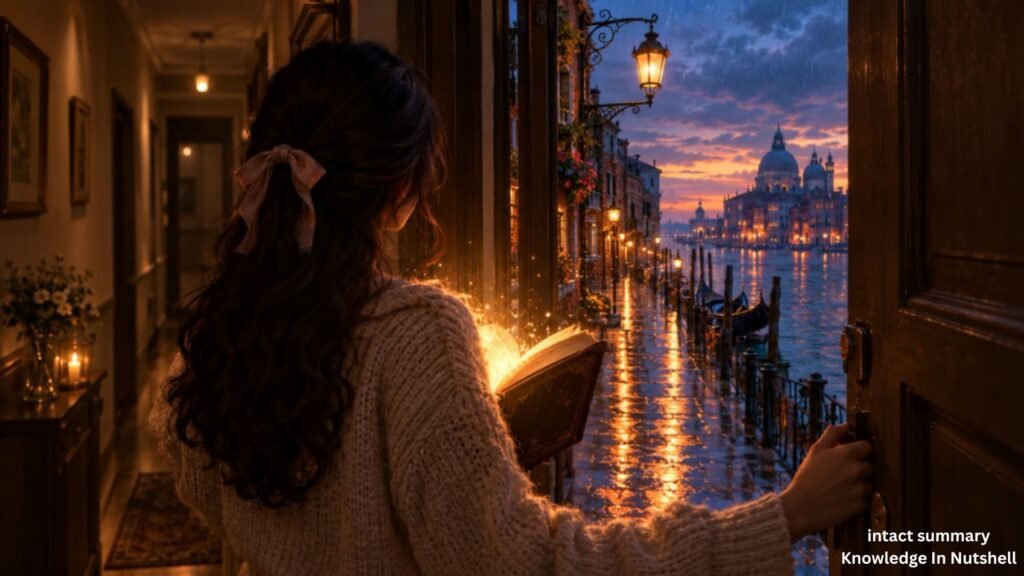
Cassie and Izzy test it, and it works. A normal door becomes a doorway to anywhere she can picture. They hop to rooftops, libraries, and even a rainy street in Venice. At first it feels like the best gift in the world.
But the book also gives off a strange glow when it is used. That glow catches the eye of Drummond Fox, a tired traveler who knows a secret. There are other magical books, each with its own power, and some people will do almost anything to own them. Soon Cassie learns that her book is one of the most wanted in the world. Now she must decide who to trust, how far to go, and what she is willing to risk to keep her friends safe.
Full Summary (With Spoilers)
The trouble starts when a book hunter named Dr. Hugo Barbary finds Cassie. He attacks, and Cassie escapes with Izzy and Drummond. To keep Izzy safe, Drummond uses the Book of Memories to make her forget the magic. He then takes Cassie to the Fox Library in Scotland, a hidden mansion full of magical books. There she learns that her book can open doors in time, not only in space. She even visits her late grandfather in the past.
Then things go badly. Barbary steals the Book of Doors and uses the Book of Control to push Cassie through a doorway. She lands in 2012, ten years in the past, with no money and no way home.
Cassie finds the younger John Webber and lives with him for almost ten years. She also makes a deal with a book broker named Lottie Moore. Lottie will protect Izzy in the future and lend Cassie the Book of Safety. In return, Cassie must deliver the Book of Doors.
In late 2022, Cassie watches her younger self receive the book from Mr. Webber. Then she ambushes Barbary, takes the book back, and sends him fifty years into the past. This is a closed time loop: her past was always part of the story.
Next comes a deadly book auction at an old hotel. A murderous figure called the Woman arrives and kills many people. Izzy appears to be shot, and Cassie runs through a door into a strange void called The Nothing and Nowhere. There, her grief and memories create the world’s special books and scatter them through history.
Cassie then returns and learns that Izzy is alive. She had the Book of Illusion in her pocket and, without meaning to, made a fake picture of her own death. The friends form a five-part plan. They set a trap with a fake auction, swap the Woman’s real books for illusions, and set her on fire. Drummond pushes her into the void, and she is trapped there for good.
In the end, the group makes the Fox Library their home. Cassie visits her dying grandfather and gives him the Book of Joy so he can pass in peace. Last, she travels back to the night Mr. Webber dies. She hands him the book so he can write her that first note. The loop closes.
Meet the Main Characters in The Book of Doors
You do not need to memorize everyone. These are the key people.
Character: Cassie Andrews
Role & Arc: She is the main protagonist, a shy bookseller who loves to read. She starts out quiet and cautious. By the end, she is brave, wise, and ready to make hard choices.
Character: Izzy (Isabella Cattaneo)
Role & Arc: Cassie’s best friend and roommate. She is funny, loyal, and brave. She worries about the cost of magic early on. Later she proves she can fight back and save the day.
Character: Drummond Fox
Role & Arc: A mysterious librarian figure and the last keeper of the Fox Library. He is guarded, serious, and sad. At first he wants Cassie to destroy her book. Over time he becomes a true ally and a father-like friend.
Character: John Webber
Role & Arc: The kind customer who leaves Cassie the book. He seems small at first, but his link to Cassie runs deeper than we first know. His story is a big reason the time loop works.
Character: Dr. Hugo Barbary
Role & Arc: A dangerous book hunter who wants power. He is cruel and smart, and he is the first big threat Cassie faces.
Character: Lottie Moore, Azaki, and Hjaelmer Lund
Role & Arc: These are the unexpected allies. Lottie is a broker who deals in magical books. Azaki is a book hunter and former card magician. Lund is his bodyguard. They are not simple heroes, but they help in the final fight.
Character: The Woman (Rachel Belrose)
Role & Arc: The main antagonist. Her full story is in the villain section below, with a spoiler warning.
How Does the Book of Doors Work?
Short answer: If you hold the Book of Doors and picture a place, any unlocked door can open to that place.
Here is how it works in the story:
- You must hold the book. The power belongs to whoever has it in hand.
- You picture where you want to go. The door then leads there.
- The door must be unlocked. Locked places are a limit on the magic.
- It works across space and time. Drummond reveals this early on, and it changes everything.
- It gives off a glow. That magical light helps Drummond find Cassie, and it can attract danger too.
Why is the book so wanted? Because someone who can step anywhere, at any time, has huge power. Cassie slowly sees the weight of that. The book is a gift, but it is also a moral test: what will you do when you can go anywhere?
Who Is the Villain in The Book of Doors? The Woman and the Collectors
Short answer: The main villain is the Woman. Her real name is Rachel Belrose.
She does not just want one book. She wants all of them, and she kills people to get them. She is feared across the secret world of book collectors, and Drummond carries painful memories of what she did to his fellow Librarians.
One thing readers sometimes notice is that she is only ever called “the Woman.” One reviewer wished she h
ad a nickname, like something whispered in the dark. Others found that the plain name made her feel more cold and strange.
Her story ties back to Dr. Barbary. After Cassie sends him fifty years into the past, he lives there for decades. His torment later spreads into young Rachel and helps create the Woman. In other words, Cassie’s own choices feed into the villain’s start. That is the closed time loop again, and it makes the danger feel personal.
Not every collector is a villain. People like Lottie, Azaki, and Lund begin as unexpected allies with mixed motives. This shows an important idea in the book: the people hunting magic are not all the same. Some want power. Some want to protect the books. And some, like Cassie, are simply trying to do the right thing.
Time Travel in The Book of Doors Explained
Short answer: In The Book of Doors, time travel works by closed-loop rules. You can visit the past, but you cannot change it. Whatever you do there has already happened.
This is magical time travel, not science-fiction time travel. The book does not try to prove it with math. It just sets the rules and keeps to them. Drummond Fox even jokes about the “jiggery-pokery” of it all. If you want a lab-style explanation, this book will not give you one. If you like fantasy time travel with a firm rulebook, you will probably enjoy it.

The open model vs. the closed model
The story explains two ways time travel can work, in a flashback conversation:
- Open model: You go back, change something, and your present changes. This is the kind you see in many science-fiction stories. 11.22.63 by Stephen King is a well-known example.
- Closed model: You go back, but your actions were always part of history. You cannot break the timeline, because you already helped build it.
The book follows the closed model. I am describing the book’s own treatment here, not every rule from other time-travel stories. In this world, you cannot change the past, and your future self may already be hiding in it.
When Cassie is thrown into 2012, she does not “fix” anything. Instead, she becomes part of what already happened. She lives with the younger John Webber, watches her younger self get the book, and later sends Barbary into the past. Even Webber’s gift at the start turns out to be part of the loop. Cassie hands him the book years later, so he can write the note that begins everything.
Why this matters: It changes how the story feels. Instead of asking “Can she change it?”, you ask “What did she already do?” That makes early scenes feel different on a second read. It also turns small details, like a note or a leather cover, into big clues. One honest warning: if you read quickly, the nonlinear storytelling can feel tangled. Taking your time helps.
Key Themes Explained in The Book of Doors
Many readers say this book is about more than magic. Here are the big themes.
Grief and Healing in The Book of Doors
This is the heart of the novel. Several characters carry grief and regret, and the book shows that mourning takes time, sometimes years. A librarian reviewer called the book a meditation on grief. Cassie’s own sadness even shapes the magical books in a big way (see the ending). The message is gentle: you do not “get over” loss, you learn to live with it.
Regret and Second Chances in The Book of Doors
Time travel lets people visit the past, but it cannot undo what happened. That makes regret feel real. Cassie’s visit to her grandfather is a good example. She cannot save him, but she can give him peace.
Trauma and Family in The Book of Doors
The story also looks at the lasting effects of trauma and how pain can pass from one person to the next. The villain’s story shows the dark side of that. Meanwhile, family relationships, both by blood and by choice, show the hopeful side.
Found Family and Friendship in The Book of Doors
Cassie, Izzy, Drummond, and their allies slowly become a found family. The book says life is easier when we do not face it alone. This is one of the warmest ideas in the story.
Power and Moral Responsibility in The Book of Doors
A book that opens any door is a lot of power. The story asks: what do we do with power? Some characters use it to hunt and hurt. Cassie learns to use hers with care. This is the consequences of power theme.
The Love of Books in The Book of Doors
At its core, this is a book about the magic of books. Reading is Cassie’s comfort, and books are how people connect, remember, and heal. Readers who love bookstores will feel right at home.
Choosing to Move Forward in The Book of Doors
The book has a clear message that happiness is something you choose and chase, even when life is hard. That idea sits quietly under the whole adventure.
Symbolism and Literary Devices in The Book of Doors
Doors. The most obvious symbol. Doors stand for choices, change, and new chances. Every time Cassie opens one, she decides who she wants to be.
The inscription. The line about any door being every door is simple, but it is also a promise and a warning. It tells readers the book is about possibility.
Books as portals. The idea that a story can take you somewhere is turned into something real. This is a love letter to reading and storytelling.
The Fox Library. The hidden library stands for safety, memory, and community. It is a place where lost things are kept and cared for.
The Nothing and Nowhere. This empty void works like a picture of deep grief: a place with no edges where feelings take over. It is also where Cassie finds the strength to come back.
The Book of Joy. A small but important symbol. It shows that comfort can be a kind of magic.
Literary devices to notice:
- Multiple points of view. The story jumps between characters, which builds suspense.
- Nonlinear timeline. Past and present mix, in a book split into seven parts.
- Foreshadowing. Early clues pay off later, and a reviewer said “everything means something.”
- The closed loop. The story’s shape is a circle, ending where it began.
- A small stumble: One reviewer felt characters looked at their reflections too often, which started to feel repeated.
Setting, Atmosphere, and Writing Style in The Book of Doors
Setting. The story opens in a cozy New York City bookstore and a small apartment. Then it spreads out: Venice, Lyon, Oregon, and a Scottish mansion full of books. The shifts between homey and dangerous places keep things lively.
Atmosphere. Think bookish atmosphere: warm lights, creaky floors, and quiet rooms with books everywhere. Then, suddenly, the mood turns dark with attacks, hunts, and danger. One reviewer described the mix as moving from cozy mystery to high-stakes adventure.

Writing style. Gareth Brown’s prose is easy to follow but rich in detail. He describes places with care, so you can picture them. The story is a slow-burn at first, and it speeds up as the threats grow. One reviewer said their interest dipped in the middle but came back strong, so patience pays off.
Who will enjoy the style? Readers who like richly descriptive writing, emotional character moments, and a plot that clicks together at the end. Readers who want nonstop action from page one may find the start gentle.
The Book of Doors Ending Explained
Short answer: Cassie and her friends defeat the Woman, trap her in the void, and make the Fox Library their home. Then Cassie closes the time loop by handing the book to John Webber.
Here is what happens and why it matters:
- The Woman is trapped. Using the five-part plan, illusions, and a well-timed fire, the group lures her in. Drummond pushes her through a doorway into The Nothing and Nowhere, where she cannot escape.
- The Fox Library becomes home. Izzy, Azaki, and Lund join Drummond and Cassie to find and protect magical books. This is the found family payoff.
- Cassie gets the original blank Book of Doors. Drummond gives it to her, and it wakes at her touch. This shows she has truly become its owner.
- Cassie visits her grandfather. She places the Book of Joy in his hands so he can pass in peace. It is a quiet, sad, loving scene.
- Cassie goes back to Webber. She hands him the Book of Doors on the night he dies, so he can write her the note. The loop closes.
The ending says that grief and love are tied together. Cassie’s sadness created the books, and her love lets her use them to heal. The loop also shows that her life was always connected to the people who came before her. It is not a tragedy. It is a story about choosing to move forward while still carrying loss. A reviewer called it satisfying, and many readers agree because it ties many small clues together.
Frequently Asked Questions About The Book of Doors
1. What is The Book of Doors about?
It follows Cassie Andrews, a New York bookseller who inherits a magical book that turns any door into a portal. She then learns about other magical books and the dangerous people hunting them.
2. Who wrote The Book of Doors?
Gareth Brown wrote it. It is his debut novel, published in February 2024.
3. Is The Book of Doors worth reading?
Yes, for readers who like magic, time travel, and emotional stories. One blogger gave it 4 stars and another gave it 5, though some readers disliked the pacing.
4. What genre is The Book of Doors?
It is a contemporary fantasy with suspense, portal travel, and time-travel elements.
5. How does time travel work in The Book of Doors?
It follows the closed model. You can visit the past, but you cannot change it, because your actions were always part of history.
6. Who is the villain in The Book of Doors?
The main villain is the Woman, whose real name is Rachel Belrose. Dr. Hugo Barbary is an earlier dangerous threat.
7. How does The Book of Doors end?
Cassie and her friends trap the Woman in the void, and the group makes the Fox Library their home. Cassie then closes the time loop by giving the book to John Webber.
8. What are the other magical books in the story?
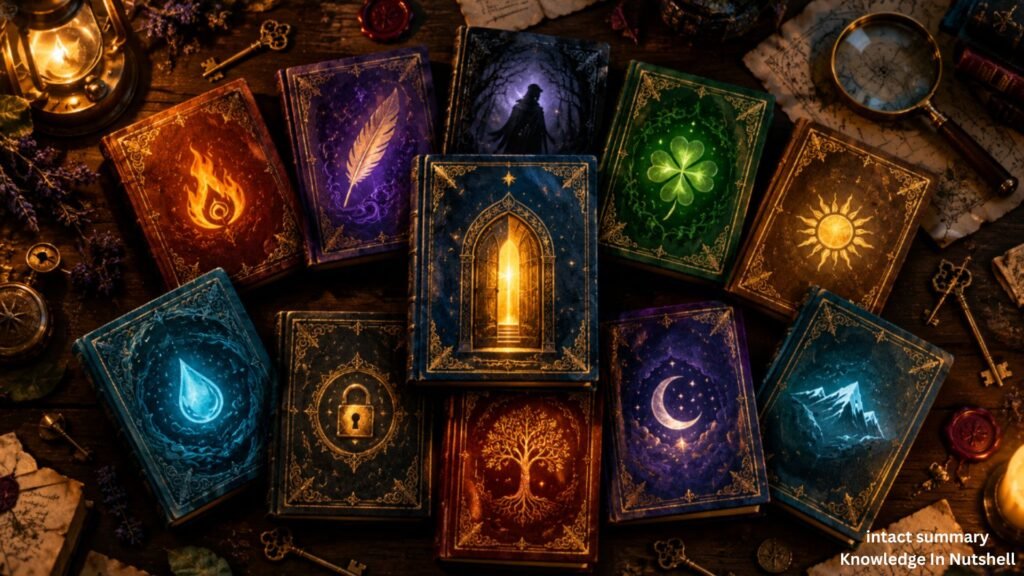
They include the Book of Pain, Book of Luck, Book of Illusion, Book of Despair, Book of Joy, Book of Control, Book of Memories, and Book of Safety.
9. What is the main theme of The Book of Doors?
The biggest theme is grief and healing. It also covers found family, regret, trauma, power, and the love of books.
10. Is The Book of Doors for kids or adults?
It is written for adults. The words are easy to read, but the story has violence and heavy themes.
11. Is there romance in The Book of Doors?
Romance is not the focus. The story is about friendship, family, and grief.
12. How long is The Book of Doors?
It is about 416 pages, according to the edition listed by reviewers.
13. Is there a sequel?
I could not confirm a sequel. Check the publisher’s page for news on Gareth Brown’s newer books.
About This Article: How We Researched and Wrote It
I want you to know how this guide was made. I read the publisher’s description and several reviews, including a library review and book blogs, then cross-checked plot details across more than one summary. I wrote everything in my own words, with no copied sentences, and I kept direct quotes very short. I checked names, events, and the order of key scenes against each other, and I labeled spoilers so you can choose what to read. This guide is for readers and is not a replacement for the book. If you spot a mistake, please let us know and we will fix it.
Conclusion of The Book of Doors
The Book of Doors by Gareth Brown is a fantasy novel about much more than magic. On the surface, it is a suspenseful fantasy adventure about a quiet bookseller who can open any door to anywhere. Underneath, it is a gentle story about grief and healing, found family, and choosing to move forward after loss.
If you love magical books, cozy bookstores, and clever time-travel plots, this novel is a strong pick. The closed time loop ties early clues to the ending in a way that feels satisfying. Cassie Andrews, Izzy, and Drummond Fox also give the story a lot of heart, and the variety of magical books with special powers keeps the world fresh.
It is not perfect for everyone. The middle can feel slow, and the time travel is magic, not science. If you want fast action from page one, or a hard science explanation, you may want to try a sample first.
Overall, this Book of Doors review comes down to one idea: it is a book for book lovers. It reminds us that stories can comfort us, connect us, and carry us somewhere new.