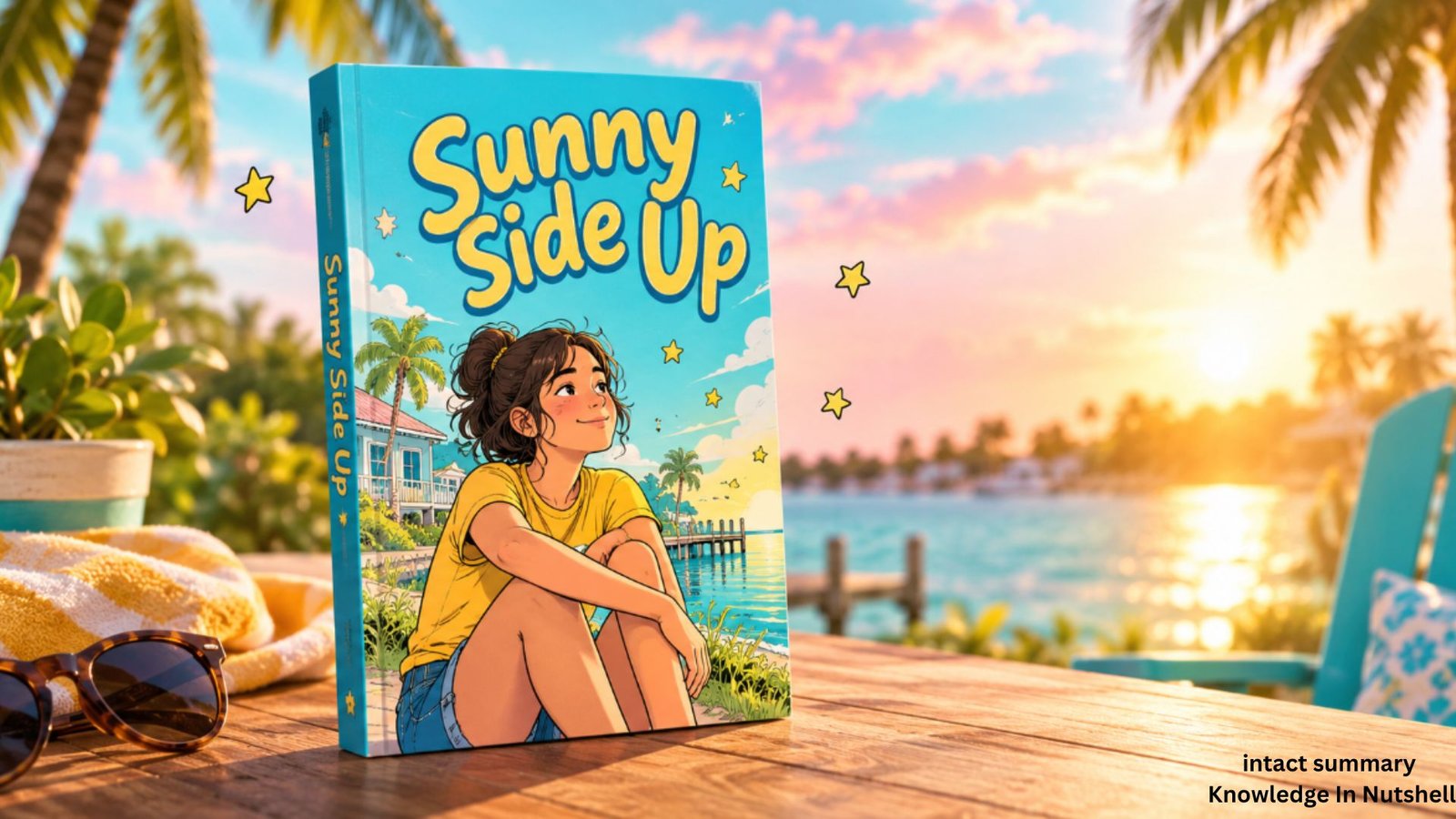
Maybe a trip got canceled. Maybe you got sent somewhere new, far from your friends. That is exactly what happens to Sunny Lewin in Sunny Side Up, a graphic novel by Jennifer L. Holm and Matthew Holm.
Sunny is a young girl in 1976. She thinks she is going to have a fun time in Florida. Instead, she is sent to stay with her grandfather in a retirement community where nobody is under sixty. There is no theme park. There are no kids. And there is a big secret about why she was sent there at all.
If you are a parent, teacher, or librarian, you may be wondering whether this book is right for a child. It has a bright cover and funny pictures. But it also deals with a serious topic: a family struggling with substance abuse. That mix can be confusing, so many readers want clear answers before they start.
Here is the short answer. Sunny Side Up is a gentle, hopeful, and very honest middle grade graphic novel. It does not show scary details. It shows how a family secret can make a child feel confused, lonely, and even guilty. It also shows how friendship, honesty, and a loving grandfather can help.
Quick Answer of Sunny Side Up
What is Sunny Side Up about? Sunny Side Up is a 2015 middle grade historical fiction graphic novel by Jennifer L. Holm and Matthew Holm. It follows ten-year-old Sunny Lewin, who is sent to spend the summer of 1976 with her grandfather in a Florida retirement community. There she meets a comic-book-loving friend named Buzz and slowly learns the truth about her older brother’s addiction. The story shows that family problems are not a child’s fault and that it is okay to talk about hard feelings. Many librarians and teachers suggest it for readers around ages 9 to 13.
What Is Sunny Side Up About? (Spoiler-Free Summary)
Sunny Lewin is about ten years old. In August 1976, her family was supposed to take a beach trip. But that plan falls apart. Sunny is put on a plane and sent to stay with Gramps, her grandfather, who lives in a retirement community called Pine Palms in Florida.
Sunny has big hopes. She is in Florida, after all! She pictures Disney World and sunny beaches. But Gramps has a different idea of fun. His “big plans” for the day might mean waiting in line at the post office or eating dinner very early with his friends. Sunny feels bored and a little lost. There are no kids around, and nobody will tell her what is really going on at home.
Read More:/the-stolen-queen-book-review/
Then she meets Buzz. He is the son of the groundskeeper, and he is crazy about comic books. Soon the two are having small adventures. They hunt for lost golf balls near a pond with alligators. They chase runaway cats. They talk about superheroes, and Buzz asks Sunny what superpower she would pick.
While Sunny tries to enjoy her summer, the story also takes her (and us) back in time. Through flashbacks, we see what life was like at home in Pennsylvania in the year before the trip. We see her older brother, Dale, and how he began to change. Sunny knows something is wrong, but she does not have the words for it. And she begins to wonder whether it is somehow her fault.
The book answers one big question: Why is Sunny really in Florida? The answer is a family secret. Sunny must decide if she is ready to hear it.
Why this summary is “safe”: The book does not give a scary, graphic picture of drug use. It shows a child’s feelings, small moments, and the way a whole family is hurt when one person is struggling.
The Real Story Behind Sunny Side Up
One reason this book feels so honest is that it comes from real life. Sunny Side Up is loosely based on the childhood of Jennifer L. Holm and her family. Jennifer and Matthew Holm are a sister-and-brother team. Before this book, they were best known for funny, lighter series like Babymouse and Squish. Sunny Side Up was a new step. It was aimed at slightly older readers and handled a much more serious topic.

The authors have said they wrote the book so that kids facing similar problems would not feel ashamed or alone. That idea sits at the heart of the whole story. Many children in difficult family situations think they are the only ones. This book tells them they are not.
Why 1976?
The story is set in 1976, the year of the U.S. bicentennial, the nation’s 200th birthday. The time period shows up in small ways: the clothes, the cars, the comic books, and the way adults act around kids. In the 1970s, people often did not talk openly about addiction or mental health. Families kept problems quiet. That silence is a big part of Sunny’s story. She is confused partly because the grown-ups around her do not explain.
The Art Team in Sunny Side Up
The pictures were made by Matthew Holm, and the color was added by Lark Pien. Her warm, bright colors give the book its sunny feel. The setting feels like a Florida postcard even while the story talks about heavy things. That contrast is a clever choice, and we will look at it more closely in the next sections.
Why the Book Matters Today in Sunny Side Up
Sunny Side Up started a long series. It has been popular with young readers, parents, teachers, and school librarians. It has also been challenged in some places because of its subject matter, which is why so many families search for honest reviews before reading it. Good news: the book handles the topic with care, and the next sections will help you decide for yourself.
Full Plot Summary of Sunny Side Up (With Spoilers)
Arriving in Florida. In August 1976, ten-year-old Sunny Lewin lands at the West Palm Beach airport. Gramps picks her up and drives her to Pine Palms, a retirement community where almost everyone is a senior citizen. Sunny wants fun, but Gramps’s “big plans” turn out to be dull errands and very early dinners. She is lonely and wonders why her family sent her away.
Meeting Buzz. Things change when Sunny meets Buzz, the groundskeeper’s son. Buzz loves comic books and shares them with her. The two kids earn money finding lost golf balls in a pond that has alligators in it. They also track down runaway cats. Sunny starts to enjoy herself. But her mind keeps drifting back home.
Also Read:/a-court-of-mist-and-fury-review/
The flashbacks. The story jumps back to Pennsylvania and shows what really happened. Sunny used to look up to her big brother, Dale. As he got older, he changed. He drank, used drugs, hung out with a rough crowd, and became angry and unpredictable. At school, a teacher asks Sunny if she is Dale’s sister, and the teacher’s face shows she remembers him for the wrong reasons. Sunny feels embarrassed. At home, Dale sometimes pressures her to keep his secrets, including telling small lies to cover for him. Sunny wants to protect him, but she is also scared.
The scary night. One of the hardest flashbacks is an argument between Dale and their dad. Sunny tries to step in and gets hurt in the middle of it. After that, her parents decide she should be somewhere safe while they deal with Dale. That is the real reason for the Florida trip. But no one explains this clearly to her.
Sunny’s guilt. Without answers, Sunny makes up her own story. She quietly believes she did something wrong. She also thinks of Dale as the Hulk, a gentle person who turns into something frightening. Buzz helps her talk about superheroes, and Sunny discovers she likes Swamp Thing best, because he has no disguises or secrets. That small detail says a lot about what she wishes for her own family.
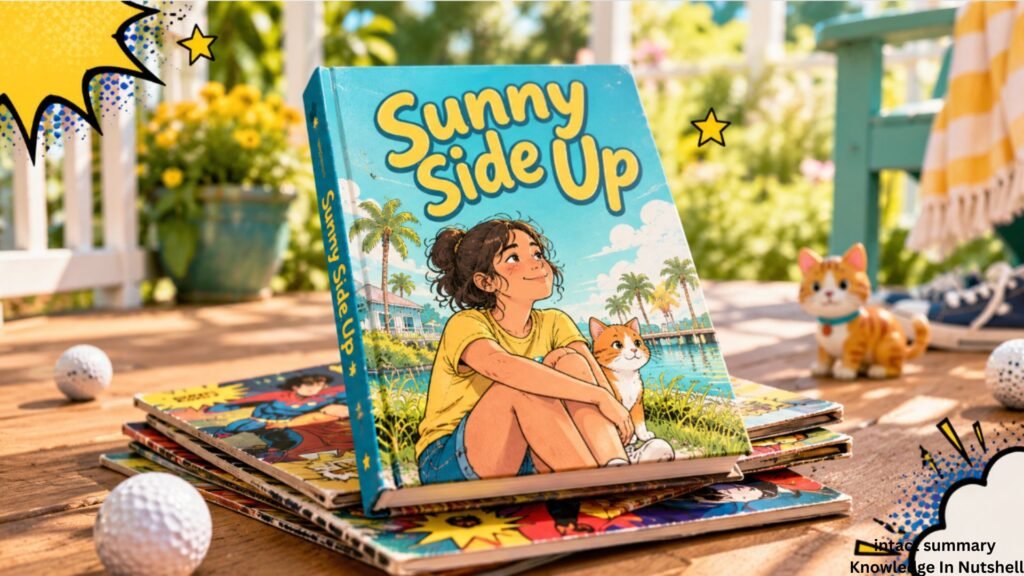
The breaking point. Gramps is trying to quit smoking. When Sunny catches him smoking again, she finally explodes. She is angry about all the hiding, not just the cigarette. This moment opens the door. Gramps stops dodging and tells her the truth: Dale has a serious problem with drugs and alcohol, he needs help, and none of it is Sunny’s fault.
The ending. Sunny feels a huge weight lift. She has not “fixed” anything, and Dale is not magically better. But she is no longer alone with the secret. When it is time to go home, Gramps tells her to keep her sunny side up. Sunny leaves Florida sadder, wiser, and more hopeful. The book ends with healing just beginning, not finished.
Meet the Characters in Sunny Side Up
You do not need a long list to understand this book. A few key people carry the whole story.
Character: Sunny Lewin
Role & Arc: Sunny is the heart of the book. She is ten, kind, curious, and trying very hard to be cheerful. At the start, she keeps her worries inside and blames herself. By the end, she can say what she feels out loud. Her biggest change is learning that a child is never responsible for a grown-up’s or older sibling’s choices.
Character: Dale Lewin
Role & Arc: Dale is Sunny’s older brother and the reason the family is in crisis. Sunny once adored him. The book shows that Dale is not a “villain.” He is a teenager caught in addiction, and his actions hurt people he loves. The story does not tell us everything about his future, which is honest. Recovery takes time.
Character: Buzz
Role & Arc: Buzz is Sunny’s first friend in Florida. He is funny, brave, and full of ideas. He introduces her to superheroes and gives her a way to talk about her feelings without sounding scary. Buzz shows readers how a good friend can help just by being there. He also adds a different background to the story, since his family has roots in Cuba.
Character: Gramps
Role & Arc: Gramps is Sunny’s grandfather. He seems goofy at first, with his early dinners and “big plans.” But he turns out to be the most important adult in the book. He is imperfect: he smokes and is not good at talking about hard things. Yet when Sunny needs the truth, he gives it gently. Their bond is one of the sweetest parts of the story and a great example of a grandparent-grandchild relationship.
Sunny’s Parents and the Pine Palms Neighbors
Sunny’s parents are shown as worried and overwhelmed, trying to protect their daughter while handling a crisis. The older residents of Pine Palms add warmth and humor. They treat Sunny like a friend, which helps her feel she belongs.
How Does Sunny Side Up Handle Addiction and Substance Abuse?
Short answer: It handles it gently, honestly, and from a child’s point of view. The book shows what addiction does to a family, not how drugs work.
Here is how the authors keep the topic safe for young readers:
- We see Sunny’s feelings, not graphic details. The pictures focus on her face, her worry, and her confusion.
- Flashbacks are short. Scenes at home are brief and then we return to the sunny Florida story. This gives readers a breather.
- Dale is shown as a whole person. He is not only “the bad brother.” We also see he was once fun and loving, which makes the sadness real.
- No one is glamorized. Neither smoking nor drug use looks cool or fun in this book. There are clear costs.
- The ending is hopeful but honest. The family is not fixed overnight.
The book also makes a smart link between Dale’s problem and Gramps’s smoking. Both are habits that are hard to break. This helps kids see that addiction can show up in many forms, and that people can love someone while hating what the habit does.
A helpful tip for adults: Read the book with your child, or right after. Ask what surprised them. The book is a strong conversation starter about family communication and children’s mental health, but it works best when a caring adult is nearby to answer questions.
Key Themes Explained of Sunny Side Up
1. It Is Not Your Fault
This is the most important message. Sunny believes she caused the trouble. The book shows how often children blame themselves when adults do not explain. When Gramps tells her the truth, it lifts a huge weight. Why it matters: Many kids in difficult family situations need to hear this exact message.
2. Secrets Make Things Heavier
Almost everyone in the book is hiding something, usually to protect Sunny. But the secret makes her feel more scared, not less. Honest talk, even about hard things, is what helps. Why it matters: It encourages children to ask questions and adults to answer them in a caring way.
3. Friendship and Belonging
Sunny feels alone until Buzz shows up. Through comic books, shared adventures, and silly moments, she remembers how to have fun. Why it matters: A good friend can make a lonely time easier.
4. Love and Forgiveness
Sunny loves Dale even though he hurt her. The book shows that you can love someone and still be upset by what they do. It also shows that forgiveness takes time. Why it matters: This is a gentle lesson in emotional healing.
5. Optimism and Resilience
The title says it all. Sunny tries to keep her “sunny side up,” even when life is hard. The book does not say feelings should be pushed down. It says hope can grow beside sadness. Why it matters: It models emotional resilience for young readers.
6. The Power of Grandparents
Gramps may not be perfect, but he shows up. His bond with Sunny is a reminder that intergenerational relationships can give children comfort and truth when they need it most.
How the Art and Graphic Novel Format Tell the Story
A graphic novel tells a story with pictures and words working together. In Sunny Side Up, the pictures do a lot of the heavy lifting. Here is what makes the visual storytelling special.
The layout is simple and friendly. Most pages use only a few comic panels, and the same easy-to-follow grid shows up again and again. Chapters often open with a big picture of where we are, like a postcard from Florida. This makes the book a great pick for kids who find busy comics hard to follow. Fans of very detailed art may find it plain, but it keeps the focus on feelings.
The colors do double duty. Lark Pien used bright, warm colors for the Florida scenes: pinks, blues, and sunny yellows. The flashbacks to Pennsylvania feel different. They show a quieter, more tense side of home. The color change helps readers tell past from present without needing extra words.
Silence says a lot. Some of the most powerful pages have almost no text. A look on Sunny’s face or an empty room can show worry better than a paragraph could. This is where sequential art shines.

Comic books inside a comic book. Buzz’s love of superheroes is more than a fun detail. When Sunny pictures Dale as the Hulk, she is using a superhero to understand something scary. Her pick of Swamp Thing as a favorite also hints at what she wants most: no disguises and no secrets. It is a smart way to show a child’s inner world.
Humor keeps the book light. Golf-ball-hunting alligators, runaway cats, and Gramps’s very early dinners give readers many smiles. The jokes make the sad parts easier to handle without making them less true.
Frequently Asked Questions About Sunny Side Up
1. What is Sunny Side Up about?
Sunny Side Up is about ten-year-old Sunny Lewin, who is sent to spend the summer of 1976 with her grandfather in a Florida retirement community. There she makes a friend named Buzz and learns the truth about her older brother’s addiction.
2. Who wrote Sunny Side Up?
The book was written by the sister-and-brother team Jennifer L. Holm and Matthew Holm. Lark Pien did the coloring. It was published in 2015 by Graphix, an imprint of Scholastic.
3. What age is Sunny Side Up appropriate for?
Many librarians and reviewers suggest grades 4 to 8, or about ages 9 to 13. Some younger children can read it with help. Because it covers substance abuse, adults should know the story and be ready to talk.
4. Is Sunny Side Up a true story?
It is loosely based on the childhood experiences of the authors. The characters and events are written as fiction, but the feelings come from real life.
5. Why is Sunny sent to Florida?
Her older brother, Dale, is using drugs and alcohol, and the home has become tense and unsafe. Her parents send her to her grandfather to protect her. They do not explain it clearly, which leaves Sunny confused.
6. What is the main theme of Sunny Side Up?
The main theme is that a child is not responsible for a family member’s addiction. Other big themes include family secrets, friendship, forgiveness, and hope.
7. How does Sunny Side Up end?
Sunny learns the truth from Gramps and understands that none of it is her fault. She heads home feeling relieved and hopeful, although Dale’s recovery is only beginning.
8. Who is Buzz in Sunny Side Up?
Buzz is the groundskeeper’s son and Sunny’s first friend in Florida. He loves comic books and superheroes, and he helps Sunny enjoy her summer and talk about her feelings.
9. Why does Sunny compare Dale to the Hulk?
She sees Dale as a person who can change from kind to scary, just like the Hulk. It is her way of making sense of her brother’s changing moods.
10. How does the Sunny Side Up show addiction to young readers?
Mostly through Sunny’s feelings and short flashbacks, not through graphic scenes. It focuses on how addiction affects a family, and it never makes drug use look fun.
11. Is Sunny Side Up good for classroom use?
Yes. It is popular for social-emotional learning, book clubs, and middle school reading. Teachers should let students skip personal questions and share who they can talk to.
12. What is the reading level of Sunny Side Up?
It has a Lexile of GN490L and an AR level around 2.4. The reading level is low because it is a graphic novel, but the themes are for older kids.
13. Is there a sequel to Sunny Side Up?
Yes. The Sunny series continues with Swing It, Sunny, followed by Sunny Rolls the Dice, Sunny Makes a Splash, Sunny Makes Her Case, Sunny Figures It Out, and Sunny Hits the Road.
About Sunny Side Up: How We Researched and Wrote It
Research approach. This guide was built by cross-checking the book’s publisher descriptions, library catalog records, and published reviews, including trade reviews and educator and librarian blogs. Facts such as the publication year, setting, authors, colorist, and series order were compared across several sources.
Writing process. Everything here is written in original words. We do not copy the book’s text, and we do not repeat competitor reviews. The summary describes events in a fresh order and focuses on what matters most to readers.
Accuracy review. Each claim was checked against the sources above. Where sources differ (for example, page count is listed as about 220 or 224 depending on the edition), we say so. We also kept the plot facts to what is well supported, and avoided inventing details.
A note on credentials. We do not claim to be doctors, therapists, or teachers. This is an editorial reading guide, not medical or counseling advice. If a child in your life is dealing with a loved one’s addiction, please reach out to a school counselor, a doctor, or a trusted professional.
Conclusion of Sunny Side Up
Sunny Side Up is a book that proves a story can be gentle and honest at the same time. In this graphic novel by Jennifer L. Holm and Matthew Holm, a young girl named Sunny Lewin spends the summer of 1976 in Florida, far from home. She meets a funny friend named Buzz, spends time with her caring grandfather, and slowly learns the truth about her older brother Dale’s addiction.
The most important lesson is simple: it is never a child’s fault when someone in the family struggles. The book also shows that secrets make hard times feel heavier, while honest talk, friendship, and hope can help a child feel stronger.
With its warm colors, easy-to-follow panels, and kind sense of humor, this middle grade graphic novel is a great pick for ages 9 to 13. Parents and teachers will find it a helpful way to start talking about family communication, mental health, and addiction awareness. Because the topic is serious, it works best when a caring adult reads along or is nearby to answer questions.
If you are still deciding, our advice is clear: give Sunny Side Up a try. It is quick to read, easy to love, and meaningful long after the last page. And if your reader wants more of Sunny’s story, the Sunny series is waiting with six more books.